

The Boot Inn, Houghton
Perfect River Test stop-off pub, half way along the Clarendon Way, 27 miles!

Try this Pub & Walk
The Boot Inn is my stop at the end of Day 1 on The Clarendon Way.
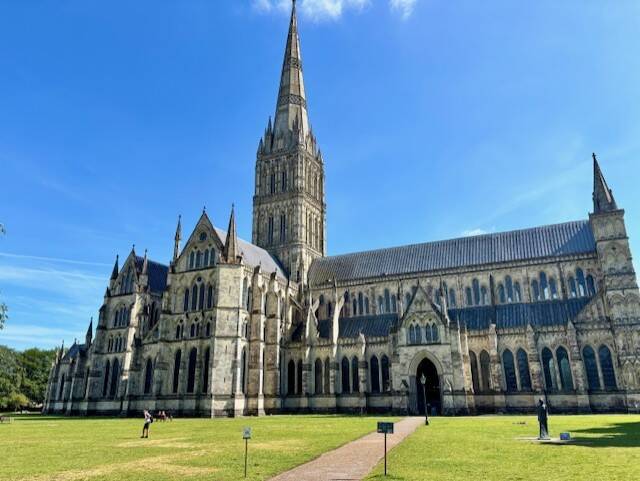
It's not simply a walk between two cathedrals. It is a journey across the old heart of Wessex: a route that threads together chalk downs, ancient woodland, river valleys, medieval churches, lost royal palaces and some of the most quietly beautiful villages in southern England.
Stretching for around 27 miles between Winchester Cathedral and Salisbury Cathedral, the route feels less like a modern long-distance footpath and more like a gradual immersion into the deep landscape of Hampshire and Wiltshire. Roman roads, Saxon history, Norman power, medieval pilgrimage and centuries of rural life all seem to linger just beneath the surface of the path.
Arriving in Houghton towards the end of the first day feels almost perfectly timed. After miles of chalk paths, woodland tracks and open farmland, the Clarendon Way suddenly drops into the lush water meadows of the Test Valley, where the landscape softens and the famous chalk stream itself begins to shape everything around you.
Then, almost improbably, comes the pub.
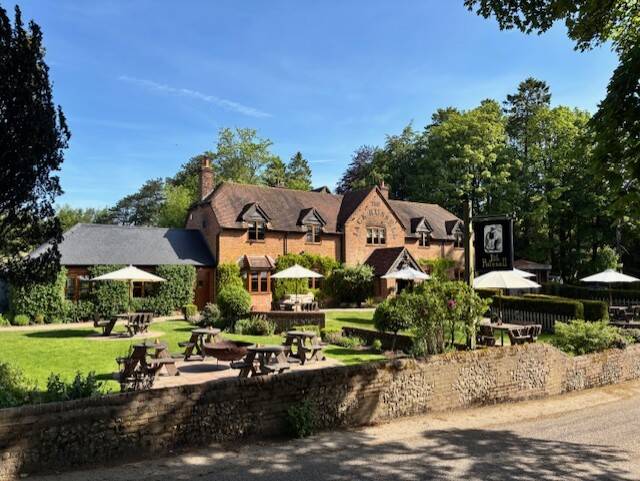
A picture-postcard inn beside the River Test, sitting quietly among honey-coloured cottages, old brick walls and one of England’s most celebrated fly-fishing landscapes.
At that point, The Boot Inn no longer feels like a convenient place to stop for food or drink.
It feels exactly like where this walk was always supposed to lead tonight.
For those trying to figure out the logistics for the Clarendon Way, I've described my approach in the Walk section below.
About The Boot Inn, Houghton


Last visit: May 2026
Houghton scarcely feels real when you first arrive on foot.
The route from Winchester Cathedral didn't present much by way of civilisation, and my planned stop at The Crown in King's Somborne was thwarted - I met the landlady locking up for the very last time. "You should have got here sooner", she said when I outlined my Pubs Worth The Walk project!
The village of Houghton is idyllic: thatched cottages, immaculate gardens, old brick walls, the slow-moving River Test, its next stop the Bossington Estate - the birthplace of dry fly-fishing. The sighting of my first cuckoo of the year made my day!
And sitting almost at the centre of it all is The Boot Inn. I whizzed round the church up the lane opposite while waiting for its 5.30pm opening time.
With its heavy beams, wood-burners, flower-filled frontage and garden running directly down to the riverbank, the pub feels inseparable from the landscape around it. And the ornaments within ties is equally tightly to fly-fishing. You can immediately understand why walkers on the Clarendon Way target it as an overnight stopping point, like I have, and why anglers disappear into it after long days beside the Test.
Everything revolves around the river.
The Test is not merely scenery in Houghton. It defines the village entirely. The famous chalk stream flows quietly past gardens, beneath footbridges and between fishing estates, like Bossington, regarded almost reverentially within fly-fishing circles. Some of the most celebrated trout water in England lies directly beyond this pub's garden.
And yet The Boot somehow has avoided becoming exclusive or self-conscious. It remains gloriously welcoming: muddy boots, tired walkers, local drinkers and visiting anglers all gathering together beneath its low beams. A new starter is learning to pour the award-winning Guinness to perfection this evening.
Owner Craig Doyle spoke warmly about the rhythms of life in the Test Valley, where the fortunes of local pubs still rise and fall with the fishing season (although Craig loves it when the Morris Men show up!). Earlier today I met some walkers on the Clarendon Way who had once arrived to find themselves accidentally competing for food service with seventy visiting anglers attending a fly-fishing talk. An unfortunate evening for hungry hikers, though an almost perfect illustration of how deeply fishing culture runs through this valley.
Fortunately, my own timing proved considerably better.
Duck followed by tiramisu restored both morale and energy after a long day on the trail, accompanied by Flack Manor’s excellent “Wolf in Sheep’s Clothing” ale, from nearby Romsey.
And sitting outside beside the river as evening settled across Houghton, it became very difficult to imagine a more satisfying end to a day’s walking.
Pub Key Information
| WEBSITE | https://www.thebootinn-houghton.co.uk/ |
| ADDRESS | Church Lane, Houghton, Stockbridge, SO20 6LH |
| PHONE | 01794 388310 |
| WHAT3WORDS | ///filed.roost.quack |
| PARKING | Car park at the rear of the pub. |
| LOCATION | Houghton is signposted from Stockbridge, at the west end of the High Street, just after the bridge over the River Test. |
Walk Overview
The Clarendon Way is a wonderfully varied long-distance footpath linking the cathedral cities of Winchester and Salisbury across the ancient heart of Wessex.
Stretching for around 27 miles, the route threads through chalk downland, woodland, river valleys, old estates and deeply rural Hampshire and Wiltshire villages, while quietly carrying centuries of Roman, Saxon, Norman and medieval history beneath its surface.
Unlike some long-distance trails, the Clarendon Way never feels remote or overly demanding. The route is extremely well signposted throughout and works perfectly as a relaxed two-day walk, particularly with an overnight stop in the Test Valley around Houghton or Broughton.
Along the way, walkers encounter Iron Age hill forts, ancient churches, forgotten royal sites, old deer parks and sweeping views across classic southern English countryside.
What gives the route much of its character, however, is the contrast between the open chalk landscapes and the lush river valleys it eventually descends into.
Nowhere feels more rewarding than the approach into the River Test valley towards Houghton, where clear chalk streams, water meadows and some of England’s most celebrated fly-fishing country provide a beautifully gentle conclusion to the first day’s walking.

Walk Key Information
The Clarendon Way is already exceptionally well documented online and very well signposted throughout, so I have not attempted to provide turn-by-turn route instructions for the twenty-seven miles between Winchester and Salisbury. Instead, I thought it might be more useful to describe the logistics I used to complete the walk comfortably over two days.
Above, I have included links to both the OS route I created and the GPX file.
For a comprehensive route guide, WalkWinchester provides an excellent overview of the Clarendon Way itself.
The route can, of course, be walked in either direction. My first decision was choosing an overnight stopping point for the end of Day 1. I opted for Houghton, just outside Stockbridge, partly because I was staying at Stockbridge View Campsite and partly because it sits almost perfectly at the halfway point of the route.
On the morning of Day 1, I drove from Stockbridge to Winchester and parked at the railway station before walking down to Winchester Cathedral for a 10am start. I carried lunch with me, which proved sensible as refreshment opportunities along the route were fairly limited. I did pass Beechwood Farm Shop & Tea Barn en route — unfortunately closed on the day I walked — which would otherwise make an excellent stopping point.
After leaving Winchester, the only significant village on Day 1 was King’s Somborne, which I reached at around 2.30pm. Although the village pub has sadly now closed, there is an excellent village store. It is also well worth taking time to visit the church, which contains some extraordinary embroidered kneelers and seat cushions, alongside fascinating connections to the pioneering aviation engineer Sir Thomas Sopwith.
By late afternoon, the Clarendon Way finally descends into the lush landscapes of the Test Valley before reaching Houghton and The Boot Inn — my chosen destination for the end of the first day’s walking. The pub opens at 5.30pm, and I had pre-booked a taxi back to Stockbridge View Campsite afterwards. Although only a short journey, taxis generally come from Andover, so advance booking is advisable.
On Day 2, I simply walked back to Houghton to rejoin the trail, adding a few extra miles but avoiding another taxi fare. There is also a bus service connecting Stockbridge, Houghton and Broughton, although it runs fairly infrequently, so timings are worth checking carefully in advance using the Stagecoach journey planner.
Broughton itself would also make an excellent overnight stop. Just a couple of miles beyond Houghton, the village has two excellent pubs alongside one of the finest village-run community stores I have encountered anywhere, attached to the Village Hall. I aimed to reach Broughton for breakfast on the second morning, which proved an excellent decision.
My lunch stop on Day 2 was The Lord Nelson at Middle Winterslow — seemingly undecided whether it belongs to Winterslow or Middleton — and ideally positioned roughly halfway through the second day’s walking. The pub offered an excellent range of beer, including Director’s, which I had not encountered for almost forty years. The food menu was superb and clearly very popular, although perhaps geared more towards substantial lunches than lighter walking fare.
Upon reaching Salisbury Cathedral, I caught a train back to Winchester via Southampton to collect the car. The overall rail journey took around an hour and worked surprisingly smoothly, making the entire two-day walk remarkably straightforward from a logistical perspective.
Walk Instructions: Choose what works for you
There are multiple ways to consume the route described below.
- Either follow the online Walk Directions below, or download and print a copy of the route.
- If you have the OS Maps App, you can follow a saved route directly in the OS App.
- Or download the GPX file for use with your chosen GPS-based tracker App, like Strava. Upload the file when you Create a New Route in the App.

Other Pub Walks to try in Hampshire
North Hampshire circular with fine views from the highest point in the County.
6.5 miles


