

The White Hart, Ludgvan
Ludgvan Circular Pub Walk – Ancient Churches, Lost Mills and Pilgrim Paths, 3 miles

Try this Pub & Walk
The White Hart is reason enough to come to Ludgvan Churchtown. This much-loved village pub sits beside St Paul’s Church in the historic heart of the parish, a granite Cornish inn whose reputation was built over generations — not least through the legendary tenure of Harry Bailey, whose warmth and character made this place known far beyond the village.
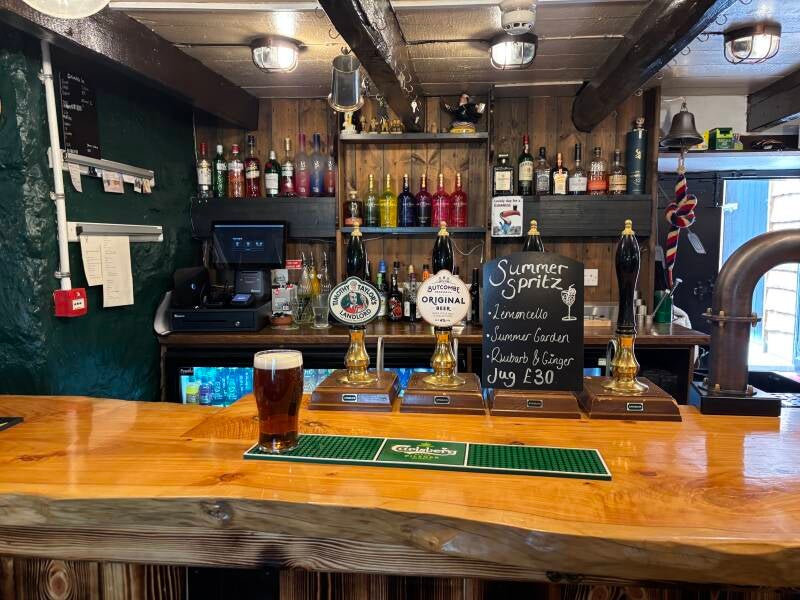
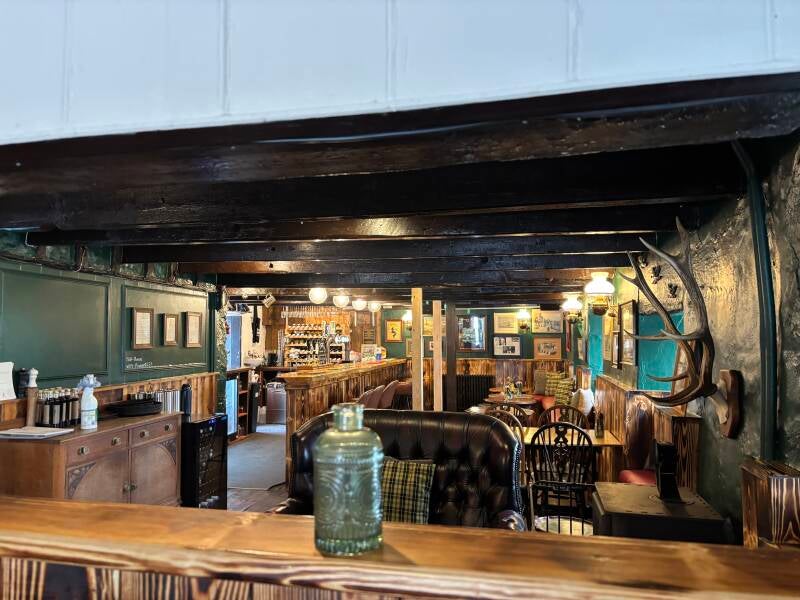
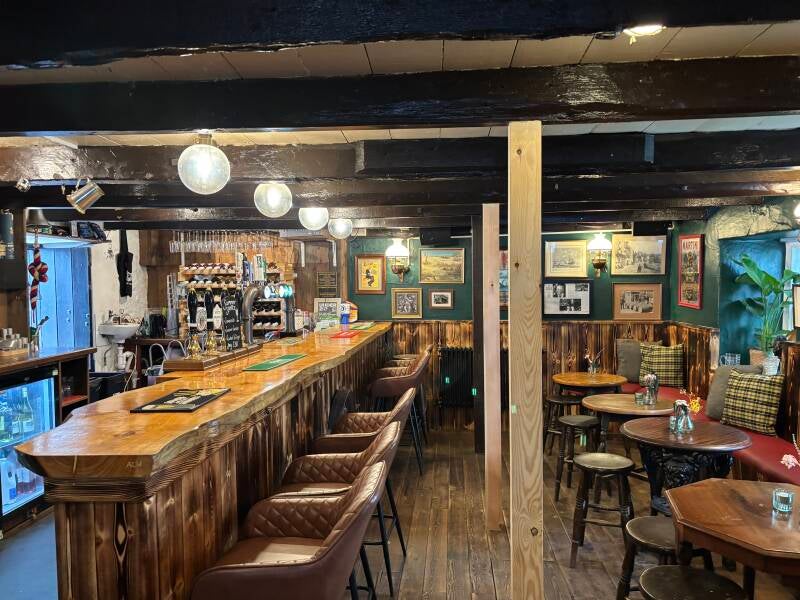
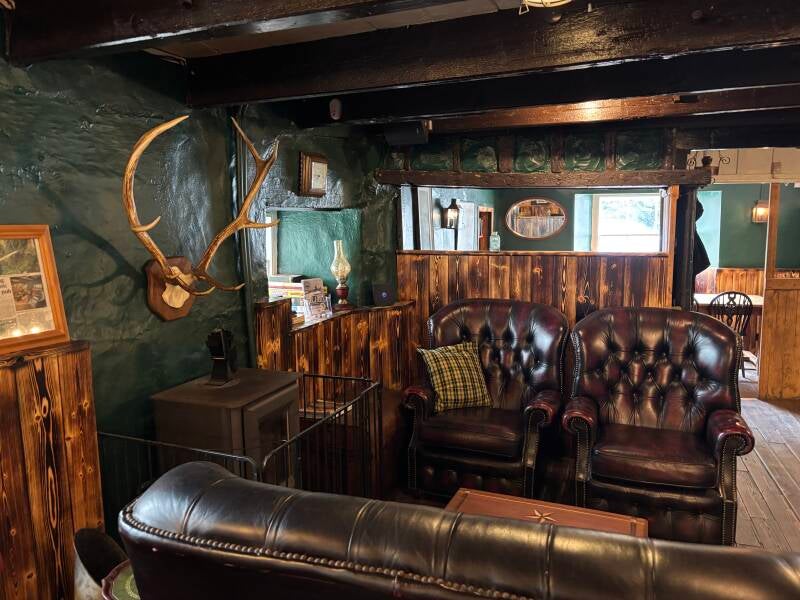
Today, that sense of welcome continues through excellent food, superb beer and a beautifully restored pub full of atmosphere.
The walk provides a gentle exploration of the surrounding countryside, leaving Churchtown to discover the quiet Red River valley, the remnants of its industrial past and a section of St Michael’s Way, an ancient route once used by pilgrims crossing West Cornwall. Returning to Ludgvan, the medieval churchyard and the village’s layers of history provide the perfect introduction to a pub that has long been at the heart of this community.
About The White Hart, Ludgvan


Last visit: August 2026
The White Hart at Ludgvan is one of those Cornish pubs that feels rooted in its place, its people and its history. Set beside the ancient church in a granite village heartland, it has long been more than just a pub: for generations in West Cornwall it has been remembered fondly, and to many locals it will always be “Harry Bailey’s”.
Harry Bailey’s years behind the bar clearly left a mark that still matters. His warmth, humour and loyalty helped turn the pub into a community institution, where conversation mattered as much as the pint and where people came not just for drink but for belonging. His reputation reached far beyond Ludgvan, with people travelling from across West Cornwall to spend time in his company.
The new team, Olly and Clare, have clearly understood that they are custodians of something precious, openly respectful of the pub’s past, with the dining room named “Harry Bailey’s Parlour” as a fitting tribute. But they are not simply recreating what went before; they are setting their own standards too, building a pub that feels relevant, welcoming and very much alive today.
The refurbishment has clearly been done with care, and the result is a pub that feels both smart and lived-in. Soft lighting, warm corners, snug seating and a sense of intimacy make it welcoming from the moment you walk in, while the landscaped garden and the view of St Paul’s church tower give it a very special setting.
What especially stands out is that the place still feels social rather than showroom-perfect. The team were enthusiastic, knowledgeable and genuinely proud of the pub’s story, and that matters: they helped make the atmosphere feel authentic rather than manufactured.
By all accounts, the food is excellent and the beer was certainly superb. That fits with the pub’s current reputation for excellent food, but without losing the feel of a traditional bar where a good pint still matters.
The White Hart is a success because it has managed something many pubs aspire to but few achieve: it honours its past without being trapped by it. Harry Bailey’s legacy still hangs over the place in the best possible way — not as nostalgia, but as a living standard of hospitality, loyalty and community. If you want a Cornish pub with history, atmosphere, a beautifully handled refurbishment and a genuinely emotional local story, this is one to seek out.
Pub Key Information
| WEBSITE | https://www. |
| ADDRESS | The White Hart, Church Hill, Ludgvan, Penzance, TR20 8EY |
| PHONE | 01736 780172 |
| WHAT3WORDS | ///caring.buzzer.resurgent |
| PARKING | Street parking outside the pub. |
| LOCATION | Ludgvan is signposted off the A30, inbetween Penzance and Hayle. |
| HANDY FOR | All of West Cornwall. |
Walk Overview
This is a pleasant inland walk through the historic parish of Ludgvan rather than a dramatic Cornish coastal route.
Beginning beside St Paul’s Church and The White Hart, the route explores the countryside around the village, following the Red River valley before joining a section of St Michael’s Way, one of Cornwall’s ancient pilgrimage routes.
Along the way there are glimpses of a landscape shaped by water, farming and industry, including the remains of old mills along the Red River.
The route then returns through quiet lanes and fields to Ludgvan Churchtown, where the churchyard and The White Hart provide a rewarding finish.
The walk is perhaps best viewed as a gentle exploration of west Cornwall’s hidden corners, with the pub providing the memorable highlight.



Walk Key Information
| START/FINISH | The White Hart, Church Hill, Ludgvan, Penzance, TR20 8EY |
| PARKING | Street parking outside the pub. |
| GRID REFERENCE | SW 505 331 |
| WHAT3WORDS | ///caring.buzzer.resurgent |
| DISTANCE/TIME | 3 miles / 5 km; approx 1.5 hours |
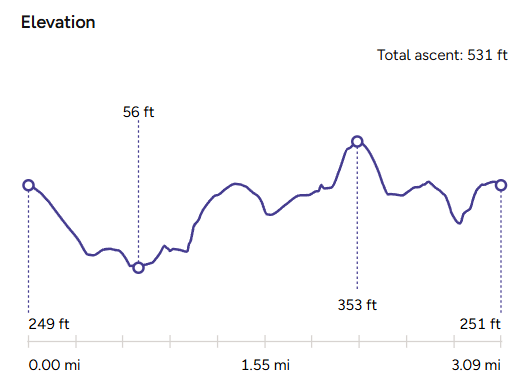
| ASCENT | 530 feet / 165 metres |
| PATHS/TERRAIN | Pavements, quiet lanes, gravel tracks, field & woodland paths. |
| DIFFICULTY | Easy, one steep uphill to Boskennal Farm |
| PUBLIC TRANSPORT | Numerous bus services available to or near to Ludgvan. |
| TOILETS | The route passes The Star Inn quite soon after leaving The White Hart. No other toilets on the route. |
| OTHER PUBS TO VISIT | The Star Inn in Crowlas, excellent local brewing its own beer – The Penzance Brewing Company. Further afield, The Mexico Inn at Long Rock is excellent; and The Coldstreamer at Gulval is worth a visit. |
Walk Instructions: Choose what works for you
There are multiple ways to consume the route described below.
- Either follow the online Walk Directions below, or download and print a copy of the route.
- If you have the OS Maps App, you can follow a saved route directly in the OS App.
- Or download the GPX file for use with your chosen GPS-based tracker App, like Strava. Upload the file when you Create a New Route in the App.
Walk Directions
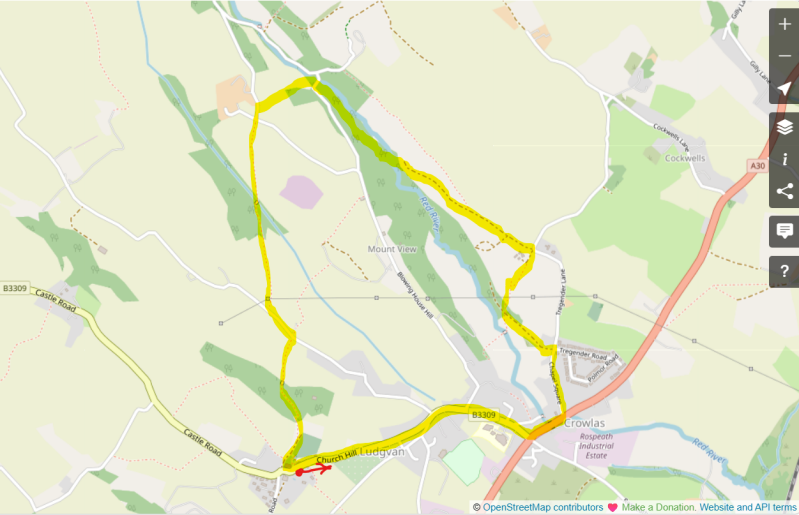
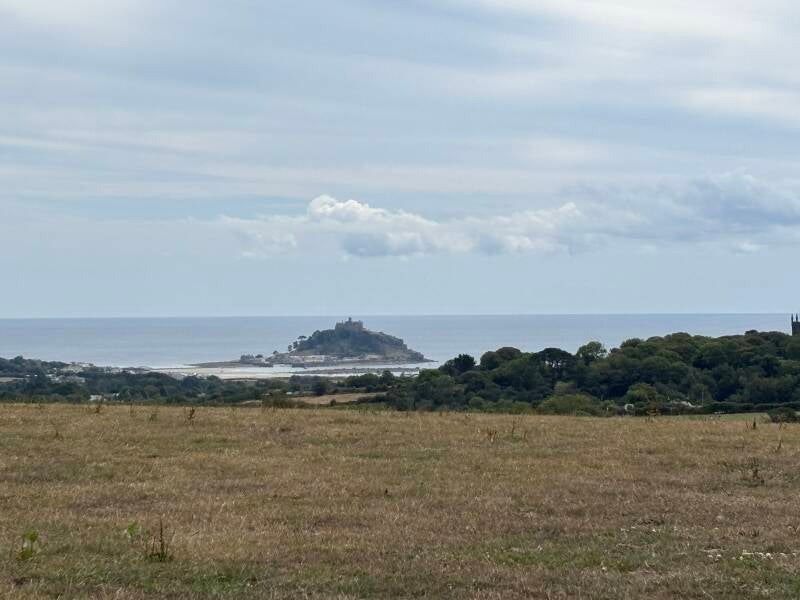
- Outside The White Hart, head down hill towards Crowlas on the pavement on the B3309, Castle Road. Castle Road takes its name from Castle-an-Dinas, the Iron Age hillfort and later folly on the hill to the north-east, although this walk never reaches it. Take a moment at Ludgvan’s Royal British Legion Memorial Garden, created to mark the Millennium. It offers a magnificent view of St Michael’s Mount and incorporates a number of re-located memorial tablets, the RBL badge and flagpole.
- Ludgvan is in two parts – Churchtown, where we started, and Lower Quarter that we soon pass through. It has started to merge with Crowlas. Continue on the pavement all the way through to Crowlas and the main A30 road. Turn left on the pavement and continue to the Star Inn. It has a great reputation and is brewing its own range of beers. Take the lane, called Chapel Square, to the left immediately after The Star.
- Continue past the old Methodist Chapel and Sunday School to gently start uphill on Tregender Lane. A residential road on the right appears – Tregender Road – and just before it on your left, a footpath sign leads down a driveway of Mount Pleasant House.
- Continue down the driveway until you reach a ‘Mount Pleasant Private’ sign where a footpath marker guides you to the right, into woodland, uphill. You may notice that a footpath also arrives at this point from a field below you. The bridge is out of action across the stream in the valley, so the instructions listed in #2 and #3 to reach this point are the diversionary route.
- Emerge into a field at the top, and follow a field path again uphill along the left-hand hedge line. Exit the field via a stile to follow a shaded path. Bear right on the gravel drive, then left signposted Tregender Vean.
- Continue straight ahead on this quiet shaded driveway. Pass a cottage hidden away in gardens on the left, and another house slightly right, but the footpath is straight – it looks like the cottages in this hollow have helpfully added a route direction. The path drops through a narrow section to a footbridge over a stream.
- The path now opens out into a small field with rough grass and ferns. Bear right. The stream – Red River - looked quite tame when crossing it on the footbridge but as you walk through this field and the next few, you can see sizeable granite boulders along the stream’s edge to provide a clue to the force of water that has flowed through here. Indeed, we’re heading up river towards the old site of Boskennal Mill and further above it, Cocurrian Mill, both now disused. There’s evidence of dammed pools and ponds throughout the Red River valley on the OS Map, and hydraulic rams too, as it flows towards Marazion Marsh and the sea.
- The path crosses a 2nd field diagonally to the left, emerging onto a farm track, the first house to pass is the beautifully converted ‘Boskennal Barn’ (was this the mill?), now a holiday let (Aspects Holidays).
- Leave the gravel lane to emerge onto a road. Go straight across it – a footpath sign guides you into what looks like the rear part of a private residence. Carry on ahead across some gravel, to climb away from the garden over a bank into a grassy area, which perhaps is/was an overgrown lawn. (While this is a legitimately signposted route, the OS Map does show an alternative that loops around the garden, heading right on the road). Bear left here to the top end of the grassy area, where a stile leads you into the field.
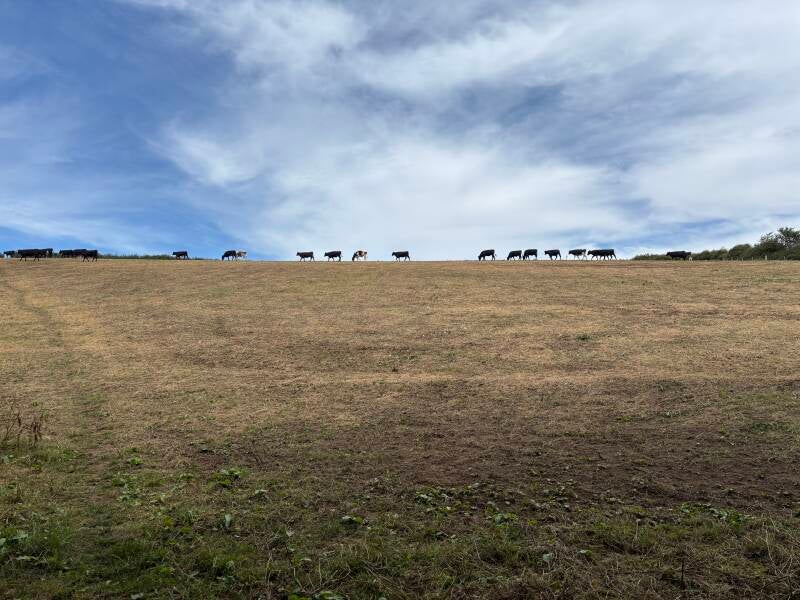
- This is a livestock field. Follow the field boundary on your left steeply uphill to a metal footpath gate onto the road – Blowing House Hill - in front of Boskennal Farm, which has an impressive entrance!
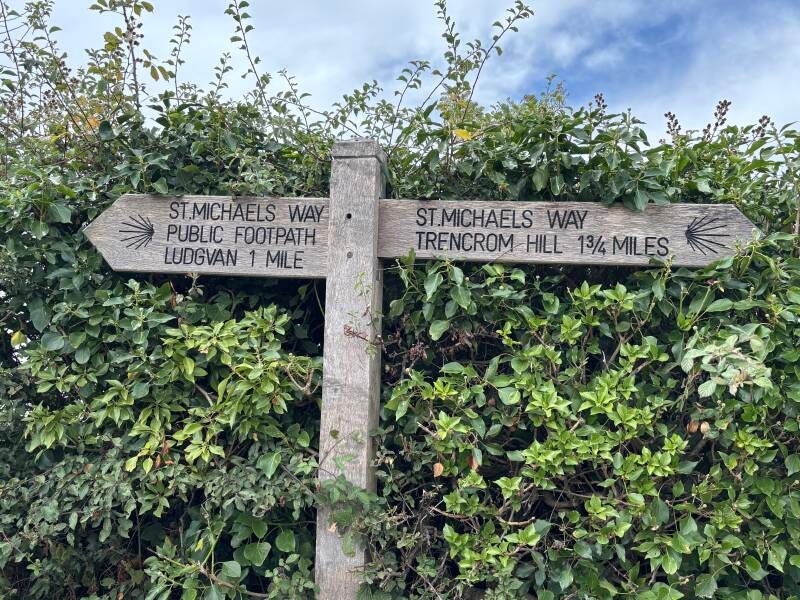
- Turn left to follow the road ahead towards a hairpin bend. The route now joins St Michael's Way, one of Britain's designated European Cultural Routes, following an ancient route once used by traders, pilgrims and, according to tradition, the Celtic saints travelling between Ireland and continental Europe. At the bend leave the road straight ahead into a field. The route is also signposted with a ‘Camino Ingles to Santiago’ waymark. St Michael's Way is a 12.5 mile walking route which crosses West Cornwall: from Lelant on the North Coast to Marazion and St. Michael's Mount on the South Coast.
- Follow the (livestock) field path downhill diagonally across the field to a gate, then cross granite bridge in woodland to emerge into a field on a distinct path.
- Cross through a gate & stile into the next field, following the boundary to the side of a pylon.
- Emerge onto a lane, turn left downhill, following footpath signs. Lower down lookout for a post box in a house wall on your right, then turn right. We’re close to Ludgvan again now, and footpaths are clear and well-marked.
- Follow the path ahead through woodland, continue uphill towards Ludgvan Church. St Paul's Church (and the White Hart) is the historic heart of Ludgvan. Although much of the building dates from the fourteenth and fifteenth centuries, there has been a place of Christian worship here since at least the seventh century. The church occupies the site of an early Celtic religious settlement, making this one of the oldest continuously occupied sites in west Cornwall.
- The White Hart beside the church has welcomed parishioners, travellers and locals for generations, making it a fitting place to finish!
Additional Notes - A Churchyard Worth Exploring
I'd hoped to have a proper look inside St Paul's, but the church fete was in full swing when I arrived, and stepping past the cake stalls into the nave felt like the wrong kind of intrusion. My acquaintance with Ludgvan Church therefore remained firmly outdoors.
That turned out to be no bad thing, because the churchyard alone repays the visit.
What appears at first to be an ordinary circular boundary is thought to preserve the outline of a Celtic lan — an early religious enclosure that may date back to the sixth century, when an Irish missionary remembered as St Ludewon, or Ludowanus, is said to have founded a Christian community here.
The parish's own history goes further, pointing to seventh-century grave markers within the enclosure as evidence that this was already a place of worship long before anyone built in stone. None of it can be proved with certainty. Ludewon himself may be no more than a saint created to explain the place-name, which others believe derives from the Cornish for 'a place of ashes'. Whatever the truth, the remarkable shape of the churchyard suggests that something very ancient once stood here.
The tower that dominates the view from the White Hart is a much later addition: a handsome fifteenth-century granite tower with pinnacles and carved angel heads. It is, in many ways, the newest chapter in a story stretching back more than a thousand years.
Ludgvan even lays claim to another piece of Cornish folklore. It is sometimes said that the last church service conducted in the Cornish language took place here during the late seventeenth century. Unfortunately for local pride, nearby Towednack makes exactly the same claim, and neither parish can quite prove it.
The churchyard also contains some distinguished names. William Borlase, the great eighteenth-century antiquarian and author of The Natural History of Cornwall, served as rector here for almost fifty years. His grave can still be identified by the lettering picked out in red.
Nearby lie the parents of Sir Humphry Davy, who grew up in the parish before becoming one of Britain's greatest scientists. Although Davy himself is buried in Geneva, Ludgvan played an important part in his early life.
Outside Cornwall, Davy is usually remembered for the miners' safety lamp that bears his name. Yet that invention was almost a footnote in a remarkable career. He isolated elements including potassium and sodium, became President of the Royal Society, and recognised the extraordinary talent of a young Michael Faraday, giving him the opportunity that launched one of the greatest scientific careers in history.
It is remarkable that such an ancient church, standing quietly beside a village pub, should also preserve connections with one of Britain's greatest scientific minds. Ludgvan's story turns out to be rather richer than first impressions suggest.
Other Pubs to try in Cornwall
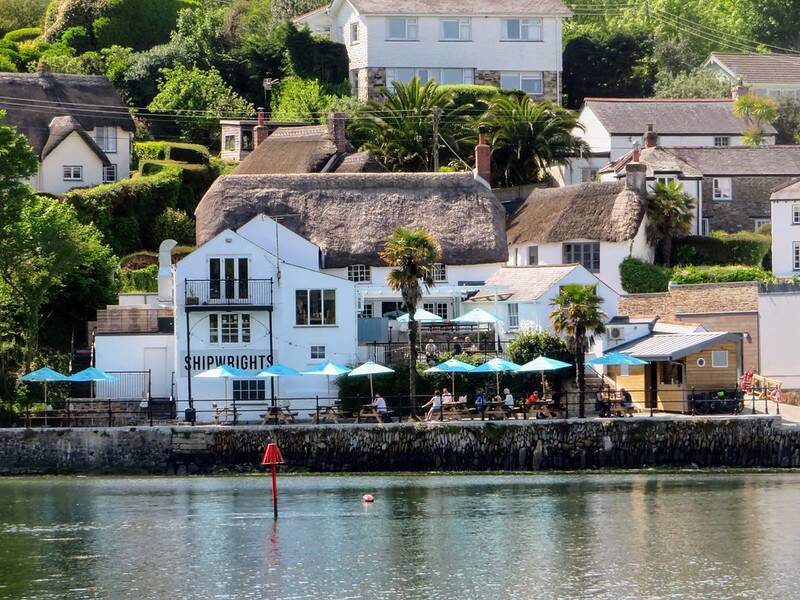
Helford – From Shipwrights to Scientists: A River of Discovery
5.2 miles