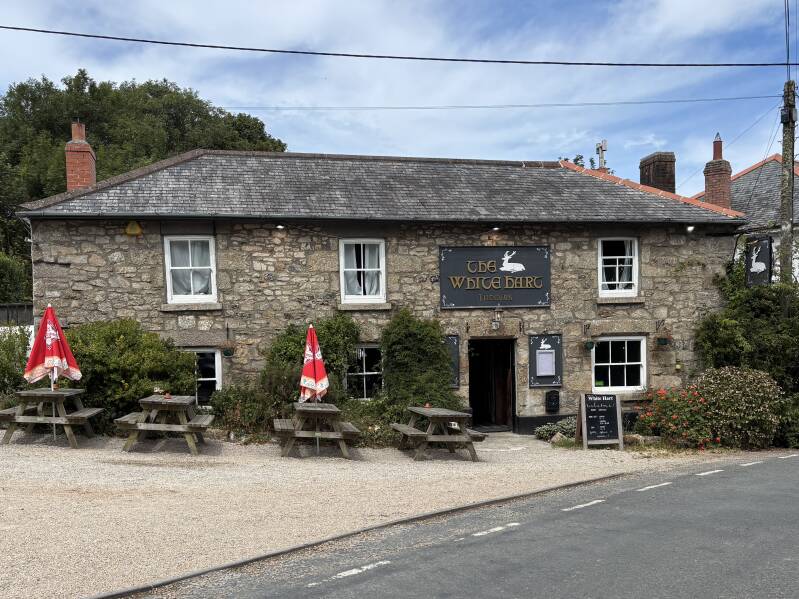
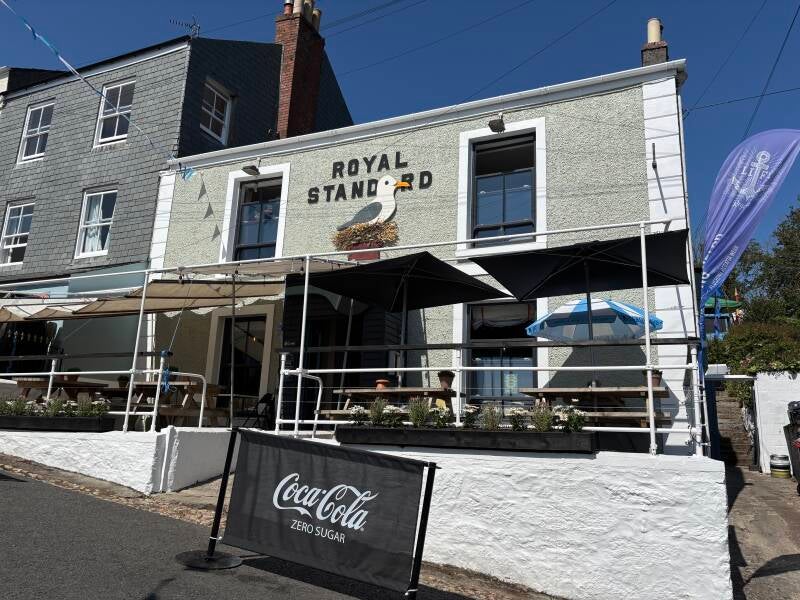
The Ship Inn, Porthleven
Porthleven Harbour, Penrose Estate and Loe Bar Circular Walk, 4.6 miles

Try this Pub & Walk
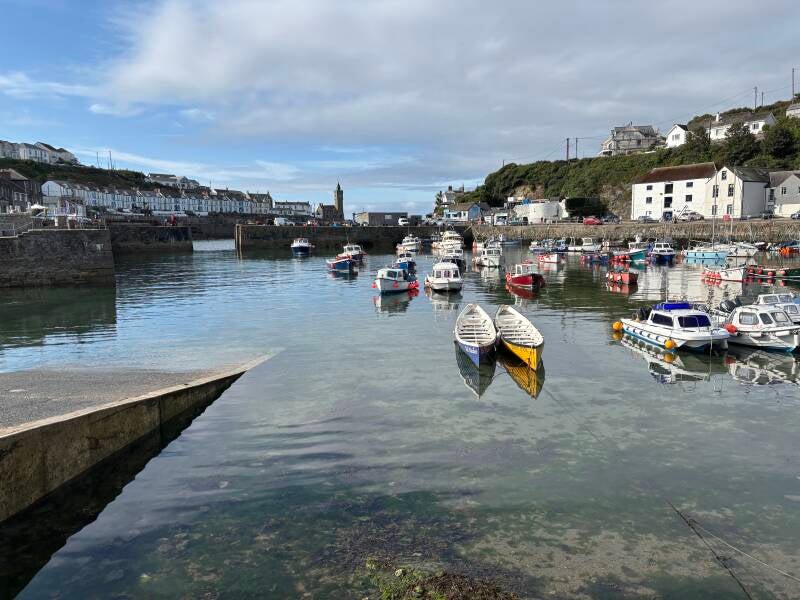
Porthleven is a town shaped by the Atlantic. Its harbour was built as a place of refuge on one of Cornwall's most exposed stretches of coastline, where fishing boats, working vessels and those caught in storms could seek shelter from the power of the sea.
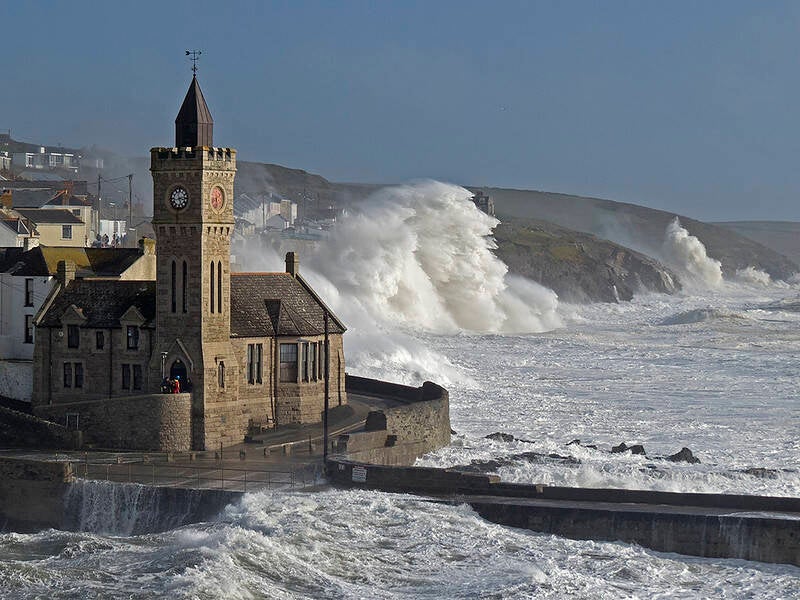
Standing opposite the harbour entrance, The Ship Inn feels as though it has grown from that same need for shelter. This is not a pub beside a harbour; it is almost built into the harbour. The Bickford-Smith Institute stands across the water, often seen on television as waves crash around it during winter storms, and The Ship occupies the perfect position to understand the relationship between the town and the ocean beyond.
The walk reveals a different side of Porthleven. Leaving the harbour behind, you climb away from the bustle of the town into the tranquillity of the Penrose Estate, following woodland paths beside The Loe before returning along the dramatic coastline. It is a journey through the landscapes that surround and protect Porthleven, ending exactly where you would want to be: back beside the harbour, inside a pub that feels part of its story.
I discovered The Ship's greatest quality quite literally. After a sun-baked summer walk, an Atlantic shower caught me on the final mile into town. I arrived soaked, moving at a pace I didn't know I still possessed, and headed for the obvious refuge. As I approached, the irony was that some of the staff were heading outside to cool off in the rain. In Porthleven, the weather is not something to avoid; it is part of the experience.
Some pubs serve food. Some serve great beer. The Ship serves shelter.
About The Ship Inn, Porthleven
Last visit: July 2026
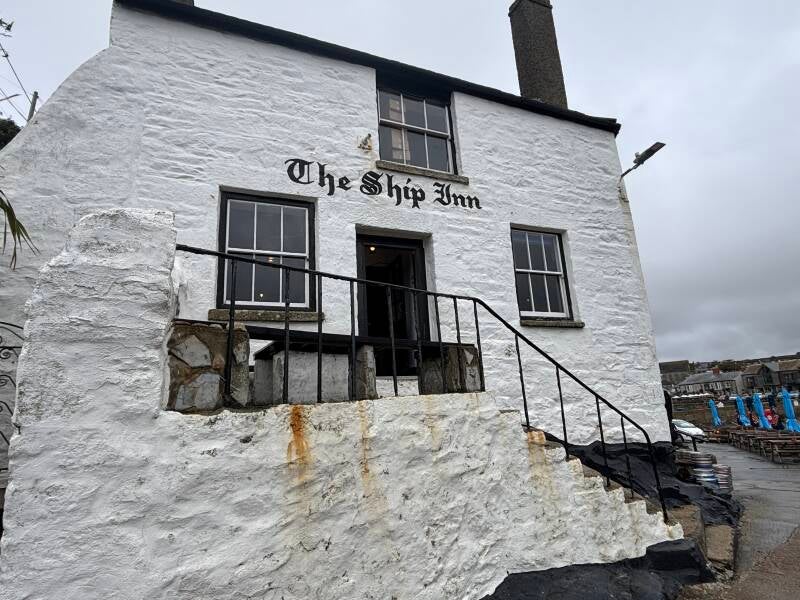
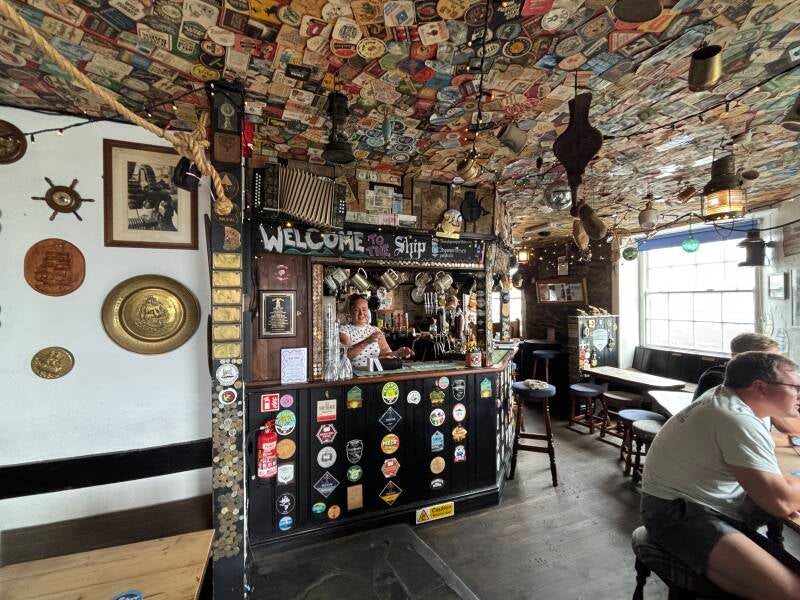
Standing opposite Porthleven's harbour entrance, The Ship Inn looks exactly like the pub you hope to find at the end of a coastal walk.
It is a place where the relationship between land and sea feels tangible: where fishermen, sailors, harbour workers, locals and visitors have gathered for generations just a few steps from the Atlantic.
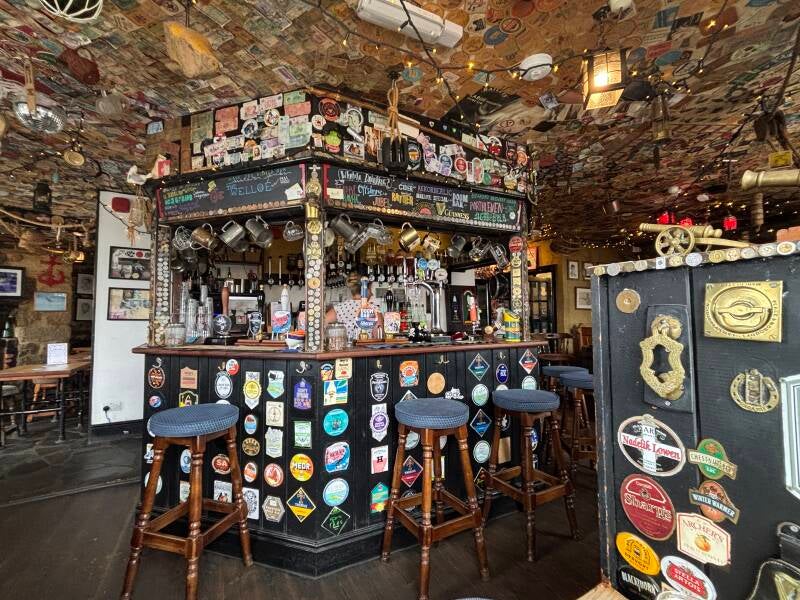
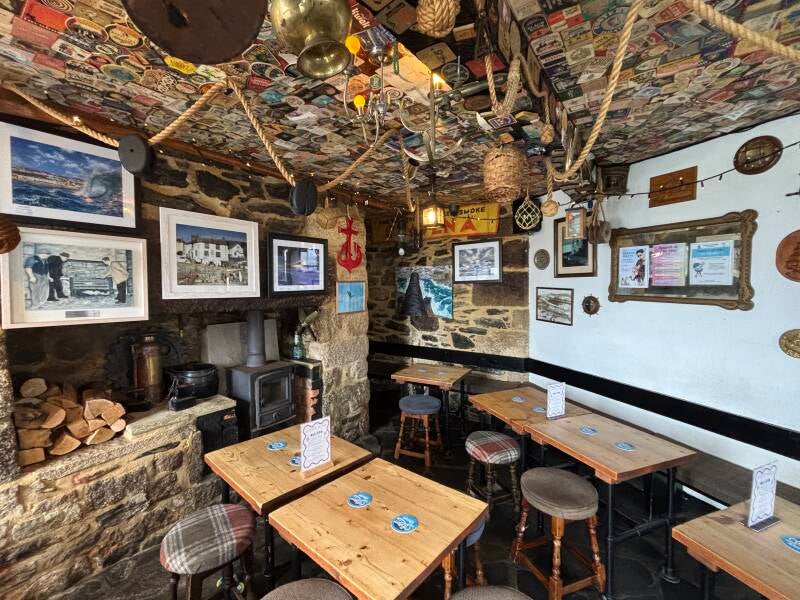
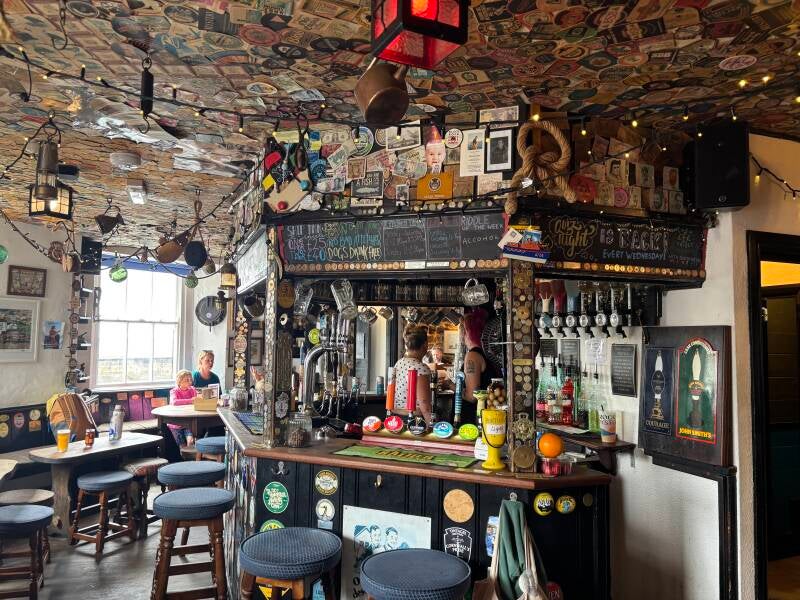
Step inside and the first impression is not of a carefully created nautical theme, but of a pub that has simply accumulated a life of its own. Every wall and ceiling space seems occupied by something with a story behind it: brewery memorabilia, ships' curiosities, coins, banknotes, photographs and the kind of unexplained treasures that make you stop and wonder, "what on earth is that doing here?"
Some pieces have clearly been collected, others feel as though they arrived with customers over the years and never left.
That is the charm of The Ship. It does not feel decorated to look like a harbour pub; it feels as though it has always been one.
The atmosphere is warm, relaxed and unmistakably that of a proper coastal local. It can be busy, but never impersonal. Whether you are a regular, a fisherman, a family stopping for food or a walker arriving from the coast path, the welcome feels the same. There is conversation, humour and a genuine sense that people are here to enjoy being here.
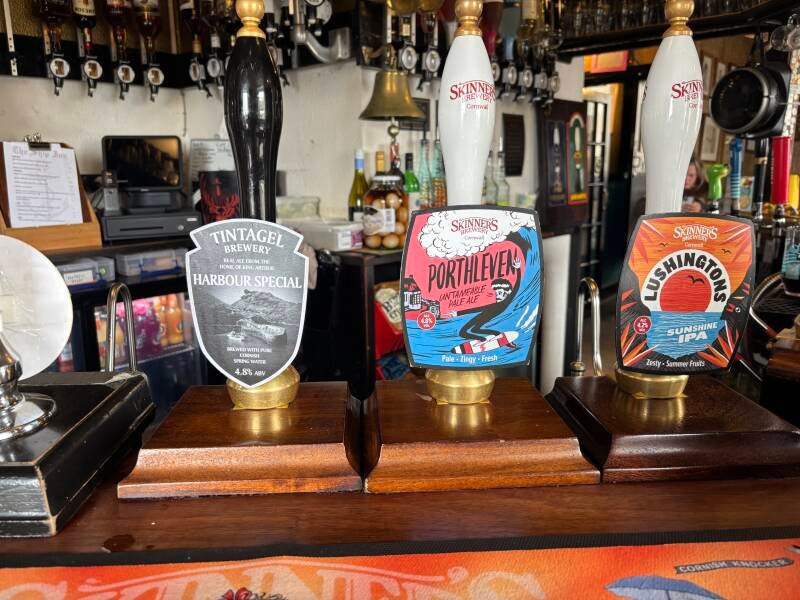
The beer offering is a particular strength, with an excellent choice of ales that suits the setting perfectly. Food is equally important, with a reputation for generous pub classics that make this somewhere you could happily settle in for an afternoon rather than simply stop for a quick drink.
And then there is the garden. Elevated above the harbour, it provides wonderful views across the water — although perhaps approached with caution by anyone without previous experience of climbing masts. It is another part of The Ship's character: a place that embraces its setting rather than simply looking out over it.
You get the feeling that if the Harbour Inn had its captains, merchants and ship owners, then The Ship belonged to the crews. This is where the people who worked the sea would have gathered: to warm up, exchange stories, celebrate a safe return or simply wait for the Atlantic to calm.
The Ship Inn is more than a pub beside Porthleven Harbour. It is part of the harbour's story and charm.
Pub Key Information
| WEBSITE | https://theshipinnporthleven.co.uk/ |
| ADDRESS | The Ship Inn, Mount Pleasant Rd, Porthleven, TR13 9JS |
| PHONE | 01326 564204 |
| WHAT3WORDS | ///lollipop.supreme.outraged |
| PARKING | No parking at The Ship, so use one of the town car parking locations. Kittos Field is just behind the rear of the harbour and most convenient. |
| LOCATION | Porthleven is a harbour village in South West Cornwall, off the A394 Helston to Penzance road, close to Helston. |
| HANDY FOR | The Lizard Peninsula; Helford River; St Michael's Mount and all of West Cornwall. |
Walk Overview
Porthleven is one of Cornwall's best-known harbours, a place where the Atlantic has shaped both the landscape and the lives of those who have called it home. Yet this walk reveals a quieter side that many visitors never discover.
Leaving the busy waterfront, the route climbs steadily out of town before entering the peaceful Penrose Estate, where ancient woodland, open parkland and lakeside paths replace the sound of gulls, fishing boats and harbour activity. It feels remarkably distant from the Atlantic, yet the sea is never far away.
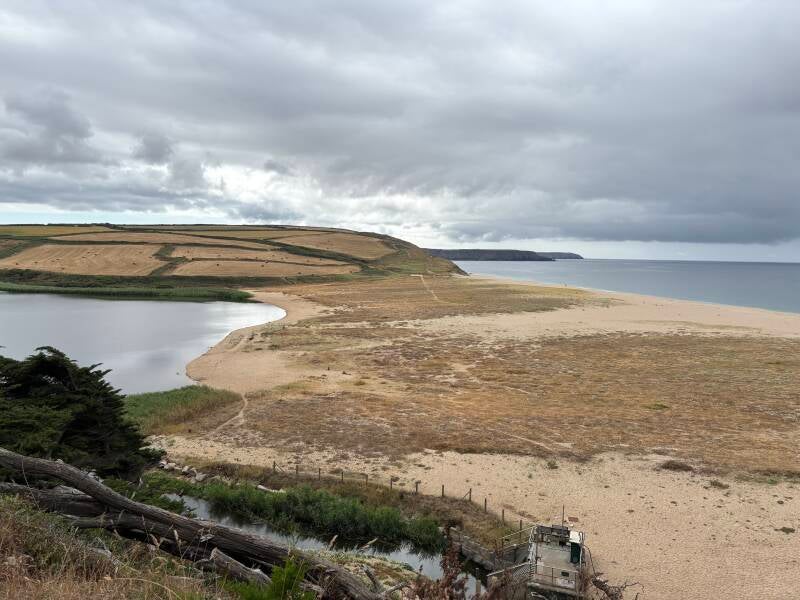
The route follows the shores of The Loe, Cornwall's largest natural freshwater lake, before reaching Loe Bar, the dramatic ridge of shingle and sand that separates the lake from the ocean.
Joining the South West Coast Path, the return journey brings wide coastal views before descending back towards Porthleven's historic, sheltered harbour.
The combination of harbour heritage, peaceful woodland, freshwater lake and rugged coastline makes this a walk of remarkable contrasts, perfectly completed with a pint at The Ship Inn — a pub that has offered warmth, welcome and shelter beside this harbour for generations.



Walk Key Information
| START/FINISH | Porthleven harbour. |
| PARKING | Kittos Field car park is most convenient. |
| GRID REFERENCE | SW 628 255 for Kittos Field Car Park |
| WHAT3WORDS | ///ballots.walls.reef for Kittos Field Car Park |
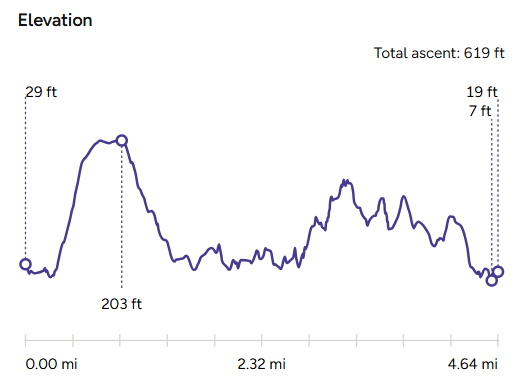
| DISTANCE/TIME | 4.6 miles / 7.4 km; approx 2 hours |
| ASCENT | 620 feet / 190 metres |
| PATHS/TERRAIN | Pavements and quiet lanes; gravel tracks. |
| DIFFICULTY | Easy. One steep section to leave Porthleven on village lane. |
| PUBLIC TRANSPORT | Well served from Helston and Penzance. |
| TOILETS | Options in Porthleven; and at the National Trust cafe at the Penrose Estate. |
| OTHER PUBS TO VISIT | The Harbour Inn is the most prominent pub in the village, on the opposite side of the harbour to The Ship Inn; by contrast, The Atlantic is Porthleven's best kept secret, with excellent views, above the tourist trail on Peverall Terrace. |
Walk Instructions: Choose what works for you
There are multiple ways to consume the route described below.
- Either follow the online Walk Directions below, or download and print a copy of the route.
- If you have the OS Maps App, you can follow a saved route directly in the OS App.
- Or download the GPX file for use with your chosen GPS-based tracker App, like Strava. Upload the file when you Create a New Route in the App.
Walk Directions
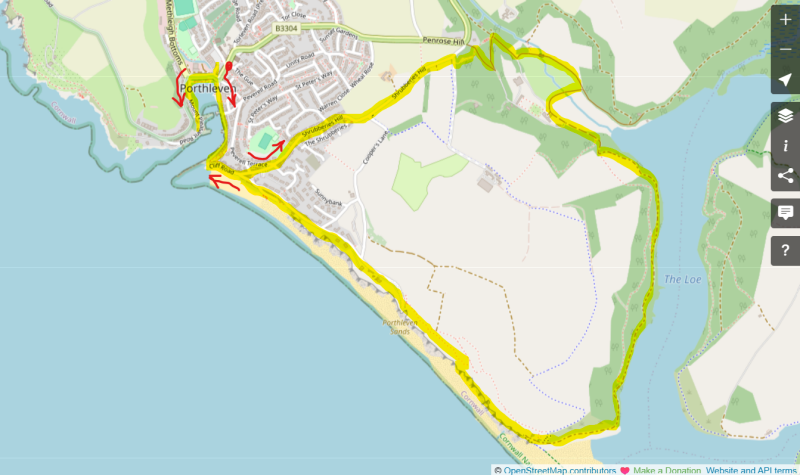
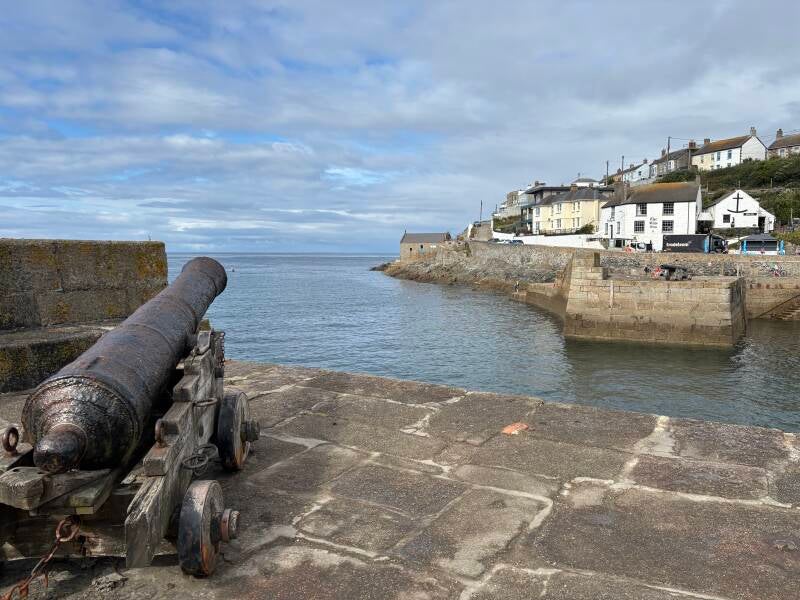
- Porthleven’s harbour is the obvious starting point because the town’s identity is bound up with the sea: it is a working harbour, a historic fishing and shipbuilding centre, and one of the most distinctive small harbours in Cornwall. From the rear of the harbour, looking towards the sea, proceed on the left-hand side, on Harbour Road. At the cannons that are protecting the entrance to the harbour on either side, look across to see The Ship Inn, our final destination!
- As you round the corner in front of the pier, you might recognise the church-like building on your left. If you've ever watched a television weather forecast during a winter storm, there's a good chance you've already seen the Bickford-Smith Institute in Porthleven. Perched here beside the harbour entrance, with Atlantic waves exploding over its sea wall, the granite building has become one of Cornwall's defining images. It is often mistaken for a church because of its elegant 70-foot clock tower, but it has never been a place of worship. Instead, it was built as a centre for education, learning and community life.
- Harbour Road becomes Cliff Road as you round the corner. Continue gently uphill to a fork in the road, with Kernow Cottage facing you. Bear left. Soon after passing Kernow Cottage, if you glance to your left along the first road off you might spy The Atlantic Inn on Peverell Terrace. It has a good sea view.
- Now on Shrubberies Hill, you continue straight up, sometimes steeply, in a residential area of Porthleven. The road eventually meets a pavement and starts to level off. That’s the hardest part of the walk behind you.
- The road starts to leave the village and narrows in parts. There are no pavements here, but it’s reasonably quiet. You’ll start to approach the entrance to the Penrose Estate.
- To avoid the junction at the end of the lane you’re on, look for the sign on your right to National Trust Penrose Hill car park. There’s a camping sign too. Come off the main road here onto a drive, and then turn left into the car park. Walk down to the bottom, where an Information Board shows the zig zag route we need to follow. Pass the board on your right to drop down to the tarmac lane beneath it. This is the Penrose Estate, a National Trust landscape of ancient woodland, parkland and lakeshore that has been shaped by centuries of ownership by the Penrose family. Their former house still stands nearby, but today the estate is one of Cornwall's finest places for a peaceful walk.
- The route is clear from here, and within a few minutes, the bustle of Porthleven feels surprisingly distant. Signs for The Stables Café are the ones to follow!
- Follow the metal railings as they curve towards the house. Keep following signs for Loe Bar until you reach the Stables Café. There are toilets at the café, but bear left in front of the café when you’re ready to press on.
- The estate road heads gently uphill to become a gravel track then continues straight ahead. Ignore the Porthleven fingerpost and continue towards Loe Bar and the Coast Path. The Loe is Cornwall's largest natural freshwater lake, created when Loe Bar sealed off what was once the mouth of the River Cober from the sea.
- You’ll continue to walk among the pines on a winding wide gravel path above the Lake to your left, then start to gain height where you’ll see the sand ridge called Loe Bar. It just looks like part of the beach. In fact, Loe Bar is a shingle-and-sand barrier beach and one of Cornwall’s most distinctive coastal landforms.
- You’ll join the South West Coast Path here back in the direction of Porthleven to your right. As you approach a stone cottage above the beach, turn right on a zig zag path to climb the hillside, heading left at the top to Porthleven. Just follow the signs all the way now!
- Eventually you’ll reach a set of steps down from the coast path to join a tarmac lane which is called Loe Bar Road. Follow it all the way to Kernow Cottage where you were earlier, at step #3.
- From here, retrace your steps, but continue all the way around Harbour Road to join Mount Pleasant Road for the final leg to The Ship Inn.
Additional Notes: The Bickford-Smith Institute – More Than Cornwall's Most Photographed Building
If you've ever watched a television weather forecast during a winter storm, there's a good chance you've already seen the Bickford-Smith Institute in Porthleven.
Perched beside the harbour entrance, with Atlantic waves exploding over its sea wall, the granite building has become one of Cornwall's defining images. It is often mistaken for a church because of its elegant 70-foot clock tower, but it has never been a place of worship. Instead, it was built as a temple to education, knowledge and community.
The Institute opened in December 1884 as the Porthleven Literary Institute, a gift to the village from William Bickford-Smith. At first glance he seems an unlikely benefactor.
His fortune came not from fishing or shipping, but from mining. His family developed the safety fuse that transformed the mining industry, allowing explosives to be detonated far more safely than the unreliable methods previously used. The invention generated enormous wealth and made Bickford-Smith one of Cornwall's most influential industrialists.
He later purchased nearby Trevarno Estate and served as the local Member of Parliament, becoming a popular figure across the district. Contemporary accounts describe fishermen unhitching the horses from his carriage and pulling him into Porthleven themselves when he returned from Westminster after his election—a remarkable display of local affection.
Rather than erecting a monument to himself, Bickford-Smith invested in the people of Porthleven.
He built the Institute as a non-religious centre for learning at a time when access to books, newspapers and education was limited. The building housed a lending library, reading room, committee rooms and lecture hall. Newspapers arrived regularly, together with a telegram news service that brought national and international events to the village almost as they happened. Scientific lectures, educational talks and community meetings were all held here, making the Institute one of the intellectual centres of Victorian Porthleven.
The choice of site was equally symbolic. The Institute replaced the old Fisherman's Arms and its adjoining Long Room, a building that had already served generations of local people as a meeting place, temporary refuge for shipwreck survivors and venue for public gatherings. In many ways, the new Institute continued that tradition while reflecting Victorian confidence that education could improve society.
Its famous clock tower served a practical purpose too. Long before Porthleven had electric street lighting, one illuminated clock face acted as a reassuring beacon for fishermen returning through the harbour entrance after dark. Today it is impossible to separate the tower from the sea itself. It has withstood well over a century of Atlantic storms, becoming one of Britain's most recognisable weather landmarks as photographers and television crews capture enormous waves breaking around its walls.
The building continues to serve the community, although in a different way. It now houses the offices of Porthleven Town Council together with the town's snooker club, while long-term plans aim to restore more of the building for wider community and heritage use. Like the harbour it overlooks, the Bickford-Smith Institute remains at the heart of village life—just as William Bickford-Smith intended nearly 150 years ago.
Other Pubs to try in Cornwall

Helford – From Shipwrights to Scientists: A River of Discovery
5.2 miles