

The Pelican, Chew Magna
From Bishop’s Chew to Chew Valley Lake, then back to the Pelican, 5 miles

Try this Pub & Walk
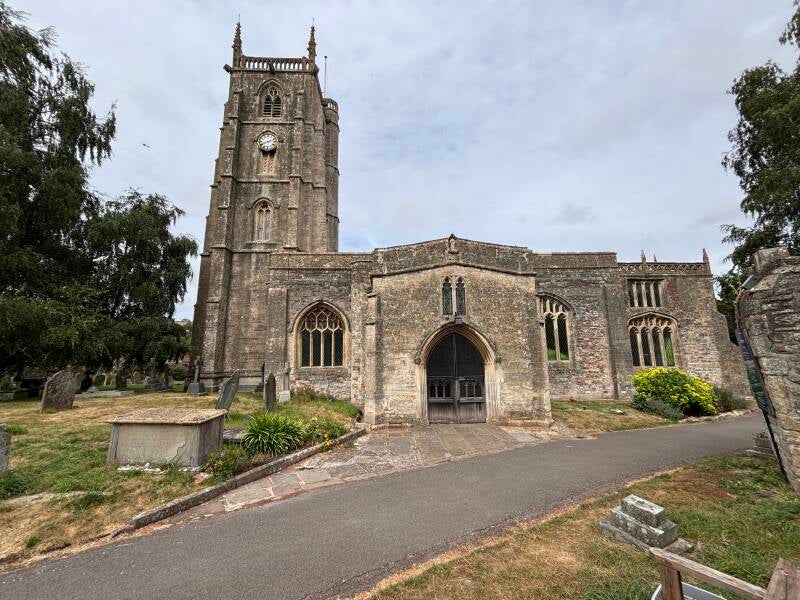
The Pelican sits at the heart of Chew Magna, but this is a walk that takes you beyond the village. Begin by stepping across the road into the medieval heart and origin of Chew Magna, where St Andrew's Church, the former Bishop's residence at Chew Court and the remarkable Old School Room reveal the first of the village's scheduled monuments and buildings.
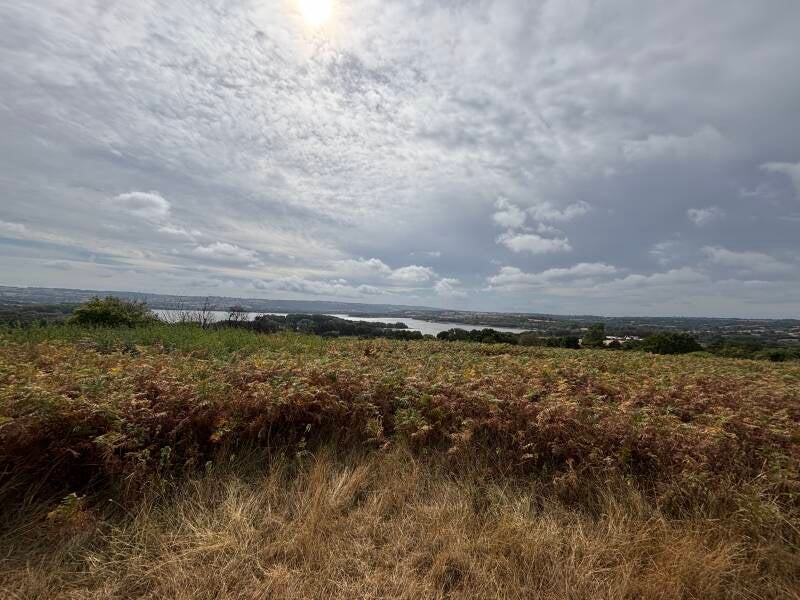
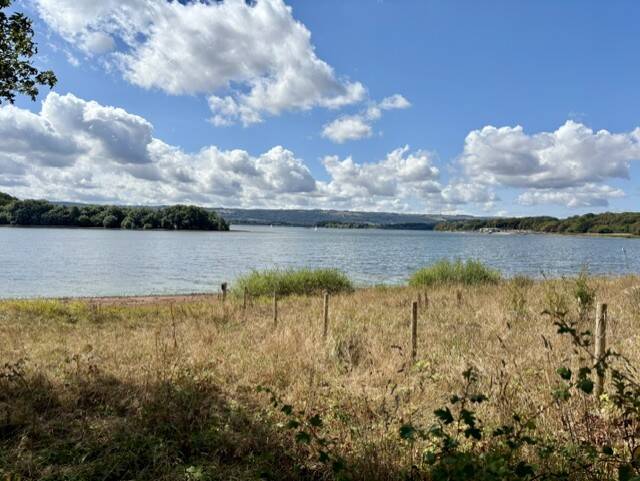
From there, the route heads into the countryside, climbing gently to Knowle Hill, one of the 'Avon 3 Peaks' offering superb views, before descending towards Chew Valley Lake. Along the lakeside you'll encounter a very different side of the Chew Valley, including refreshments at the Salt & Malt, before returning through fields to the village along the Two Rivers Way.
Back in Chew Magna, the historic buildings begin to tell their story again. More than 40 listed buildings and monuments are scattered around this remarkably compact village, and the final approach to The Pelican passes several of them.
It's a walk of changing landscapes and changing times: from the medieval village of the Bishops of Bath and Wells, through the agricultural landscape that sustained it, to today's thriving Chew Valley community.
And at the centre of it all is The Pelican — an inn with more than 400 years of history, now entering another chapter of its own.
About The Pelican, Chew Magna
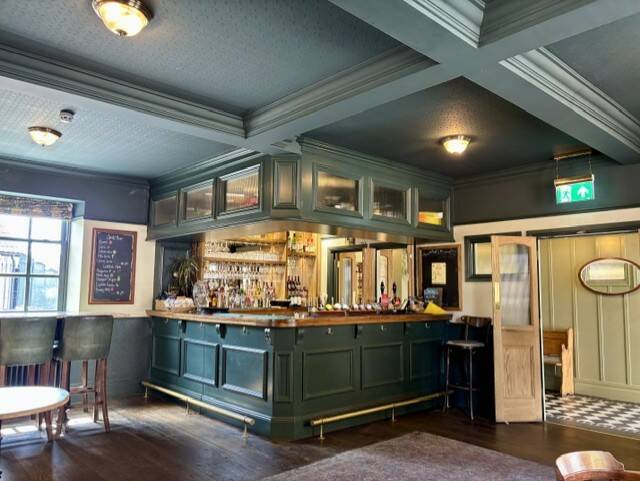
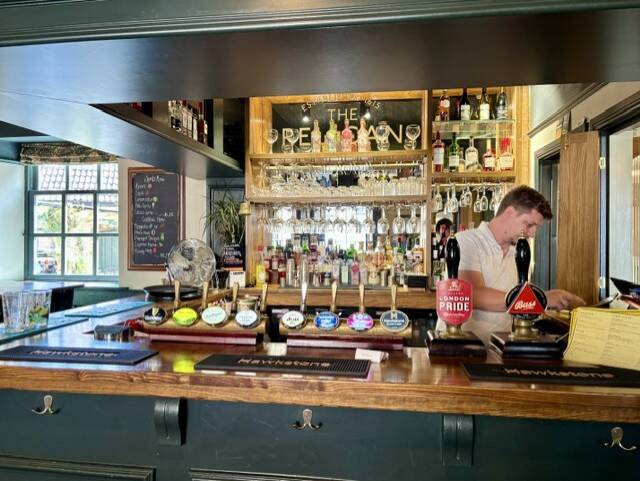
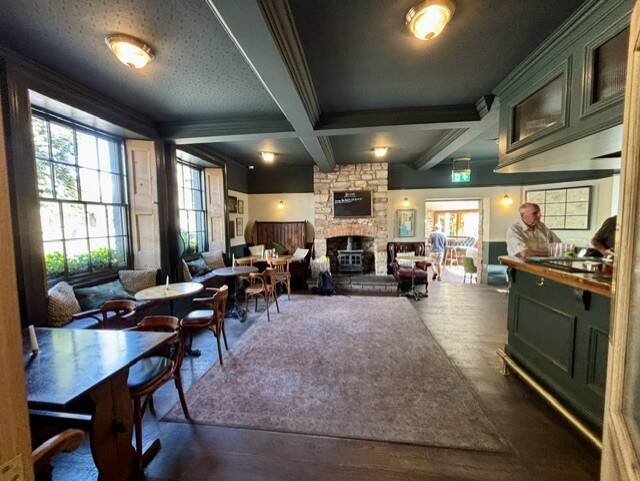
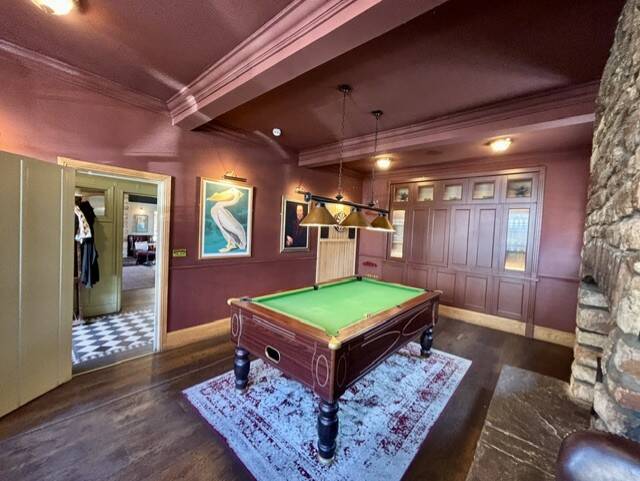

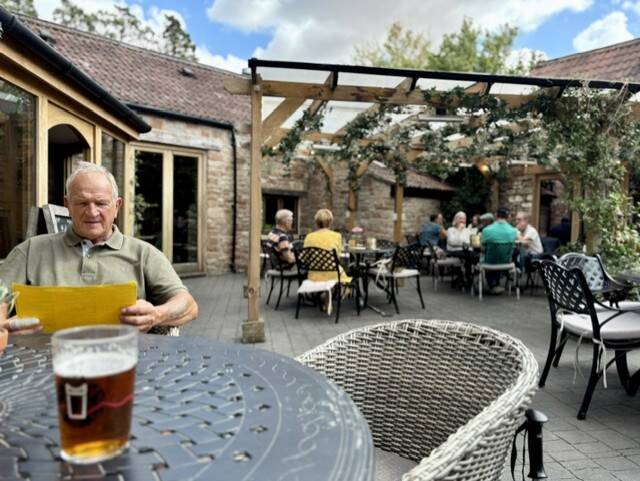


Last visit: August 2026
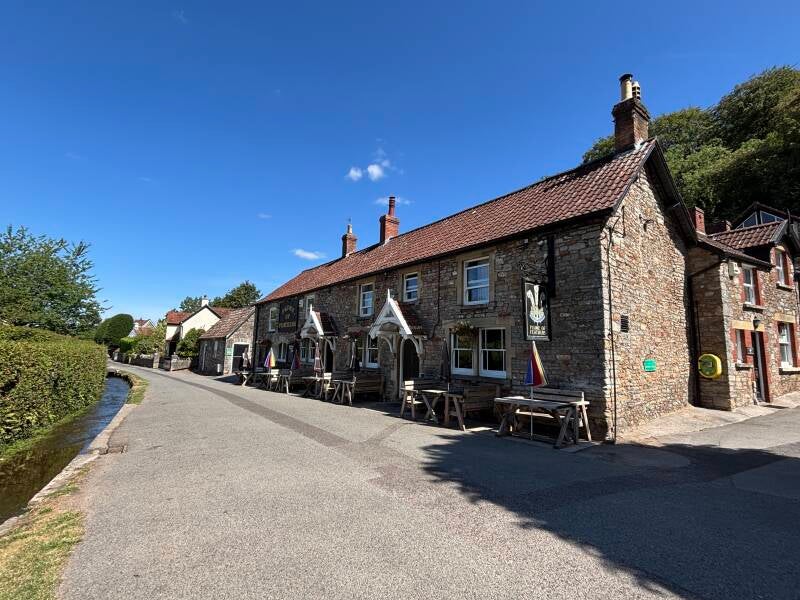
The Pelican is one of those pubs where its location is almost as important to its story as the building itself.
Step outside and look across South Parade. St Andrew's Church stands here with medieval origins stretching back to the 12th century; immediately beside it is Chew Court, surviving from the former palace of the Bishops of Bath and Wells. The Old School Room, completed around 1510 and probably built as a parish meeting room or church alehouse, completes one of the most remarkable historic clusters you'll find in a Somerset village.
And then there's The Pelican.
Records place an inn here in 1615, just as this ancient Somerset settlement was becoming known as Chew Magna rather than Bishop's Chew. The conservation history of the village records 17th-century settlement developing along Tunbridge Road to the side of the pub. The Pelican, therefore, appears at an intriguing point in the village's evolution: beyond the medieval church and Bishop's manor, but on the route towards the River Chew and Tun Bridge, where the village was beginning to expand.
What's in a name - why The Pelican?
There is an established explanation for the name. A 2004 account said that the inn was named after the ship in which Sir Francis Drake circumnavigated the globe, later renamed the Golden Hind. The same source noted that the inn sign showed a golden galleon.
I thought this a little curious - was this really the origin of the pub's name? The evidence is not quite as conclusive as the story suggests.
The pub was recorded in 1615, more than three decades after Drake's circumnavigation. The name is perfectly possible in that context, but Chew Magna has no obvious maritime connection with Drake or his voyage.
So here's another possibility.
Look across the road.
For centuries, St Andrew's Church has stood at the centre of this community - the village developed around this spot. Chew Magna was the manor of the Bishops of Bath and Wells from 1062 until 1548, and the bishop's palace stood beside the church. The pelican was a familiar Christian symbol: the Pelican in her Piety, traditionally shown wounding her own breast to feed her young with her blood, representing Christ's sacrifice and the Eucharist.
Could that have been the inspiration for a pub standing directly opposite the church, in a village so closely associated with its Bishop?
We don't know.
The Drake story may be right. My alternative theory may be nothing more than an attractive coincidence.
You decide.
Either way, The Pelican's position gives the name an intriguing extra layer — and that's perhaps exactly what you want from a 400-year-old village pub.
Four hundred years of change
The Pelican has been described as a coaching inn, and its historic character has survived remarkably well. Timber beams, exposed stonework and the substantial fireplace remain part of its character, while the building has continued to adapt to changing expectations. The 2004 account confirmed the 1615 date and described the pub as a traditional-character village inn.
In 2016 the Pelican entered the Butcombe family. The brewery acquired the freehold and subsequently invested in the pub, with plans at the time including additional accommodation and improvements to the kitchen and events space. Parish Council minutes from that year record proposals for a glazed link between the main pub and the barn.
That investment at that time has aged well. The work Butcombe undertook remains an important part of the pub's present character, and when I visited, the restoration still looked remarkably fresh and sympathetic to the building.
Now The Pelican is entering another chapter.
A New Chapter
The current team brings together two pairs of siblings who grew up together in the Chew Valley and met at school here: Josh and Holly Eggleton, and Josh and Lottie Bryant.
The Eggleton name is already firmly established in the local food scene through The Pony at Chew Valley and Salt & Malt at Chew Valley Lake. But it would be easy to overlook the equally important contribution of the Bryants.
Josh and Lottie had already spent six years running The Prince of Waterloo at nearby Winford before joining the Pelican venture. They therefore bring their own experience of running a village pub, in the same Chew Valley community in which they have grown up.
It is an interesting combination, bringing together two pairs of siblings who have known the area — and each other — for most of their lives.
When I visited, the work already completed had given the pub a fresh feel while retaining its historic character. We received a warm welcome from the team, who were clearly enthusiastic about the changes made so far and happy to talk about what comes next, including further plans for the bar area.
Accommodation is also part of the longer-term vision, although no rooms are currently available to book yet.
The Pelican has already come a long way, but it doesn't feel finished. There is a sense that this is a pub with momentum — and that another chapter is still being written.
Pub Key Information
| WEBSITE | https://thepelicanchewmagna.co.uk/ |
| ADDRESS | 10 South Parade, Chew Magna, BS40 8SL |
| PHONE | 01275 627 355 |
| WHAT3WORDS | ///manager.waged.ratty |
| PARKING | At the rear of the pub. Or street parking along Tunbridge Road to the side of the pub. Generally, limited parking in the village. |
| LOCATION | Chew Magna lies 8 miles to the south of Bristol, the first truly rural village you'll encounter. It lies on the B3130 which connects the A38 near Bristol Airport to the A37 near Pensford. |
| HANDY FOR | The Mendip Hills; Chew Valley Lake; Bristol and Bath. |
Walk Overview
The Pelican has stood at this spot since 1615 — the same year the village itself was shedding an old name. For nearly 500 years this had been Chew Episcopi, Bishop's Chew, seat of the Bishops of Bath and Wells, whose palace still stands (as Chew Court) directly opposite the pub, beside the ancient Church of St Andrew. Around 1600, as episcopal rule loosened its grip, the settlement became Chew Magna — and this walk traces that shift, from the medieval core facing the pub's front door to the newer streets that grew up around it.
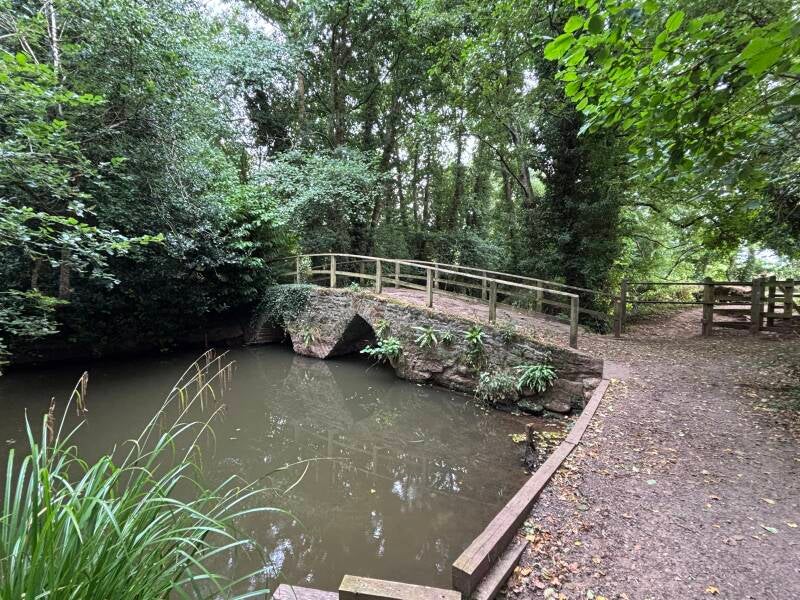
Chew Magna translates as the 'Great Settlement on the River Chew', and the river has shaped the village ever since — powering mills, supporting the wool trade that once made this a substantial market town, and feeding Chew Valley Lake, which lies just to the south and forms the turning point of this walk. You'll also cross the medieval Crickback Bridge on the way back into the village, one of more than 50 listed buildings and structures packed into Chew Magna's conservation area.
Knowle Hill is one of the ‘peaks’ of the Avon Three Peaks Circular Walk, a lot gentler than its Yorkshire cousin. And the Two Rivers Way route from Congresbury in the River Yeo valley to Keynsham on the River Avon connects with Chew Lake and also passes through Chew Magna.



Walk Key Information
| START/FINISH | The Pelican, 10 South Parade, Chew Magna, BS40 8SL |
| PARKING | At the rear of the pub. Or street parking along Tunbridge Road to the side of the pub. Generally, limited parking in the village. |
| GRID REFERENCE | ST 576 631 |
| WHAT3WORDS | ///manager.waged.ratty |
| DISTANCE/TIME | 5 miles / 8 km; approx 2.5 hours |
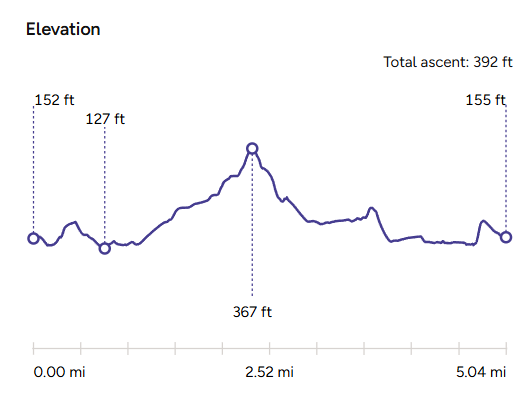
| ASCENT | 390 feet / 120 metres |
| PATHS/TERRAIN | Footpaths, farm tracks and fields. Some walking on quiet lanes, and tarmac paths around Chew Lake. Plenty of footpath kissing gates. |
| DIFFICULTY | Easy. Short up and down hill section to a viewpoint on Knowle Hill. |
| PUBLIC TRANSPORT | Bus service runs to the village from Bristol centre. |
| TOILETS | Public toilets just beyond half way point at Chew Lake picnic areas. |
| OTHER PUBS TO VISIT | The walk passes Queens in Chew Magna (opens 4pm); Druids Arms at Stanton Drew; Carpenters Arms at Stanton Wick. |
Walk Instructions: Choose what works for you
There are multiple ways to consume the route described below.
- Either follow the online Walk Directions below, or download and print a copy of the route.
- If you have the OS Maps App, you can follow a saved route directly in the OS App.
- Or download the GPX file for use with your chosen GPS-based tracker App, like Strava. Upload the file when you Create a New Route in the App.
Walk Directions

- Cross the road from The Pelican towards the Church of Saint Andrew. At the entrance, The Old School Room on the right, along with the Church and the adjoining Chew Court, was at the centre of the medieval village of Chew Magna and dates back to the early 1500’s. Pass through into the Churchyard, and continue, to pass the front door and then head to a large yew tree to exit the Churchyard via the rear gate.
- The building behind the wall to your right is the old Chew Court, once the occasional home to the Bishop of Bath and Wells, and then a court house. To the left is Chew Magna’s Village Hall. Turn right to the side of the Village Hall towards Queens.
- Follow the lane as it becomes a path curving left in front of the Queens pub to cross over a stream. At the road, turn right on North Chew Terrace and follow the pavement up to the junction.
- Here, go straight across a village road onto a path called Hanny’s Path that runs to the side of the house called Hanny’s Batch in front of you. Follow this woodland path as it curves 90° to the right and starts to run downhill.
- Reach the B3130. Take care, this is a busy road in and out of the village. Turn left in front of the house called Copper Beech - you’re aiming for a junction to the left on the other side of the road about 25 metres along, called Sandy Lane.
- Continue along Sandy Lane. Cross a small, stone bridge and follow the track around to the right, eventually passing a stone cottage. Stay on the lane as it curves around to the left, then continue on the lane. You’ll see a metal farm gate in front of you.
- Immediately before it, look for a kissing gate on your right into the field (which may have livestock in it). You’ll see a newly constructed footbridge over a stream ahead of you – this area will be waterlogged in the wetter months no doubt. Reach a kissing gate in the hedge on the other side of the field.
- In the next field, the public right of way on OS Maps runs diagonally uphill across the field. There was no sign of an obvious route when I did it, so use the right-hand hedge boundary to proceed gently uphill. Two thirds of the way up the field a kissing gate in the hedge brings another path into this field. And now an obvious route across the field to the left cuts the corner to metal farm gates in the opposite corner.
- There’s a kissing gate onto a lane here. On the lane, turn left and proceed past the metal double gates of Acorn Barn. Around 15 metres beyond the gates, look for a well-hidden path to the right through the hedge. It climbs up to another metal kissing gate….where the footpath sign is located!
- The path here runs alongside a new stretch of fencing to the left. I believe the fenced off area is used for exercising dogs. Continue gently uphill to a kissing gate into a field. From here, a distinct path across the field takes you to metal farm gates on the other side, in the direction of large farm barns. Above them in the distance is Knowle Hill, where we’re heading.
- Exit the field to the right of the first barn to join a road. It’s not a busy road, but take care. Turn left and make your way to a lane called Knowle Hill on your right. Follow this tarmac road past a few cottages. It starts to curve around and climb uphill.
- You soon reach a right-hand turn, with a ‘No Through Road’ which includes the message that this is a Private Drive, and there’s No access to the Lake. The sign also includes a small sticker to mark Three Peaks path route. Pass some cottages and then some stone markers on the grass verge on the left. Just as the lane starts to bear left downhill, leave the lane to your immediate left onto a grass path through the ferns. It’s not signposted.
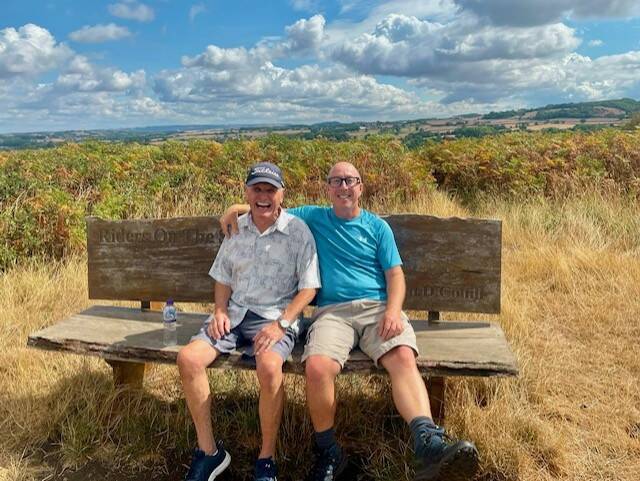
- Aim for a small cluster of small trees, where the uphill route to Knowle Hill begins. The short route is up and back on the same path through the ferns – it’s worth it for the 360-degree views.
- On your way back down, when you arrive back at this cluster of trees, turn left now and within a few metres then turn right. You’re now aiming for a tall tree in the hedge line ahead that seems to be leaning distinctly to the left. As you approach the hedge, you’ll reach a ‘cross roads’ of footpaths. Turn left, again on a grassy track through the ferns, which soon starts downhill out of the fern area and into woodland.
- Reach a tarmac lane – you’re now further along the lane called Knowle Hill that we left earlier – and turn right. As you stand admiring the impressive Knowle House, proceed by taking the driveway down to Old Granary & Denny Barn immediately to the left. The footpath is in the lower left-hand corner between the barns, across their frontage!
- Continue along a fence on the other side of the barns and follow this distinct route into a field, and on to a footpath gate to a main road. This is the Chew Stoke to Bishop Sutton road that runs along Chew Lake. We’re going to walk through the Lake’s picnic areas to exit higher up this road in the Chew Stoke direction.
- At the road, turn right to follow the grass verge until the Chew Lake picnic area on the other side. Cross here, and head to the right, following the drive past the toilets. In the parking area, bear right and follow the footpath sign for Woodford Lodge.
- The tarmac footpath from here connects with the next picnic area. There are toilets here too, but also refreshments from ‘Salt & Malt’ – a lovely restaurant, and take away coffees, ice cream, pizzas and fish & chips. Follow the road to the exit and cross over carefully. Turn left on the grass verge towards Denny Lane.
- Look for the footpath sign into woodland where Denny Lane meets the main road. Cross Denny Lane to take the path up through the woods, which opens out to grassland – a permissive path of Bristol Water. Join the tarmac driveway and turn left downhill.
- Just before a bridge with metal railings, follow a Public Footpath sign to the right into woodland, and continue straight ahead to cross a small footbridge to start the Two Rivers Way route back to Chew Magna. The distinct route is a succession of fields, gates and footbridges all the way back. Keep an eye out on your left for Chota Castle on the hillside, a magnificent family house which was built as a folly castle around 1850.
- You’ll know you’ve reached the final gate of this section when you meet a ‘mighty redwood’, a giant Sequoia tree! Bear right, then after a few metres, turn left over a bridge to then cross the ancient Crickback Bridge, which is Grade II Listed. On the other side, go right to follow the track for the last uphill back into the village.
- There are more than 50 listed buildings and monuments in Chew Magna, with a number of them visible on the route back towards The Pelican. Look for The Beeches on your left, and on the right Holly House and Acacia House.
Additional Notes
From Bishop’s Chew to Chew Magna - an ancient village that refused to stand still
It is easy to look at Chew Magna today and see a particularly attractive Somerset village: old stone buildings lining the main village street, good pubs and restaurants, the River Chew nearby and the Mendip countryside beyond.
But Chew Magna was once much more important than its size suggests.
The story begins with the River Chew and the fertile land around it. There is evidence of settlement going back thousands of years, while the village itself can trace its importance to Saxon times. By the Middle Ages it had become a thriving woollen centre, with the river providing power for mills and the surrounding farmland supporting the community.
In 1062 the manor of Chew was granted to the Bishop of Wells. For almost 500 years, until 1548, it remained in the hands of the Bishops of Bath and Wells. The settlement became known as Chew Episcopi — Bishop's Chew — and the Bishops built their palace beside the church of St Andrew.
Part of that palace survives today as Chew Court, largely hidden behind the high stone walls running the length of the Church yard.
The church itself grew into an imposing building, with medieval origins and later additions reflecting the importance of the community. The Old School Room, completed around 1510, provides another remarkable survival from this period. It was probably built as a parish meeting room or church alehouse, and its great timber roof remains largely intact, one of the most impressive in the UK.
This was not a sleepy medieval village.
Chew Magna had market and borough status, and by the 16th century the wool trade had made it a substantial local centre. When John Leland passed through around 1540, he described Chew as a "pretty clothing town" with a fine church and the Bishop's manor beside it.
Then the Bishops left.
The manor passed out of episcopal hands in the mid-16th century, and around 1600 the settlement became known as Chew Magna — literally translated as the greater or more important of the several communities along the River Chew.
The timing is fascinating.
The medieval church and Bishop's manor remained at the heart of the village, but Chew Magna was beginning to grow beyond that old centre.
Tun Bridge, probably dating from the late 15th century, already carried the route across the River Chew. In 1615, an inn was recorded at The Pelican. The conservation history of the village then identifies further settlement along Tunbridge Road during that 17th century.
The village was expanding.
The old Bishop's Chew was becoming Chew Magna.
And the river remained central to its story.
A village beside the water
The River Chew may now appear as a gentle thread through an attractive village, but it shaped everyday life for centuries.
It powered mills, defined the valley and periodically demonstrated that it could be considerably less gentle.
Tun Bridge is an extraordinary survivor from this history. Probably built in the late 15th century, it spans about 20 metres with three pointed arches and substantial cutwaters. Today it is both Grade II listed and a Scheduled Monument.
The raised pavement leading back towards the village is another reminder of the relationship between Chew Magna and its river. The present raised pavement dates from the early 19th century and runs for around 200 metres, with sandstone walls approximately a metre high.
It is easy to walk along it without giving it a second thought.
But once you know why it is there, the landscape begins to look different.
A village that keeps evolving
The wool trade eventually declined, the mills changed or disappeared, and Chew Magna's role shifted. But the village remained the commercial and social centre of the Chew Valley, and its historic buildings have survived remarkably well.
There are 50 listed buildings and structures within the village's conservation area — ranging from the Grade I St Andrew's Church and the Grade II* Old School Room, Chew Court and Manor House, to more modest buildings such as The Sycamores, The Rookery and The Beeches. See how many you can find as you explore beyond our walking route. Look out too for Harford House, Dumper's Farmhouse and the medieval Tun Bridge.
Chew Magna was designated a conservation area in 1978, with the area subsequently extended and reviewed. The purpose isn't to freeze the village in time, but to preserve or enhance the character that makes it special.
And it is clearly a village that continues to evolve.
In 2025, the wider Chew Valley was named the Sunday Times' Best Place to Live in the South West, with judges praising its combination of landscape, community and forward-thinking rural businesses. Chew Magna was singled out as the valley's village with the greatest range of amenities.
Perhaps that is the most fitting conclusion to the story.
Chew Magna has moved from Bishop's Chew, through wool, mills, markets and farming, to become a thriving modern community. The buildings have survived because the village has continued to find new uses for them; the conservation designation helps ensure that the character of the place isn't lost as it changes.
So when you walk back towards The Pelican, take your time. Look up, look down the side streets and notice the buildings around you. They aren't simply an attractive backdrop to the walk — together, they are the record of Chew Magna's long evolution.
And hopefully, with the village's history now properly valued and protected, we'll still be able to walk through it and enjoy that story for generations to come.
Other Pubs to try in Somerset
Beacon Batch, Burrington Combe & Rickford – Layers of Mendip History
6.5 miles
