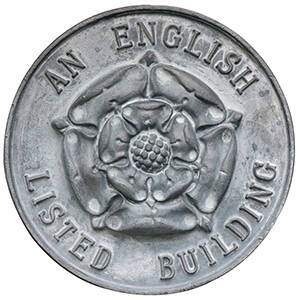
Walk around any old village — such as Sherston & Easton Grey on today's walk — and you’ll see those little plaques and guidebook notes announcing that a building is “Grade II” or “Grade II*”, as if everyone left school fluent in heritage jargon. Most of us nod politely and move on, none the wiser.
I decided to find out what it's all about.
Listing Is Basically Britain Saying:
“This building matters. Please don’t wreck it.”
And that’s the essence of it.
A listed building has been placed on the National Heritage List because it’s considered historically or architecturally important. The aim is not necessarily to freeze it in time, but to prevent careless alteration or demolition.
England uses three main grades:
Grade I
The heavy hitters.
Your cathedrals, your castles, extraordinary manor houses and ancient churches. Only a small percentage of listed buildings fall into this category.
Grade II*
The middle ground.
Particularly important buildings with more than special interest.
Grade II
The vast majority.
This is where many pubs, cottages, farmhouses and village buildings sit. Important enough to preserve, even if they’re not nationally famous.
And this is where confusion often begins.
“Listed” Doesn’t Necessarily Mean Grand
- A humble stone pub can be listed.
- A terrace of workers’ cottages can be listed.
- An old telephone box can be listed.
Because listing isn’t only about beauty. It can also reflect rarity, craftsmanship, survival, historic importance, or being a particularly good example of everyday architecture.
It's Britain's way of preserving traces of ordinary life..
The Strange Bit: It’s Not Always Logical
This is where the system becomes wonderfully British.
Two near-identical buildings can stand side by side — one listed, one not.
A medieval pub may struggle to replace a window while a 1960s concrete structure receives protection because it represents an important architectural movement.
Meanwhile, genuinely beautiful places disappear because nobody protected them in time.
Listing is part scholarship, part judgement call, part timing.
So What Can’t Owners Do?
Contrary to popular belief, owners can alter listed buildings. But they usually need consent for changes affecting the character of the structure.
That can include:
- windows,
- roofing materials,
- extensions,
- fireplaces,
- internal walls,
- signage,
- and sometimes even relatively minor details.
The result is a constant tug-of-war between preservation and practicality.
Romantic from the outside. Expensive from the inside.
The Uncomfortable Reality
Of course, preservation has costs.
Repairs become expensive. Bureaucracy can become exhausting. Villages risk becoming picturesque museums rather than functioning communities.
But remove protection entirely and many places would quickly lose the very character people travel to experience.
The balance is imperfect.
Very British I suppose.