

The Coach & Horses, Longborough
The Walk: Longborough and Sezincote – looking beyond the Cotswolds Postcard, 5.1 miles
Try this Pub & Walk
This Cotswold walk give you exactly what you might expect: golden stone villages, rolling countryside and a handsome country house or two, but there's rather more going on beneath this particular postcard.
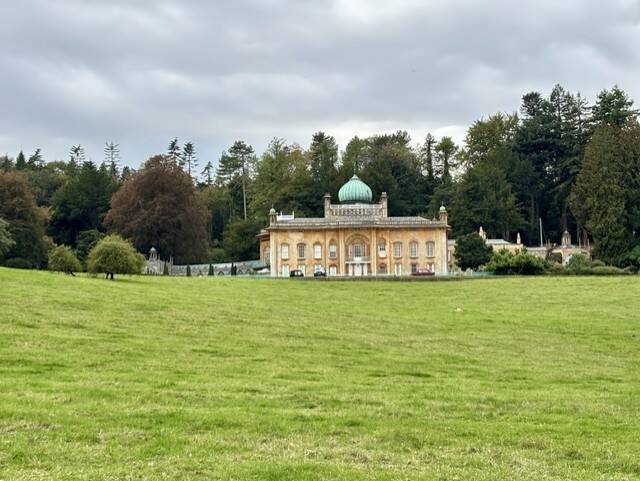
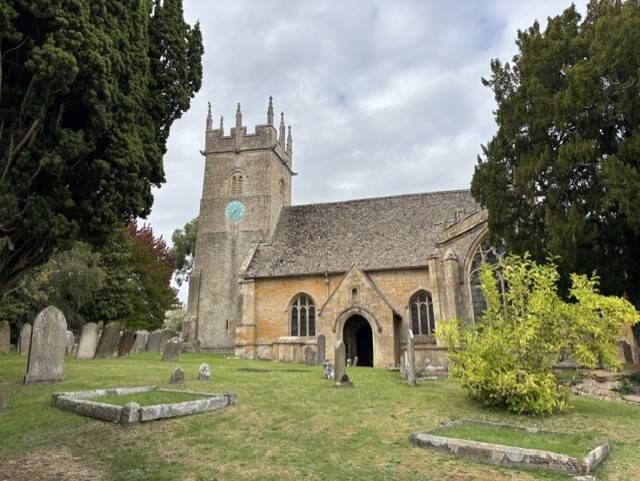
Longborough sits quietly away from the main Cotswold tourist circuit, with the Coach & Horses overlooking the green and the tower of St James' Church rising beyond it. Sezincote provides the spectacular visual surprise as the walk crosses the surrounding estate – an extraordinary Indian-inspired house that seems almost to have wandered into the Cotswolds from somewhere entirely different.
But it was St James' Church that really changed my impression of the place.
I'd returned to Longborough partly because of memories of spending the summer here as a schoolboy in 1982, when a small group of us from West Wales worked on a strawberry farm and discovered the wider world over a few weeks of hard work, camping and the occasional pint at the Coach & Horses. More than forty years later, I wanted to see whether the pub – and the village – still felt the same.
The pub certainly didn't let me down. And the church revealed a history I hadn't expected: medieval landowners, Hailes Abbey, the Leigh family and eventually the Cockerells whose East India Company fortunes created Sezincote. Suddenly the extraordinary house glimpsed from the fields wasn't simply an architectural curiosity; it was another chapter in the story of Longborough.
That's one of the things I've increasingly discovered while walking this year. I've visited more than 50 village churches, and they rarely fail to reveal something that isn't apparent from the road outside. A church can turn a pretty village into a place with a story.
This walk takes you from Longborough across the fields to Bourton-on-the-Hill, passing Sezincote on the way, before returning by a different and more varied route. There are long-distance paths, open farmland, streams, woodland, cattle fields and some excellent views, with plenty to discover if you resist the temptation simply to follow the obvious Cotswold postcard.
And at the end, there's a very good village pub waiting on the green.
Which, as it turns out, is exactly how Longborough has been doing things for rather a long time.
About The Pub, Village


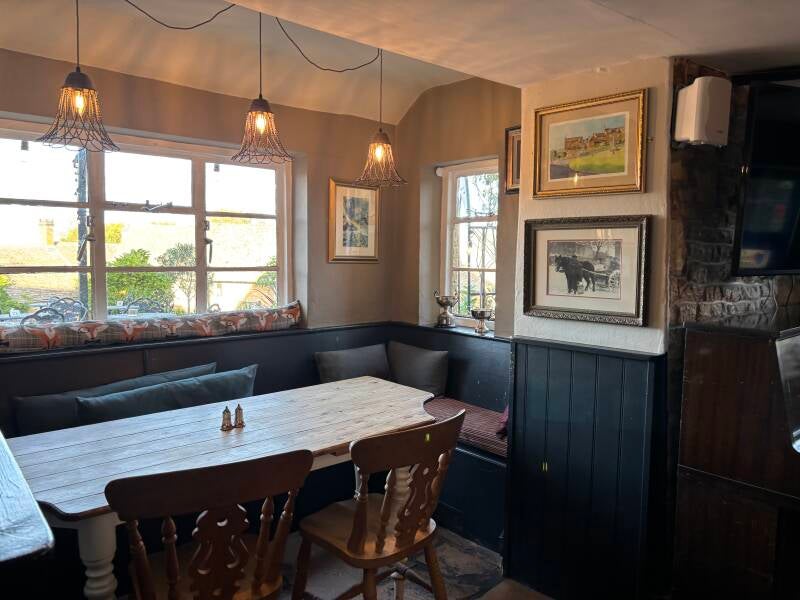
Last visit: September 2026
The Coach & Horses is a pub with a little personal history for me, which is one of the reasons I wanted to include it in Pubs Worth The Walk.
In 1982, I spent part of the summer working on a strawberry farm in Longborough, a pick-your-own business that has sadly now disappeared. A small group of us from Cardigan Secondary School in West Wales had ventured beyond our rather idyllic childhood home for the first time, camping in the Cotswolds, working hard, meeting people from all sorts of backgrounds and nationalities – and discovering the important role that a few pints could play at the end of a working week. The Coach & Horses was our local, as was the (now closed) Coach & Horses in Ganborough close by, which confused us all at the time.
I'd never been back to this part of the Cotswolds in the intervening years, so including the pub in Pubs Worth The Walk was partly a return to unfinished business. I remembered that summer with enormous affection and, naturally, hoped the pub wouldn't let me down after all these years.
Thankfully, it didn't.
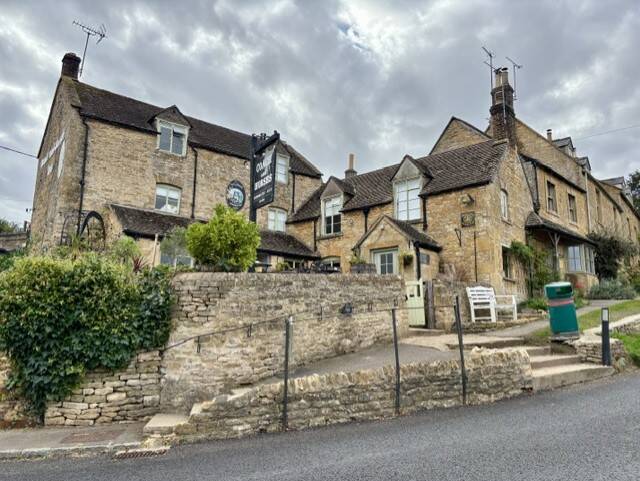
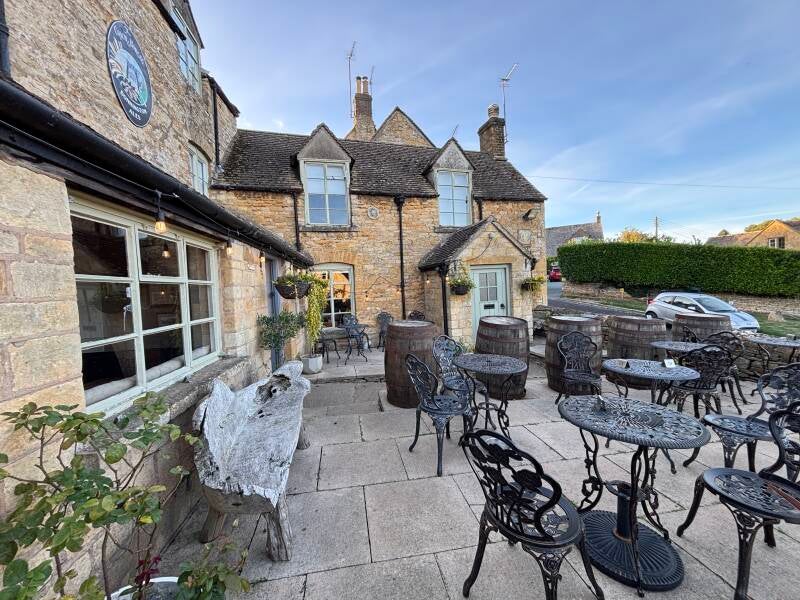
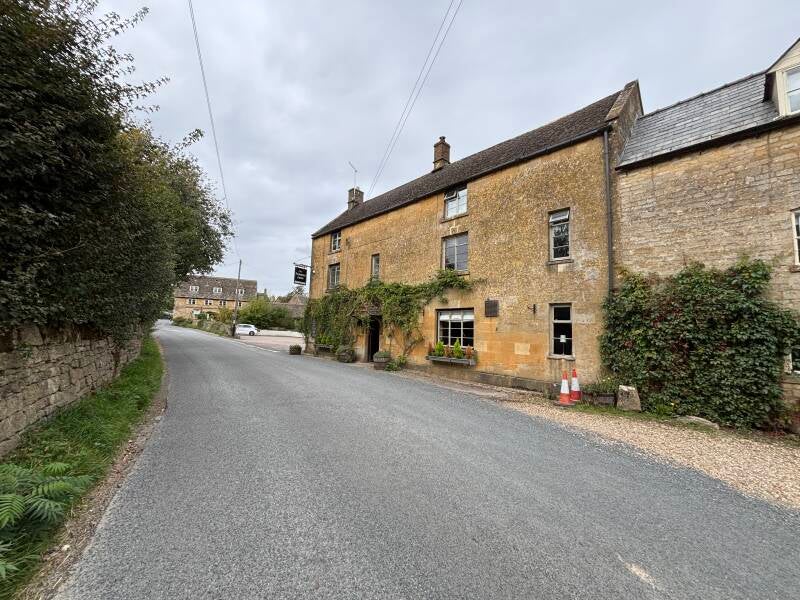
The Coach & Horses sits in an elevated position at the top of Longborough, at the end of a row of classic Cotswold stone cottages and overlooking the village green, with the tower of St James' Church beyond. It's an exceptionally attractive setting, and the outside seating makes the most of it. I arrived on a warm early-autumn afternoon and could have happily stayed there for rather longer than I did.
There is a particularly nice continuity to the pub's history. When Connie Emm took over the Coach & Horses in 1968, she and her husband had already spent years in the pub trade. Connie went on to spend around forty years behind this bar, eventually retiring in 2009. So, when I was sitting here drinking in the summer of 1982, Connie was almost certainly the person serving me.
By 2001 she had become the longest-serving tenant in Donnington Brewery's estate, and a local newspaper recorded that she had built the Coach & Horses a reputation as a drinking pub. She specifically said that she had never wanted to turn it into a gastro pub: it was, in her words, an old, original village pub. She also claimed that her most loyal regular was a ghost. Apparently the strange goings-on had begun when glasses hanging in the pub started swinging by themselves.
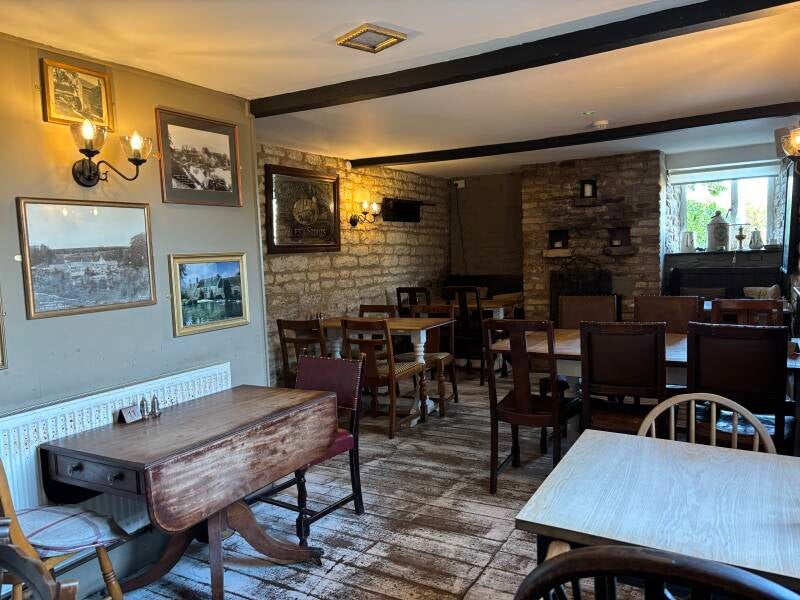
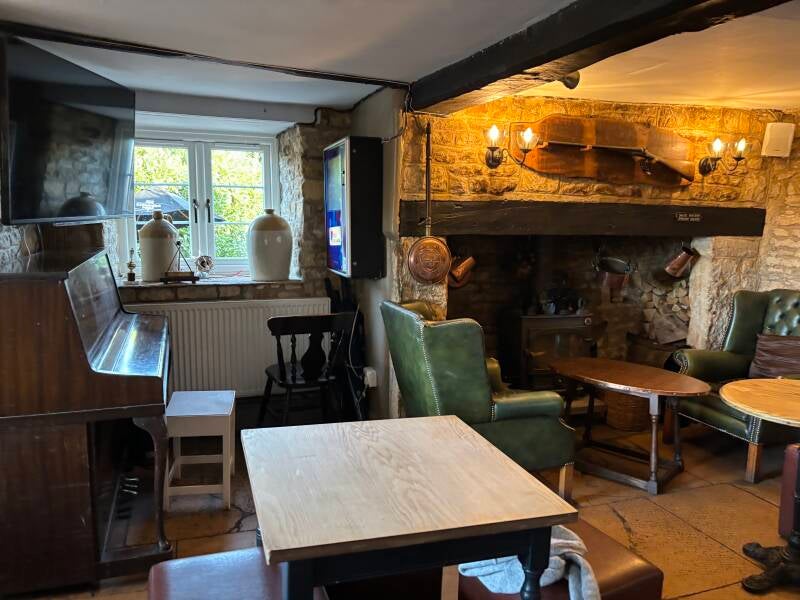
That drinking-pub tradition still feels apparent today. There is a proper bar, with room to sit and drink as well as dine, and the atmosphere when I visited was comfortably local. Workers, young families, friends and older residents shared the space, rather than the pub feeling as though it existed principally for visitors. Recent pub reviews similarly describe it as a traditional, cosy village pub with friendly locals and staff.
I'm particularly pleased that the Longborough pub remains a Donnington house. I've developed something of a weakness for Donnington's Best Bitter while exploring this part of the Cotswolds, so finding it waiting for me at the end of the walk was hardly a hardship. The brewery is only a few miles away and still supplies the pub with its own beers.
I didn't eat on this occasion, so I won't pretend to review the food. The menu looked excellent, though, and the pub now offers considerably more food than Connie's sandwiches and Ploughman's lunches of old. There are also two en-suite rooms upstairs, so it remains possible to make the Coach & Horses a base rather than simply a stop for a pint.
The pub has even had a small brush with television fame. In 2015 it provided a location for BBC's Father Brown. For filming, the pub was temporarily renamed The Brewers' Daughter and its interior was altered to give it a 1950s appearance.
Yet none of that has turned the Coach & Horses into a tourist attraction in the way that some Cotswold pubs have become. In fact, Connie's description of the pub's trade in 2001 is rather revealing. She said that Longborough had few tourist attractions and that the pub depended on local people and ramblers using the surrounding footpaths.
Twenty-five years later, that still feels remarkably accurate.
Longborough has the extraordinary distinction of being home to Longborough Festival Opera, which has grown from its beginnings in 1991 into an internationally recognised opera company with a purpose-built auditorium. It has certainly put the village on the cultural map, but it hasn't turned Longborough into another Cotswold honeypot. The village still feels primarily like a place where people live rather than somewhere arranged for visitors to consume.
That was reflected in the pub when I visited. It felt friendly, cosy and genuinely local. There are plenty of different seating areas and a larger dining space, but this is still a pub in which you can simply sit at the bar and have a drink.
The setting helps enormously. From the garden, the village green stretches away below you and St James' Church rises beyond it. I had no idea when I arrived just how remarkable the story behind that church would prove to be - read more in the Notes.
After more than forty years, I was pleased to discover that the Coach & Horses hadn't let me down. If anything, coming back to it made that summer of 1982 feel rather closer than I had expected.
Pub Key Information
| WEBSITE | https://www.coachandhorseslongborough.co.uk/ |
| ADDRESS | Coach and Horses, Longborough, near Moreton-in-Marsh, Gloucestershire, GL56 0QU |
| PHONE | 01451 830325 |
| WHAT3WORDS | ///hoops.feelers.commands |
| PARKING | No car parking at the pub. Street parking is the only option in nearby roads in the village. |
| LOCATION | Off the A429 to the north of Stow-on-the-Wold and to the south of Moreton-in-Marsh. |
| HANDY FOR | Sezincote |
Walk Overview
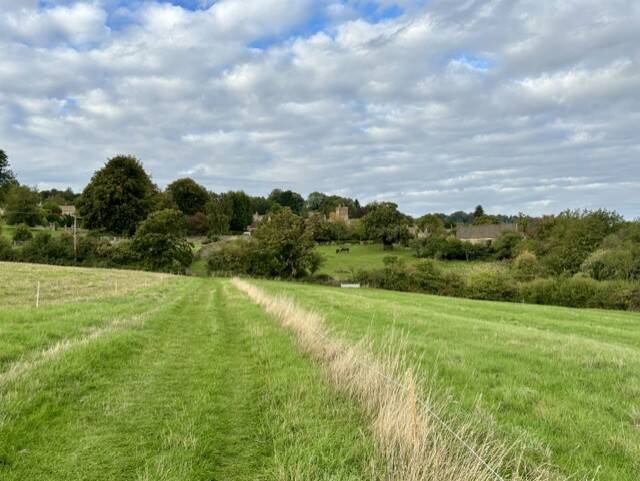
This is a wonderfully varied Cotswold walk, beginning and ending in the village of Longborough and taking a largely rural route to Bourton-on-the-Hill. The outward journey follows the Heart of England Way through the Sezincote estate, with well-maintained paths, tracks and field paths providing a particularly pleasant way of experiencing this corner of the Cotswolds.
The landscape is classic Cotswold countryside, but Sezincote provides an unexpected twist. I've included more about Sezincote in the Notes.
Bourton-on-the-Hill provides the destination for the outward leg. Take time to explore the village rather than simply turning around at the pub!
The return journey is rather different. Rather than retracing the outward route, the walk takes a more indirect course across fields and around field boundaries, eventually joining the Monarch's Way. There are a succession of gates, stiles, footbridges, small streams and hedgerows, with the route occasionally weaving around fields occupied by cattle. It is a little more adventurous than the straightforward outward leg, but the waymarkers and the distinctive landscape features described in the directions make it perfectly manageable.
Eventually the tower of St James' Church comes into view and provides a reassuring landmark for the final approach to Longborough. If the church is open, make time to go inside. It is one of those unexpected discoveries that can change your impression of a village, and I've given it a little more attention in the Notes.

Walk Key Information
| START/FINISH | The Coach & Horses, Longborough, GL56 0QU |
| PARKING | No parking at the pub. Street parking in the village. |
| GRID REFERENCE | SP 179 296 |
| WHAT3WORDS | ///hoops.feelers.commands |
| DISTANCE/TIME | 5.1 miles / 8.2 km; approx 2.5 hours |
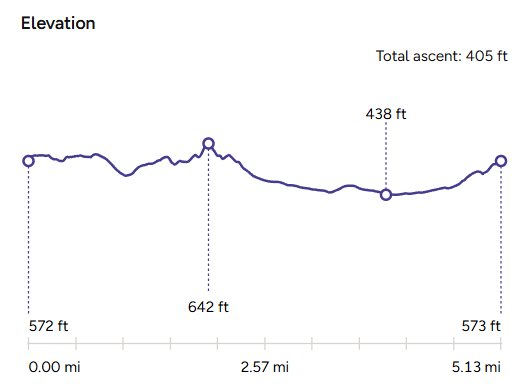
| ASCENT | 570 feet / 175 metres |
| PATHS/TERRAIN | Well defined footpaths, field paths and lanes. Numerous stiles and gates. |
| DIFFICULTY | Easy. |
| PUBLIC TRANSPORT | Infrequent bus services to/from Moreton-in-Marsh. |
| TOILETS | At Coach & Horses; also available at the churches of Longborough and Bourton-on-the-Hill |
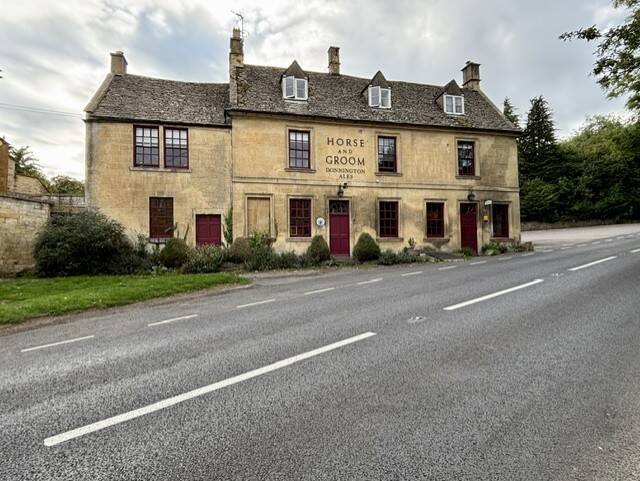
| OTHER PUBS TO VISIT | Horse & Groom, Bourton-on-the-Hill; and Fox Inn in Broadwell. Both Stow and Morton-in-Marsh are also nearby. |
Walk Instructions: Choose what works for you
There are multiple ways to consume the route described below.
- Either follow the online Walk Directions below, or download and print a copy of the route.
- If you have the OS Maps App, you can follow a saved route directly in the OS App.
- Or download the GPX file for use with your chosen GPS-based tracker App, like Strava. Upload the file when you Create a New Route in the App.
Walk Directions
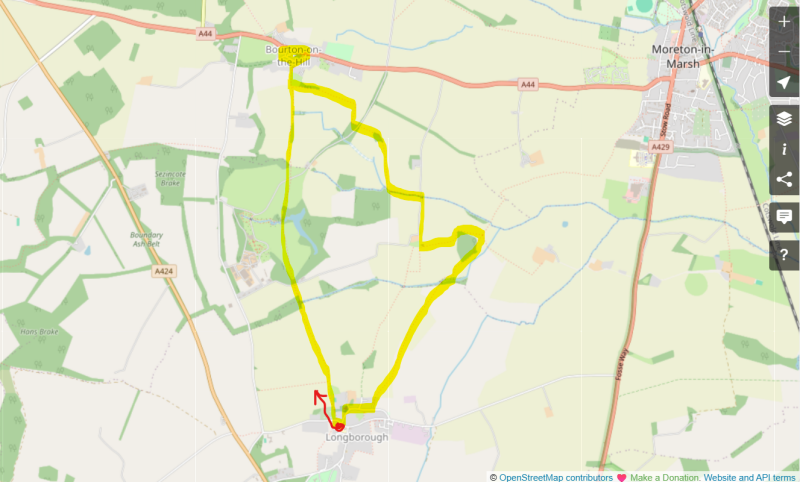
- Passing the Coach and Horses on your left, make your way uphill along the road through the village. Within a short distance, take turn right to follow a well-marked a public footpath sign onto the ‘Heart of England Way’.
- This path is well established, and well signposted all the way to Bourton-on-the-Hill, almost in a straight line. It covers some excellently prepared footpaths, tracks, and field paths, mostly managed by the Sezincote estate.
- As well as the opportunity to explore the classic hillside Cotswold village of Bourton-on-the-Hill. The walk passes close to Sezincote and there are some particularly good views of the house from the fields. It is an unexpected sight in the middle of the Cotswolds: an Indian-style country house, complete with domes, minarets and elaborate detailing, sitting rather incongruously – and wonderfully – amongst the Gloucestershire countryside. The design here was a forerunner to the Brighton Pavilion - an entirely different dimension from the usual village-and-stone cottage story. See Notes for added detail.
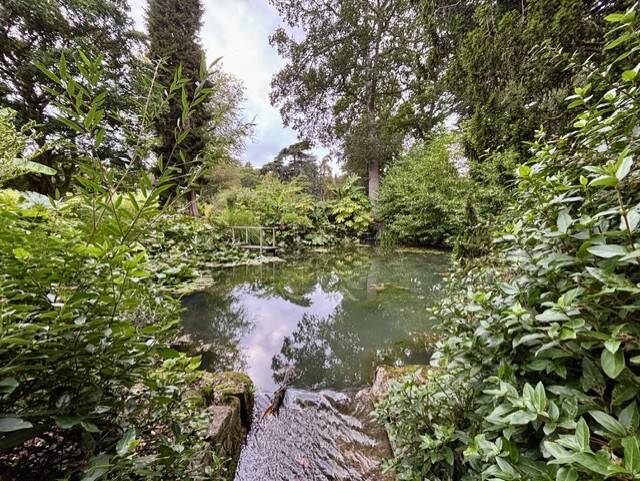
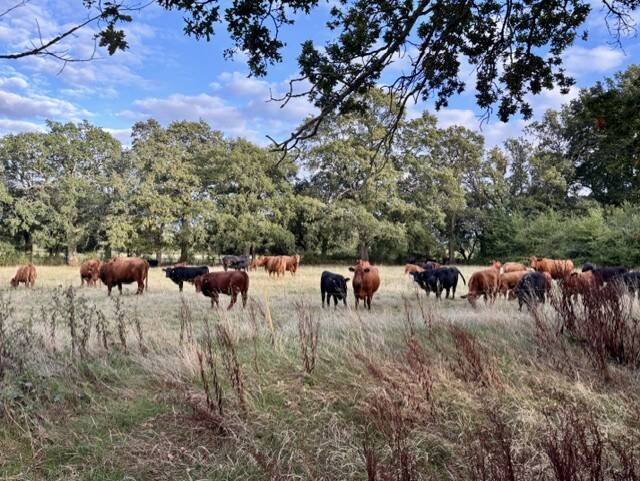
- Cross the stream and ornamental ponds of Sezincote. There are four farms in the estate, and you’ll see plenty of cattle in the fields around you on the walk. Thankfully, the footpath route keeps walker and cow apart.
- Pass through a series of wooden footpath gates, and soon Bourton-on-the-Hill will become visible in front of you. A final wooden gate marks the departure from fields as you pass between stones walls and then the houses of the village. Take note of this moment – the return path drops you down this field to a gate in the corner, rather than back across it the way you came.
- Take time to make a circuit of Bourton-on-the-Hill before returning to Longborough. The steep main road, St Lawrence's Church, the former school and the Tithe Barn give the village a character quite different from its better-known Cotswold neighbours. The Horse & Groom stands guard over the village at the top of the main road.
- Return to the wooden gate described in #5. As you pass through, rather than taking the footpath across the field back in the direction of Longborough, here turn left to head past a metal water trough slightly downhill into the corner of the field.
- Continue straight ahead along field tracks from here, passing through a number of fields and associated wooden gates. Pass through a final wooden gate – where it’s clear that you can no longer continue straight ahead - and here seek out a path on your right, which is somewhat hidden, but the giant oak tree that marks the start of a hedge row is your guide. This is the start of a zig zag, somewhat indirect route back to Longborough, eventually via the Monarch’s Way.
- As you begin along this path, note that the footpaths from here run beside or are intended to help avoid fields of cattle, so they navigate around field boundaries, over small drainage ditches and through hedgerows and across or along driveways. Follow this initial path section as it winds through the hedgerow, straight ahead and then to the left, and then cross straight over the driveway.
- Follow the public footpath over a stile and continue around the field within the specially fenced off area. Cross the footbridge into another short section of woodland, with a small stream running to your left, then continue to zigzag around the fields, crossing a little bridge along the way.
- After one final stile, arrive on the driveway of Upper Ray Farm. Turn right and cross the cattle grid. Follow the footpath signs straight ahead, passing the farm on your right, and continuing towards some barns ahead.
- Once beyond the barns, note that the goal is the copse of woodland to your left, with the footpath required passing around the copse on its left-hand side. To get there from beyond the barns, depending on the cattle situation, there are a couple of footpath routes through the fields heading left towards the woods. There are signs to support either route.
- As you reach the copse, proceed to its left-hand side. Ignore a gated entrance into the woods to continue around the side of the copse, following its fence line to the right. Up ahead you’ll soon see footpath markers, and as you continue along the fence line, you’ll see signs for Longborough (on the Monarch’s Way).
- The church of St James in Longborough becomes visible - use that as the guide for the route from here.
- After a succession of fields, stiles, gates and footbridges, and getting close to the village now, pass through a metal gate into an arable field. The distinct path proceeds across the field towards the houses of the village.
- Exit the field via a gate, onto a path between the houses. At the road, turn right towards the marvellous Church of St James. Please take time to visit the Church – I’ve included some notes about it below.
- Follow the road past the church back to the village green and The Coach & Horses.
Additional Notes
SEZINCOTE – LITTLE INDIA IN THE COTSWOLDS
The walk passes through the Sezincote estate, and there are some particularly good views of the house from the fields below. It is an unexpected sight in the middle of the Cotswolds: an Indian-style country house, complete with domes, minarets and elaborate detailing, sitting rather incongruously – and wonderfully – amongst the Gloucestershire countryside.
Sezincote was created at the beginning of the 19th century by the Cockerell family, whose fortunes were made through the East India Company. Architect Samuel Pepys Cockerell designed the house for his brother Charles, drawing heavily on Mughal and Hindu architectural influences. The result is one of the most unusual country houses in England, and its appearance subsequently influenced the Prince Regent's development of the Royal Pavilion at Brighton.
There is a pleasing local connection here too. The Cockerells were important benefactors of Longborough Church, so their influence wasn't confined to this extraordinary estate a mile or so from the village. It is another reminder that the apparently timeless Cotswold landscape was shaped by families whose lives, fortunes and experiences often extended far beyond the immediate countryside.
I only saw Sezincote from the footpath on this walk, rather than having time to visit the house and gardens – which is something I would rectify on a return visit. Access isn't directly from the walking route, so a visit means making the short journey by car from Longborough. It would be well worth building into the day, particularly as the walk itself finishes at the Coach & Horses in Bourton-on-the-Hill. In other words, there is no shortage of good reasons to linger in this corner of the Cotswolds.
ST JAMES CHURCH AND THE HISTORY OF LONGBOROUGH
I always wanted to include Longborough in my Pubs Worth The Walk project because of my fond memories and association with the village as a fruit-picking schoolboy in the 1980s. Visiting St James' Church helped me to understand that there is rather more to this village than the Coach & Horses!
St James' seems to be an unusually impressive church for a village of Longborough's present size, and its appearance begins to make sense when you discover just how much history has accumulated here. Parts of the present church date from the 12th century, with additions through the 13th, early 14th and 15th centuries. The building retains substantial medieval ‘fabric’ - fragments of medieval stained glass and a remarkable 14th-century font. It is Grade I listed.
Longborough itself has a much older story. The village lies beneath Ganborough Hill, where evidence of a long barrow points to settlement here around 5,000 years ago, while a Romano-British settlement has also been identified elsewhere in the parish.
By the time of the Domesday Survey in 1086, Longborough was divided between several manors – substantial landholdings rather than simply farms – and its medieval story subsequently became entwined with some remarkably powerful people and institutions.
Among them were the Mortimers, one of the great aristocratic families of medieval England. Their power was centred on the Welsh Marches, particularly around Wigmore in Herefordshire, and the family became increasingly influential in English affairs during the 13th and 14th centuries. Their association with Longborough is one indication that the village's importance extended beyond the immediate farming community.
By the 13th century Longborough also became connected with Richard, Earl of Cornwall. The title can sound slightly misleading: Richard wasn't a distant Cornish landowner. He was the second son of King John and younger brother of King Henry III, and therefore one of the most powerful men in medieval England.
He founded Hailes Abbey, a Cistercian monastery only a few miles from Longborough, in 1245/46. The abbey became an important pilgrimage centre after acquiring a relic believed to be a phial containing the blood of Christ, and by the late 13th century Hailes was one of the wealthier Cistercian houses in England.
That connection matters because St James' Church itself came under the ownership of Hailes Abbey in the 14th century. For several centuries Longborough was, therefore, part of the orbit of a substantial medieval monastery whose wealth and influence reached well beyond its own buildings. The remains of Hailes Abbey today give some idea of the scale of that institution.
The Dissolution of the Monasteries in the 16th century brought another change.
Hailes Abbey was dissolved in 1539 and its property was sold. Longborough's manor subsequently came into the hands of Thomas Leigh, a former Lord Mayor of London, and the Leigh family retained the estate for generations. Their presence can still be seen inside St James, particularly in the elaborate Leigh Aisle and monument to William Leigh, who died in 1631, his wife Elizabeth and their family.
And then comes the connection that links the church directly with the extraordinary building you can see from the fields on this walk: Sezincote.
The Cockerells brought a very different kind of wealth to Longborough. Their fortunes were closely associated with the East India Company, the powerful English trading company founded in 1600 to conduct commerce with Asia which, by the 18th century, had also acquired territory, maintained its own armies and become a major instrument of British power in India.
Colonel John Cockerell returned from Bengal in 1795 and bought the Sezincote estate. After his death, his brother Charles inherited it; Charles had himself served with the East India Company. Their brother Samuel Pepys Cockerell, an architect who had also worked for the Company, subsequently designed the extraordinary Indian-style house at Sezincote, drawing on the knowledge of the artists Thomas and William Daniell, who had travelled extensively in India.
The Cockerells also left their mark on St James'. In 1822–23, architect Charles Robert Cockerell designed a private chapel for the family, adding it to the north side of the medieval church. The chapel contains several Cockerell memorials, including the impressive monument to Sir Charles Cockerell by the celebrated sculptor Sir Richard Westmacott.
So, it would be easy to look at St James and assume that the Cockerells explain its impressive scale. They don't. They are really the latest chapter in a much longer story. The medieval church, the connection with Hailes Abbey, the Leigh family monuments and finally the Cockerell chapel represent successive generations of power, wealth and patronage leaving their mark on this village.
If St James' is open, go inside. What initially looks like an unusually grand village church turns out to be something rather more interesting: a physical record of Longborough's changing fortunes, stretching from medieval monastic power and landed families to the remarkable East India Company fortunes behind Sezincote.
And that makes those earlier views of Sezincote from the fields more meaningful too. The house isn't an isolated curiosity dropped into the Cotswold landscape. Its owners became part of the story of Longborough, just as Longborough's church had already been telling its story for centuries.
Other Pubs to try in Gloucestershire
Guiting Power & Naunton Villages, Eyford Park & Barton via the Wardens Way
9 miles