The Pub: The London Inn at Molland
The Walk: The Stewardship of a Parish-Wild Exmoor in Miniature from Molland, 5.2 miles


The Appeal of this Pub & Walk Pairing
It's easy to admire the sublime landscapes of Britain's countryside without considering the people, livelihoods and economics that keep them alive. Five miles around Molland on Exmoor offers a rather good lesson in rural life – far better than five hours of debate over third-hand briefing papers in Westminster.
Molland is a remarkable little parish on the southern fringe of Exmoor, reached by a network of quiet, narrow lanes that seem to lead you a long way from anywhere. It is very much an estate parish, with the Molland Estate and the Throckmorton family at the heart of its identity for more than 800 years.
The estate extends across much of the parish, embracing its farms, cottages, moorland and working landscape. Farming, residential property, woodland management, conservation and the internationally recognised Molland Shoot all form part of an interconnected rural economy. For many who live and work here, the fortunes of the parish and the estate are closely bound together.
This is not a forgotten corner of the countryside, nor a picturesque village preserved in aspic. It is a living rural community, whose distinctive character reflects generations of careful stewardship, investment and dedication to the landscape and its history. The church, village hall and pub sit almost within touching distance, at the heart of a community whose identity remains closely bound to the estate and the land around it.
The walk offers a wonderful introduction to Exmoor in miniature. You'll explore pretty, wooded combes and sheltered farmland, climb through the estate towards the open moor, and emerge into a landscape of big skies, distant horizons and a real sense of wilderness. Look out for Exmoor ponies grazing on the common and red deer moving across the hillsides. Take a moment to appreciate the remarkable transition from intimate valleys to the desolate beauty of the high moorland. It's a landscape that can be gentle, brutal and magnificent, sometimes within a few hundred yards.
Perhaps there are lessons here about understanding, respecting and supporting the people who care for our countryside. The relationship between landowners, farmers, rural communities and conservation is rarely as simple as an outside observer might imagine. Sometimes the best thing we can do is appreciate what they have achieved, understand the connections that sustain it – and leave them to get on with it.
And then there's the reward: an extraordinary little pub in an extraordinary little village, waiting to be discovered. A five-mile adventure through the heart of rural Exmoor, with a story to tell long after you've taken your boots off.



Why The London Inn is Worth The Walk
My last visit: November 2026
| WEBSITE | https://www.facebook.com/profile.php?id=61572037414118 |
| ADDRESS | The London Inn, Molland, EX36 3NG |
| PHONE | 01769 628306 |
| WHAT3WORDS | ///smuggled.gifted.musician |
| PARKING | At the pub, or Village Hall opposite. |
| LOCATION | In North Devon, on the southern fringe of Exmoor. A361 Tiverton to South Molton is the nearest major road, and then the B3227 before heading into the lanes. |
| HANDY FOR | Exmoor. |
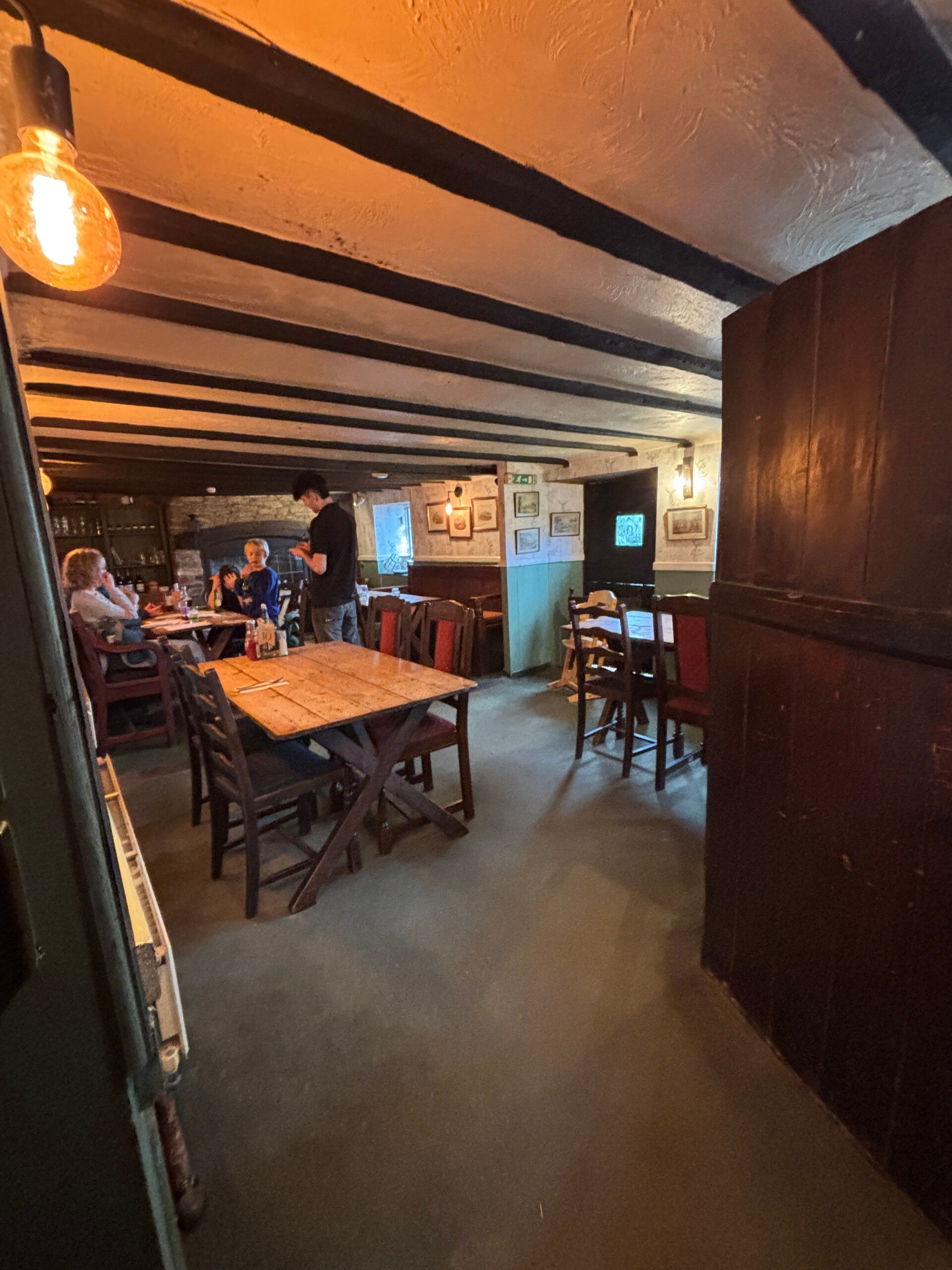
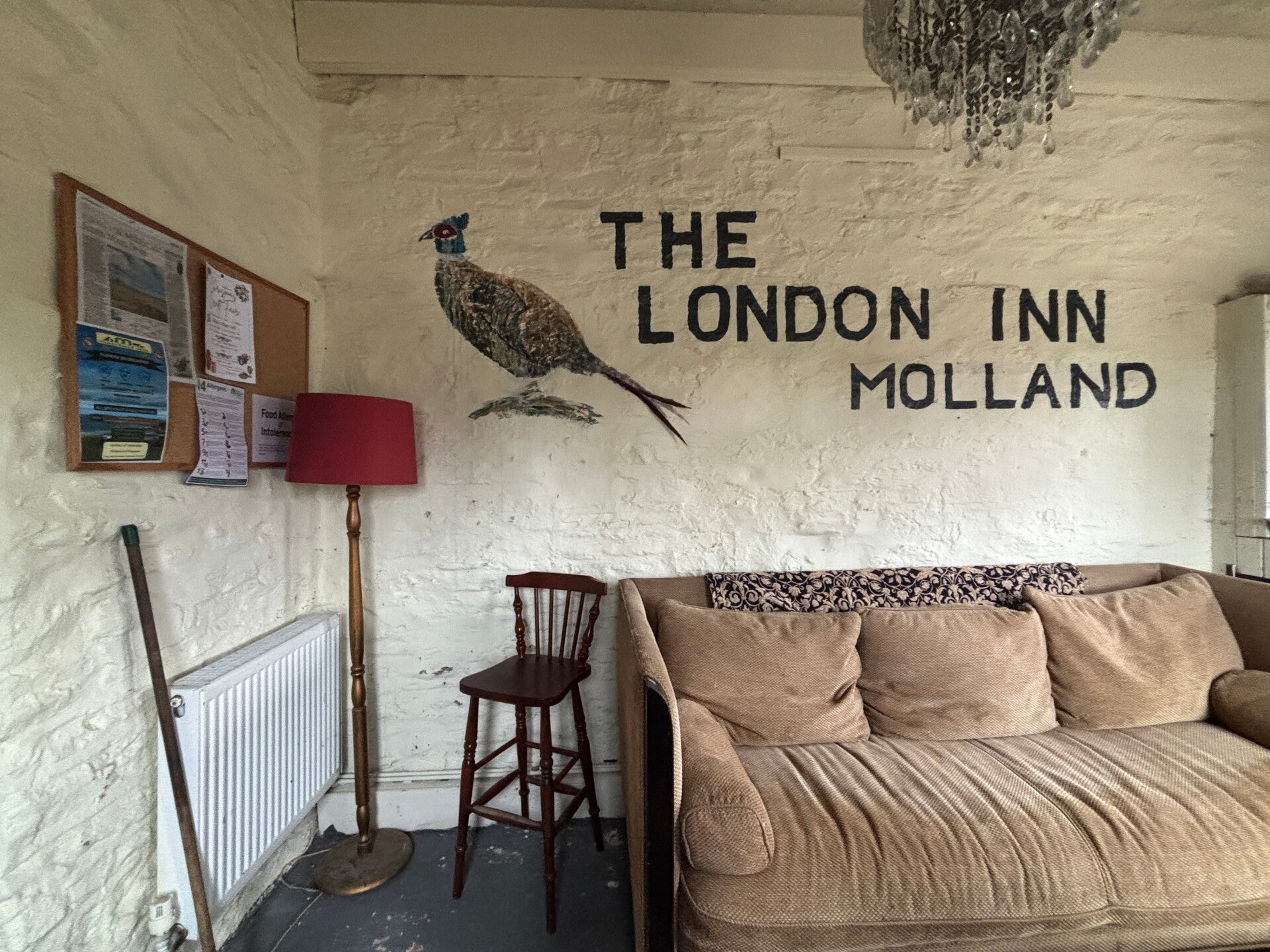
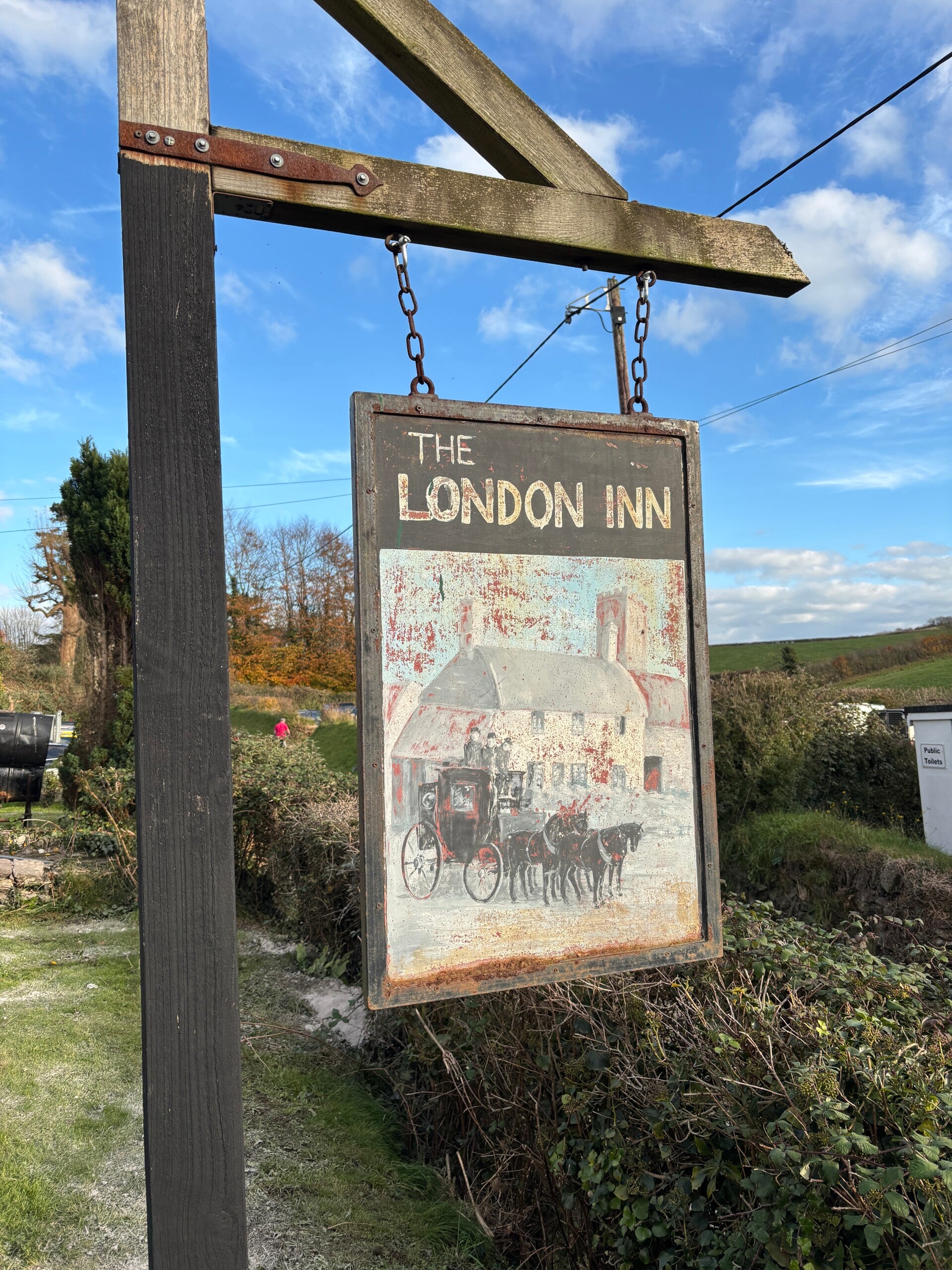
Park the car, walk through the gate, and step into a cosy pub in a cottage over the hedge. That's The London Inn.
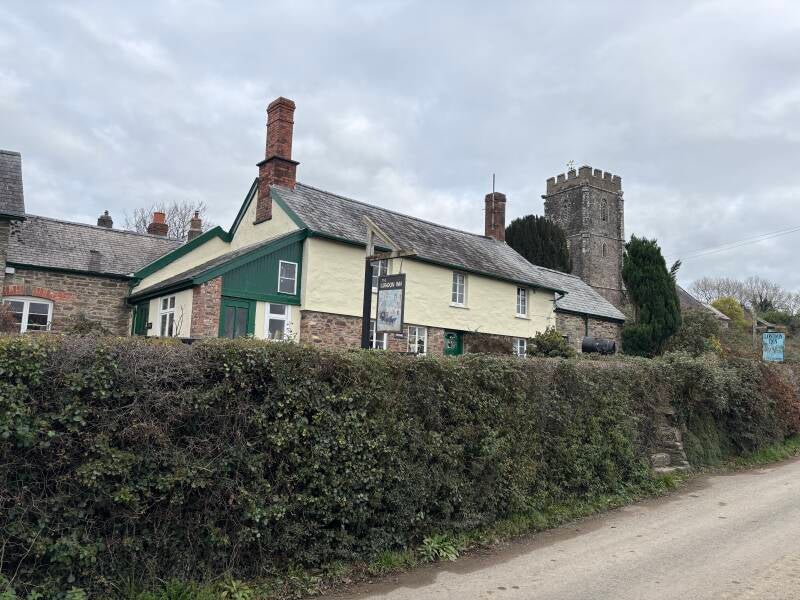
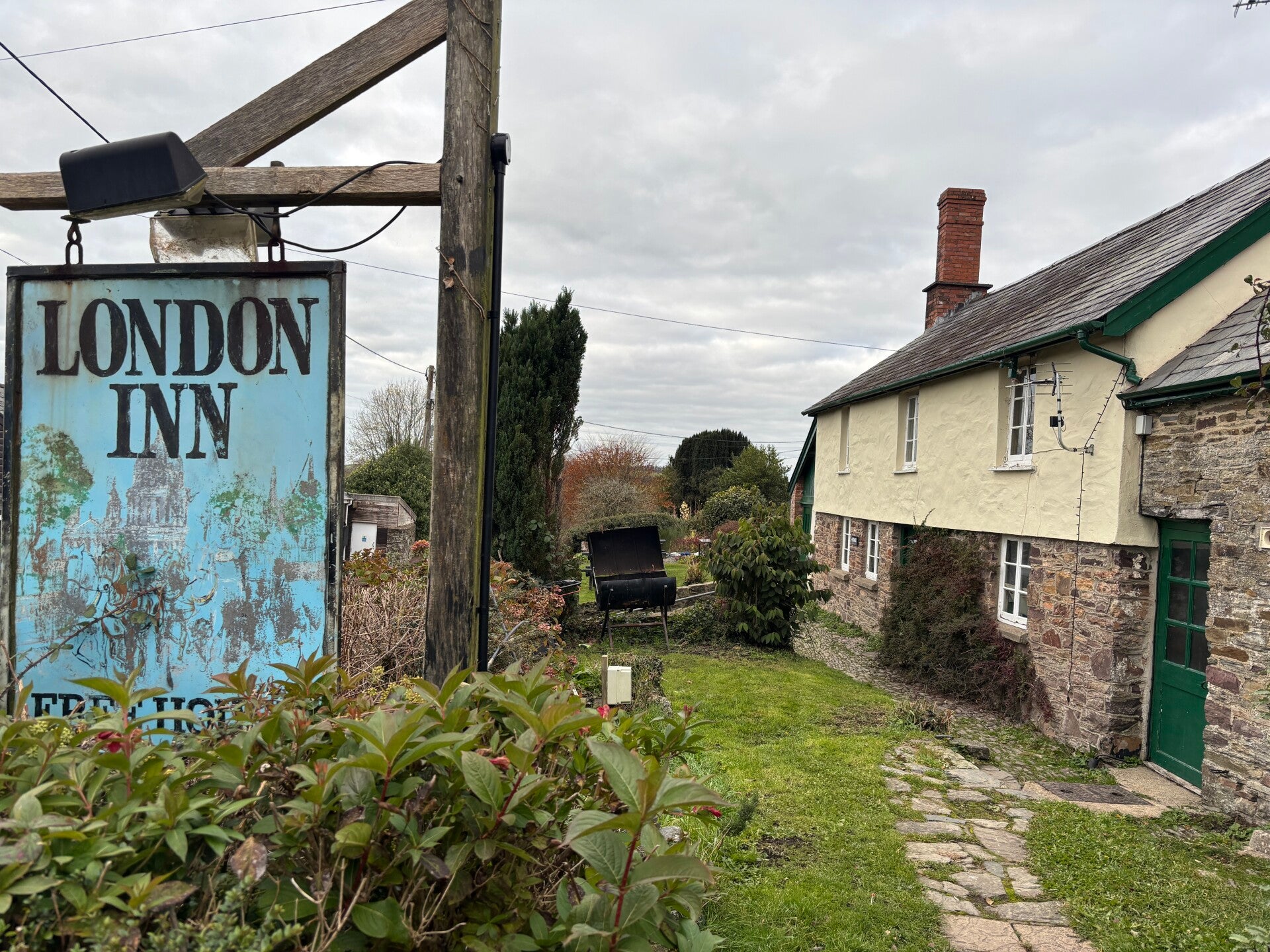
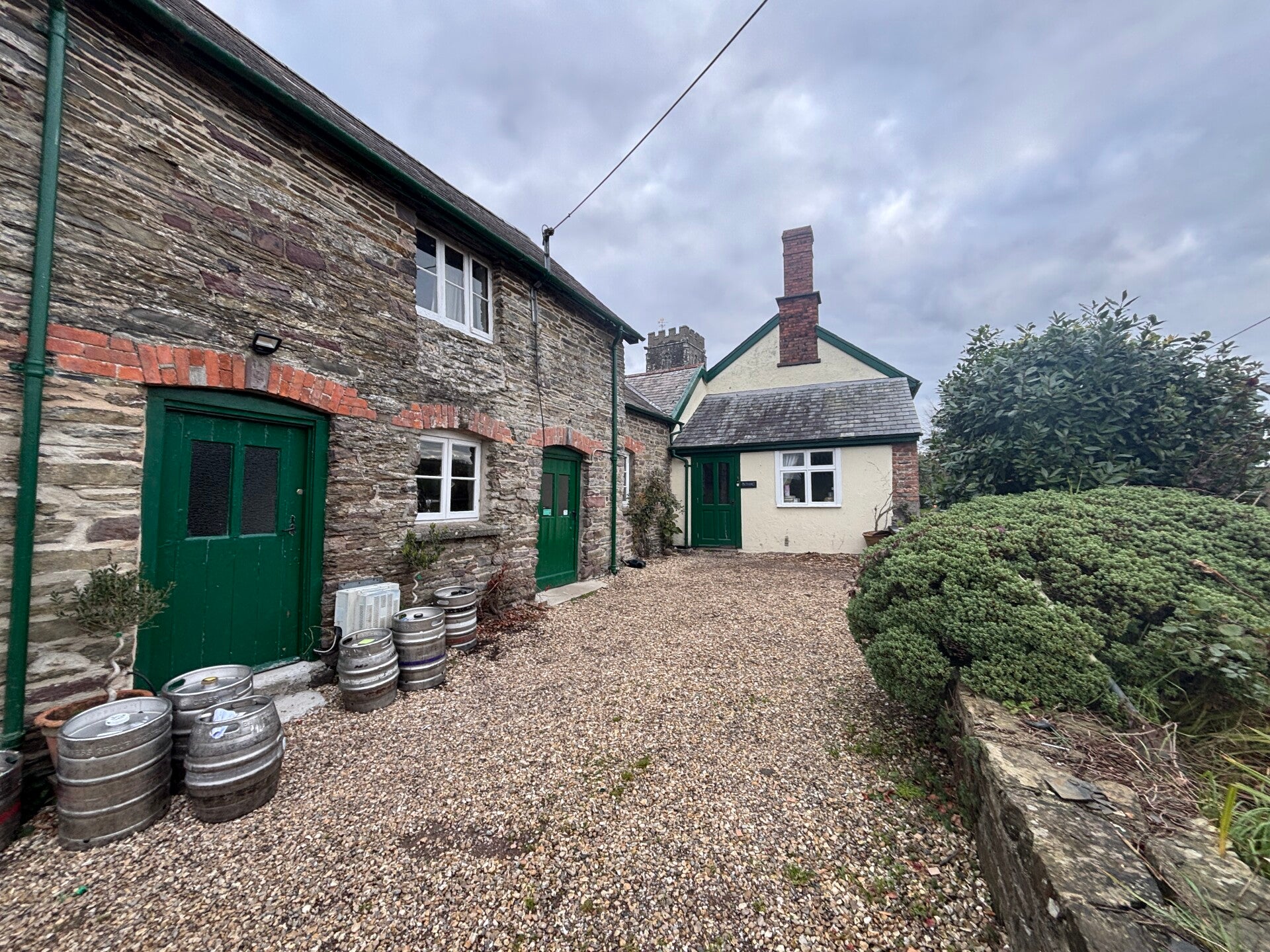
From the outside, you could almost mistake it for an ordinary village cottage, or perhaps a small row of cottages. Its bottle-green doors and windows sit comfortably within the stone and rendered buildings, with the church almost next door. There's no grand entrance or elaborate pub frontage to announce what lies within. Indeed, it's only when you step inside that you discover how the adjoining buildings and rooms have been brought together to create a surprisingly spacious village inn.
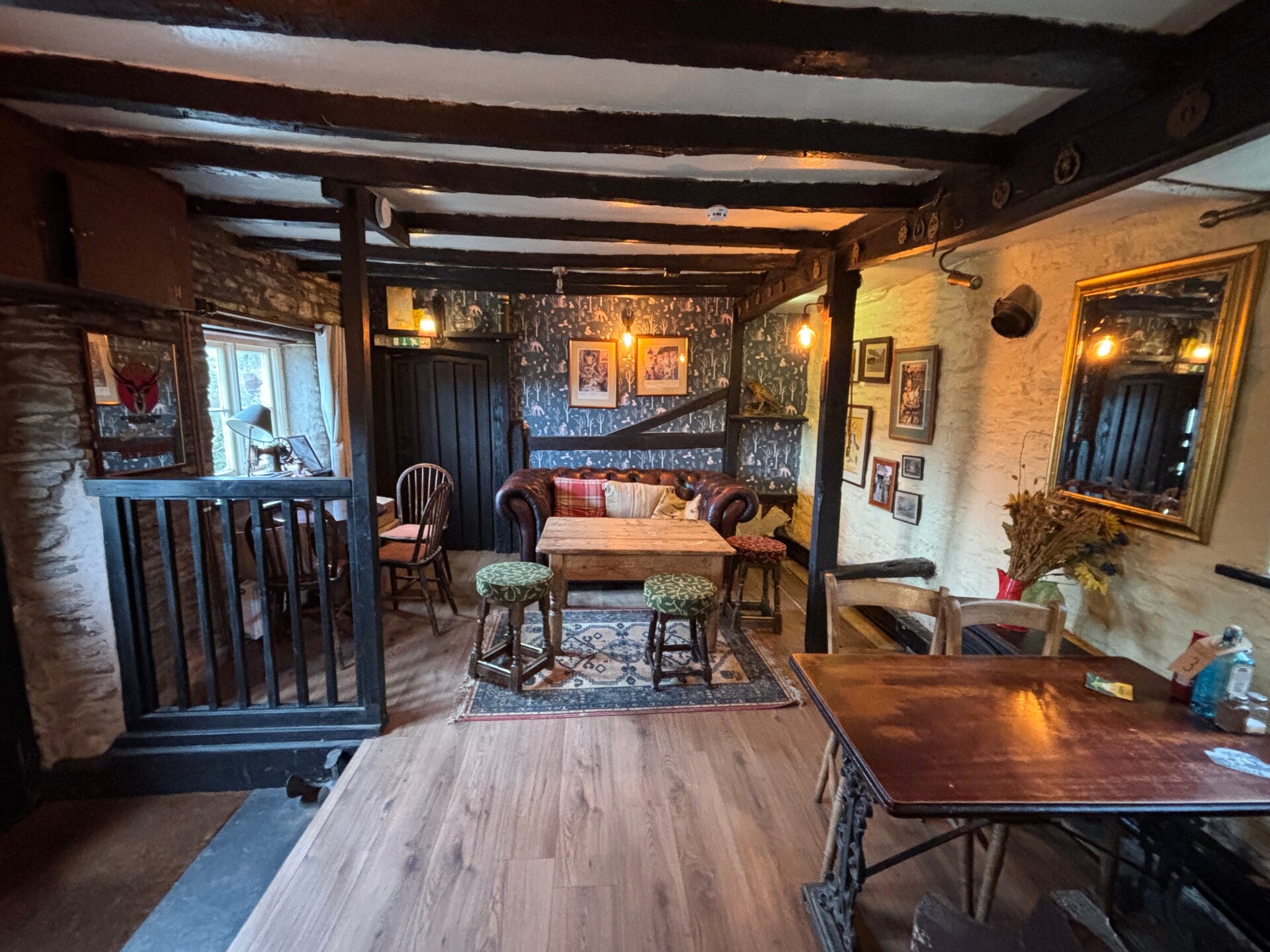
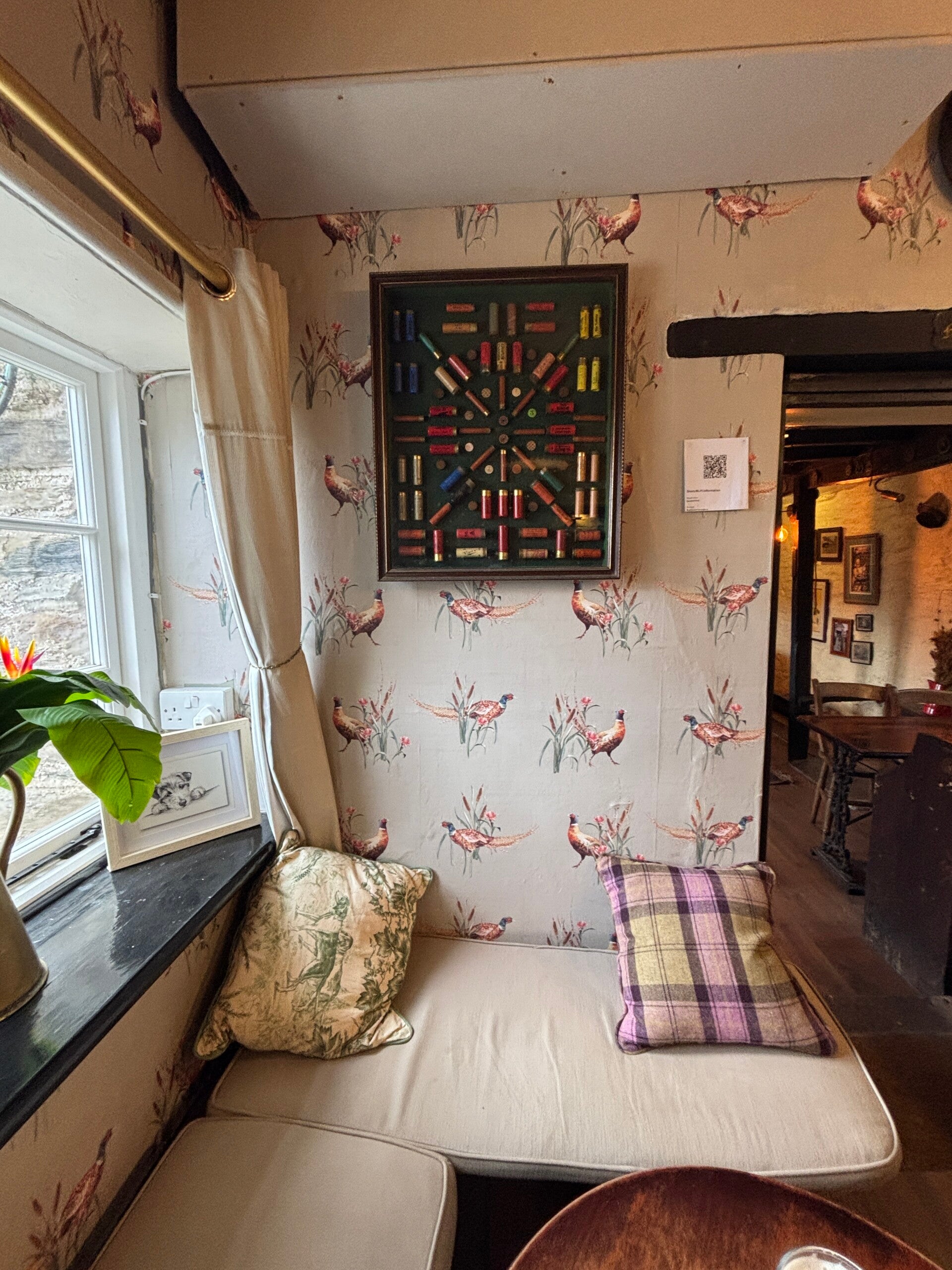
The layout is a little like exploring someone's old family home. Low ceilings, cosy corners, open fires, exposed beams and several distinct rooms give the place a wonderfully domestic feel. Some areas are relatively unchanged, better for it, while the main dining spaces have been refreshed and made particularly welcoming. There's plenty of character, too, with equestrian, hunting and country pursuits memorabilia reflecting the life of the surrounding estate.
I visited on a Saturday lunchtime and found people in every room. It was busier than expected, and the mix of customers was particularly revealing: walkers, dog walkers, people out enjoying a Saturday drive, villagers and those connected with the estate. There were two shoots taking place that day, and the pub's relationship with that world is an interesting one. The shooting guests are likely to enjoy their own private hospitality elsewhere on the estate, while the people working behind the scenes – beaters and loaders, for example – are perhaps more likely to find their way into the village pub.
I also had a lovely conversation with a young man whose family had moved from the Midlands to a cottage just behind the pub, seeking somewhere quieter to make a home. It was a reminder that Molland isn't simply a beautiful place for visitors to explore. It's somewhere people have chosen to live, and the London Inn is part of that everyday life.
The menu is straightforward, sensibly priced pub food, with starters around £7.50 and familiar mains including fish and chips, roast chicken, home-cooked honey-glazed ham and steak. The ribeye was £24, and the beef burger I tried was terrific. There's no elaborate culinary ambition needed here, just a simple menu that delivers what you'd hope for from a good country pub.
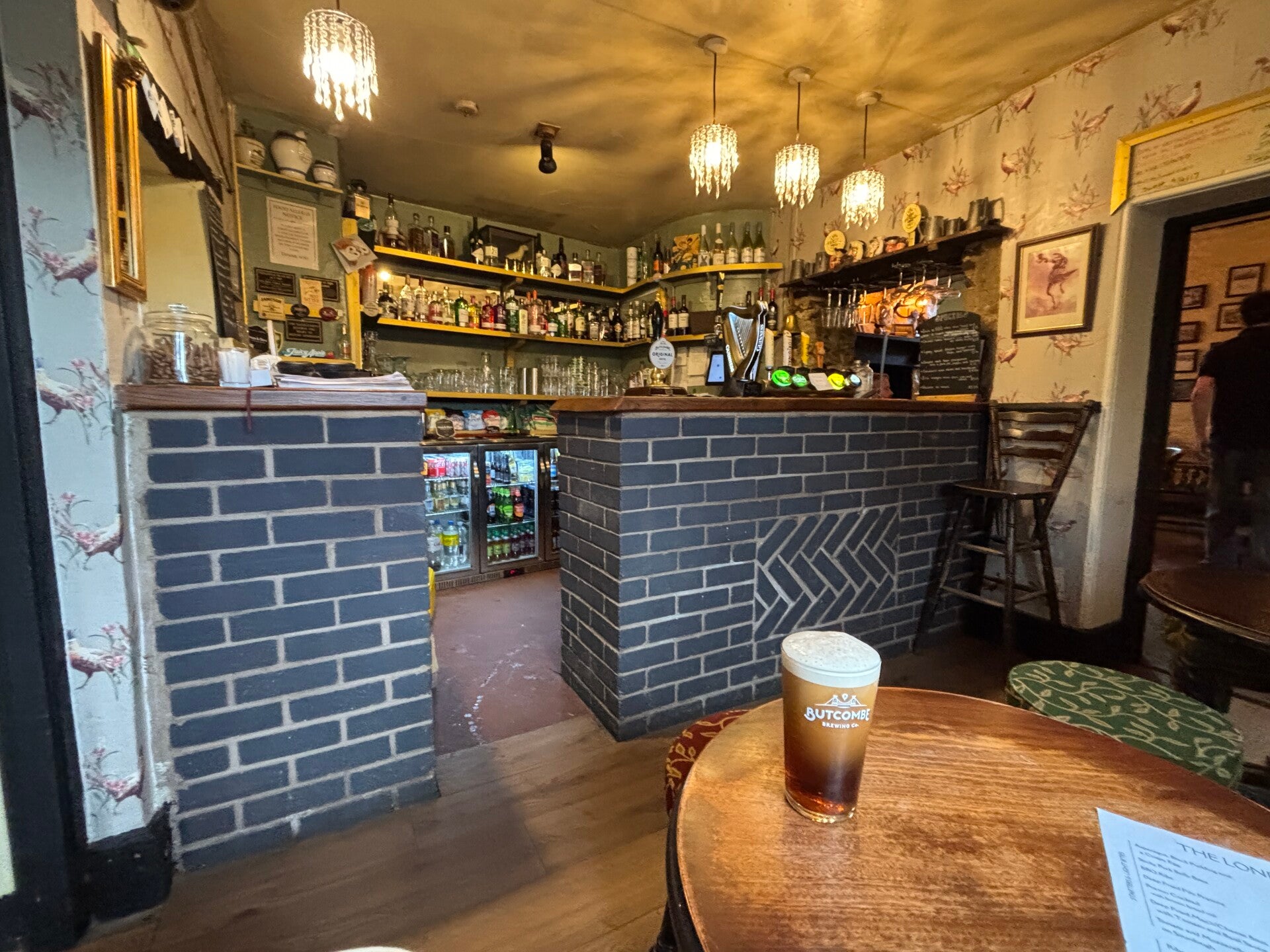
The bar is similarly uncomplicated - it's more a servery if there is such a thing. There's a single real ale, alongside Guinness, a couple of lagers and ciders, and a modest selection of spirits. It's not a destination for an extensive choice of craft beers or real ales or specialist gins, but the offer seems sensibly matched to a small, remote pub where trade can be difficult to predict.
The welcome, the food and the atmosphere are what matter here. This isn't an estate pub that has been polished into a visitor attraction or curated to complement a grand house. It's a well-presented, unpretentious old village pub that happens to belong to the estate. And it's exactly the sort of place you'd be rather pleased to find yourself snowed up in.
Walk Details
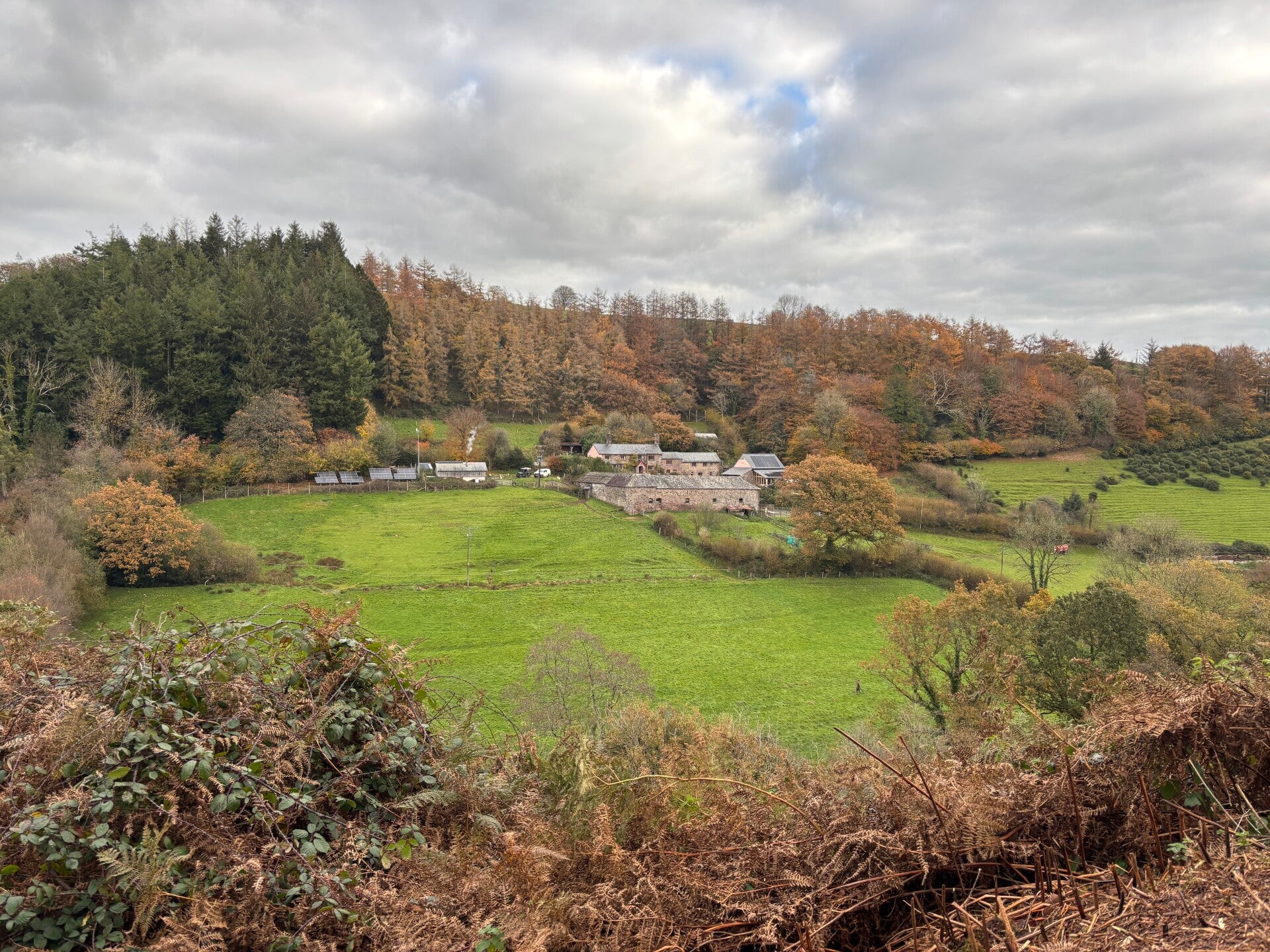
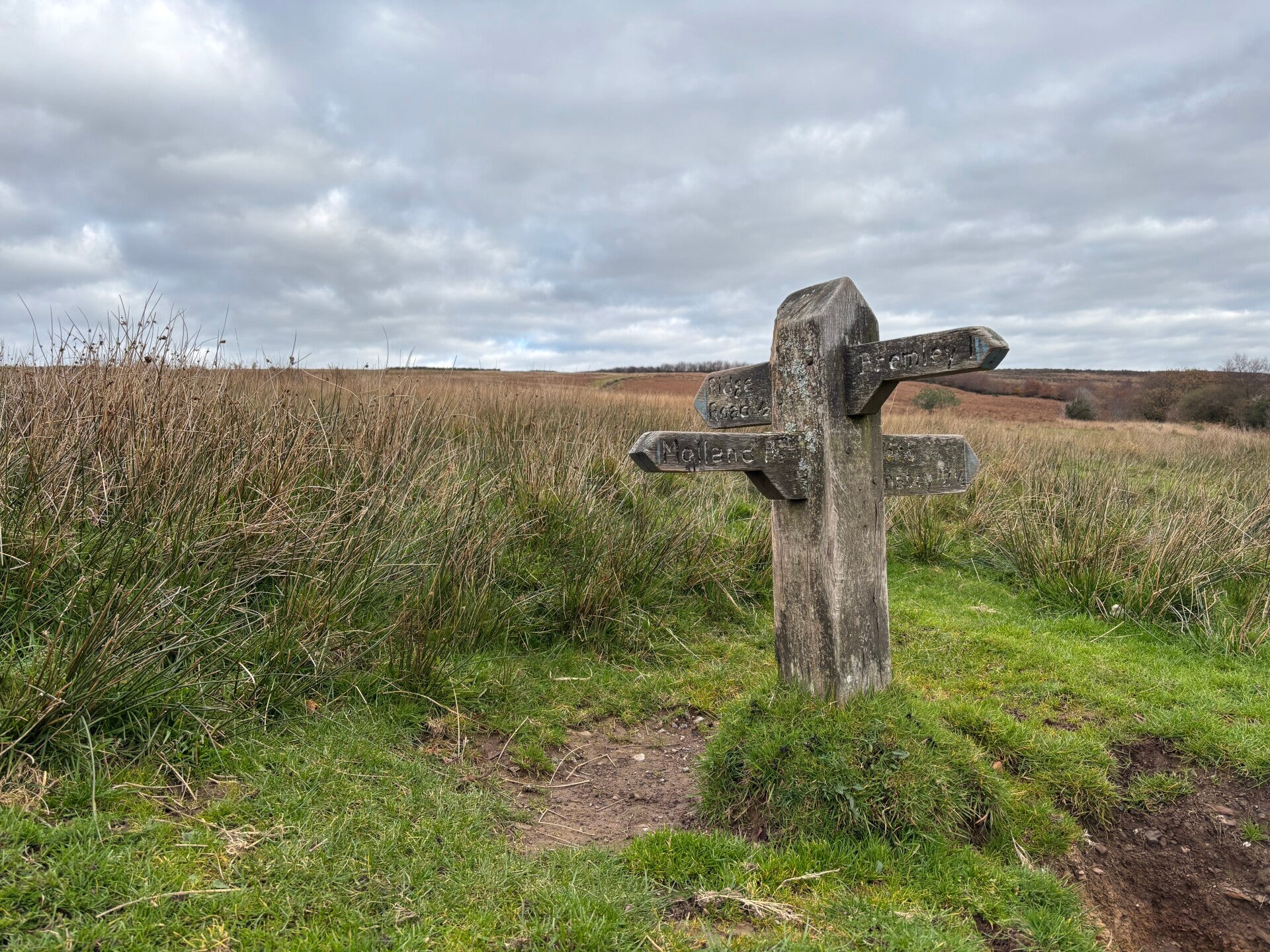
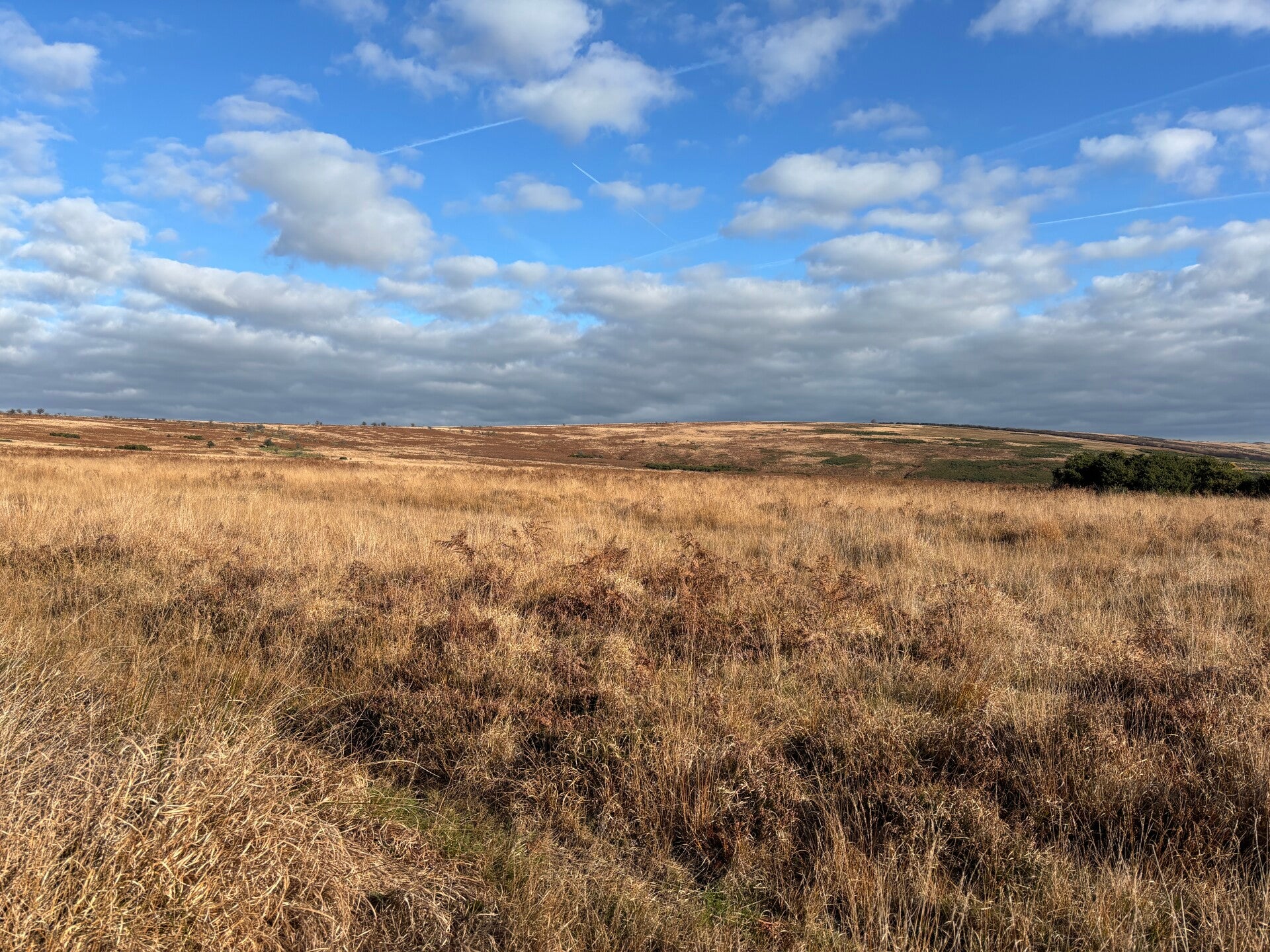
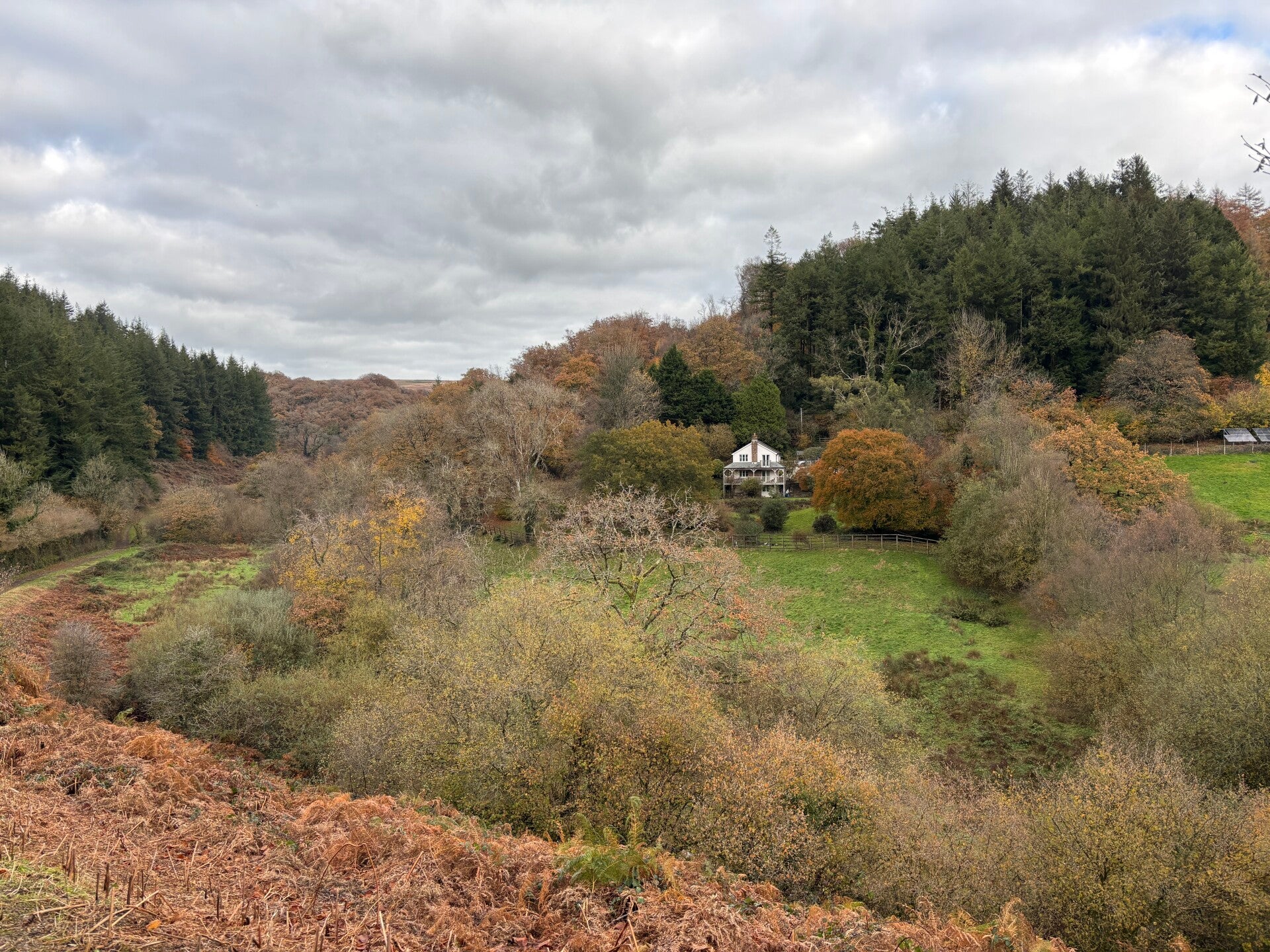
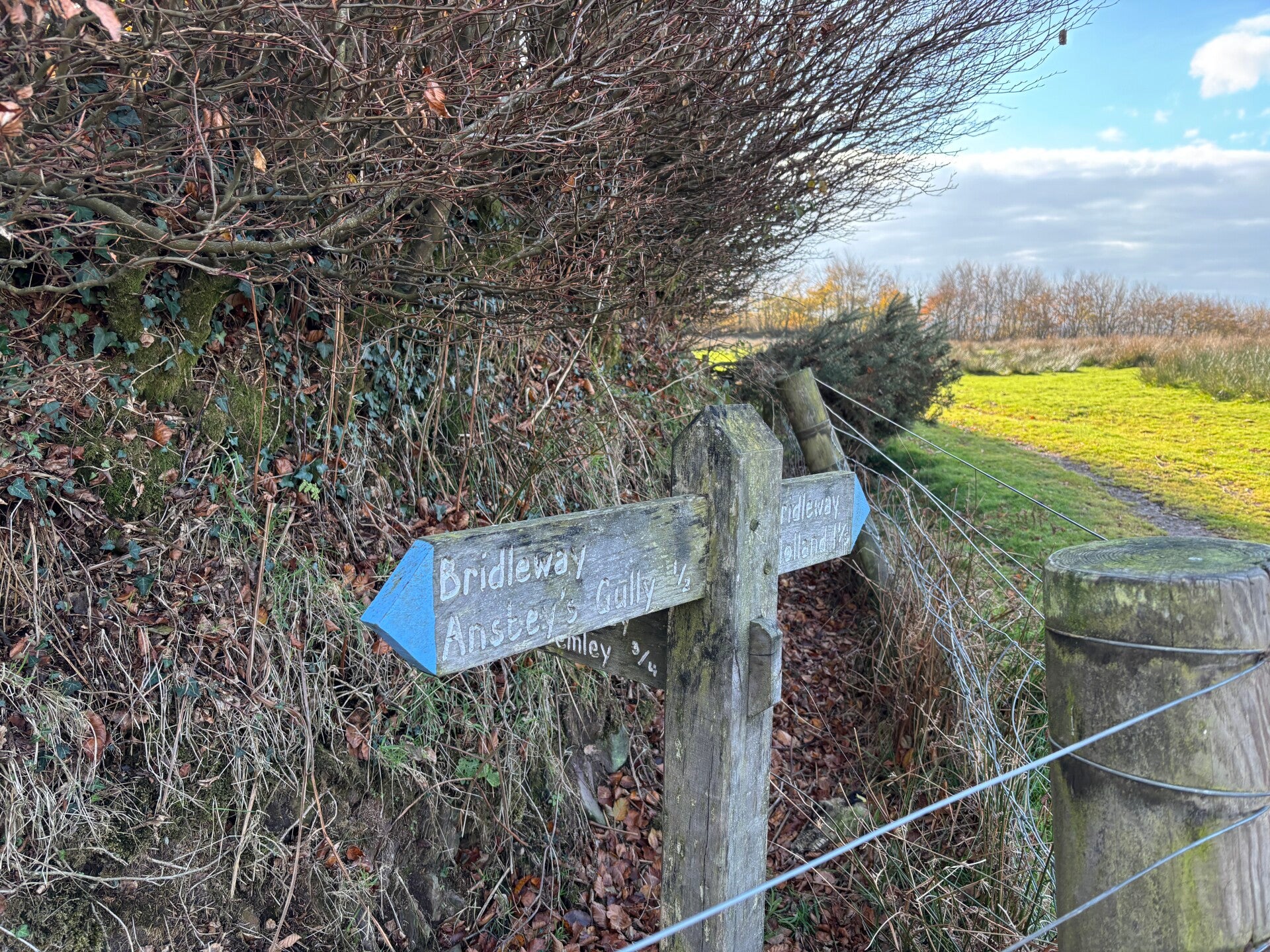
This is a wonderful introduction to the quieter, less-visited side of Exmoor. Starting in the remote village of Molland, the 5.2-mile route takes you through a landscape of wooded combes, pretty valleys and working farmland before climbing onto the open moorland at Anstey Gate. It's a walk of contrasts: from sheltered lanes and ancient farmsteads to big skies, wide horizons and apparent wilderness of Exmoor itself.
The landscape is magnificent, and very much alive. This is not simply countryside left to nature, but a working rural estate shaped by generations of farming, stewardship and sporting traditions. Keep an eye out for Exmoor ponies grazing on the common and red deer moving across the hillsides. You may hear the distant sound of a shoot, or spot pheasants and partridges in the hedgerows. As the woodland falls away and the moor opens up around you, it's easy to appreciate both the beauty of this place and the people whose lives remain so closely connected to it.
The return across the moor requires some confidence with navigation, particularly in poor visibility, but rewards you with a real sense of space and remoteness.
| START/FINISH | The London Inn, Molland, EX36 3NG |
| PARKING | At the Pub, or in the Village Hall Car Park opposite. |
| GRID REFERENCE | SS 813 283 |
| WHAT3WORDS | ///smuggled.gifted.musician |
| DISTANCE/TIME | 5.2 miles / 8.3 km; approx 3 hours |
| ASCENT | 1060 feet / 325 metres |
| PATHS/TERRAIN | Lanes, fields, farms tracks, open moorland |
| DIFFICULTY | Moderate. Navigation skills and confidence required on the open Moor from Anstey Gate. |
| PUBLIC TRANSPORT | Route 696, Thursdays only. South Molton. |
| TOILETS | At the pub, and the Village Hall. |
| OTHER PUBS TO VISIT | The Masons Arms in Knowstone is excellent – I’ll feature it on the website soon. The Royal Oak at Withypool already features on the site, including an excellent walk to Tarr Steps. At Tarr Steps itself is the Tarr Farm Inn. |
Route & Directions
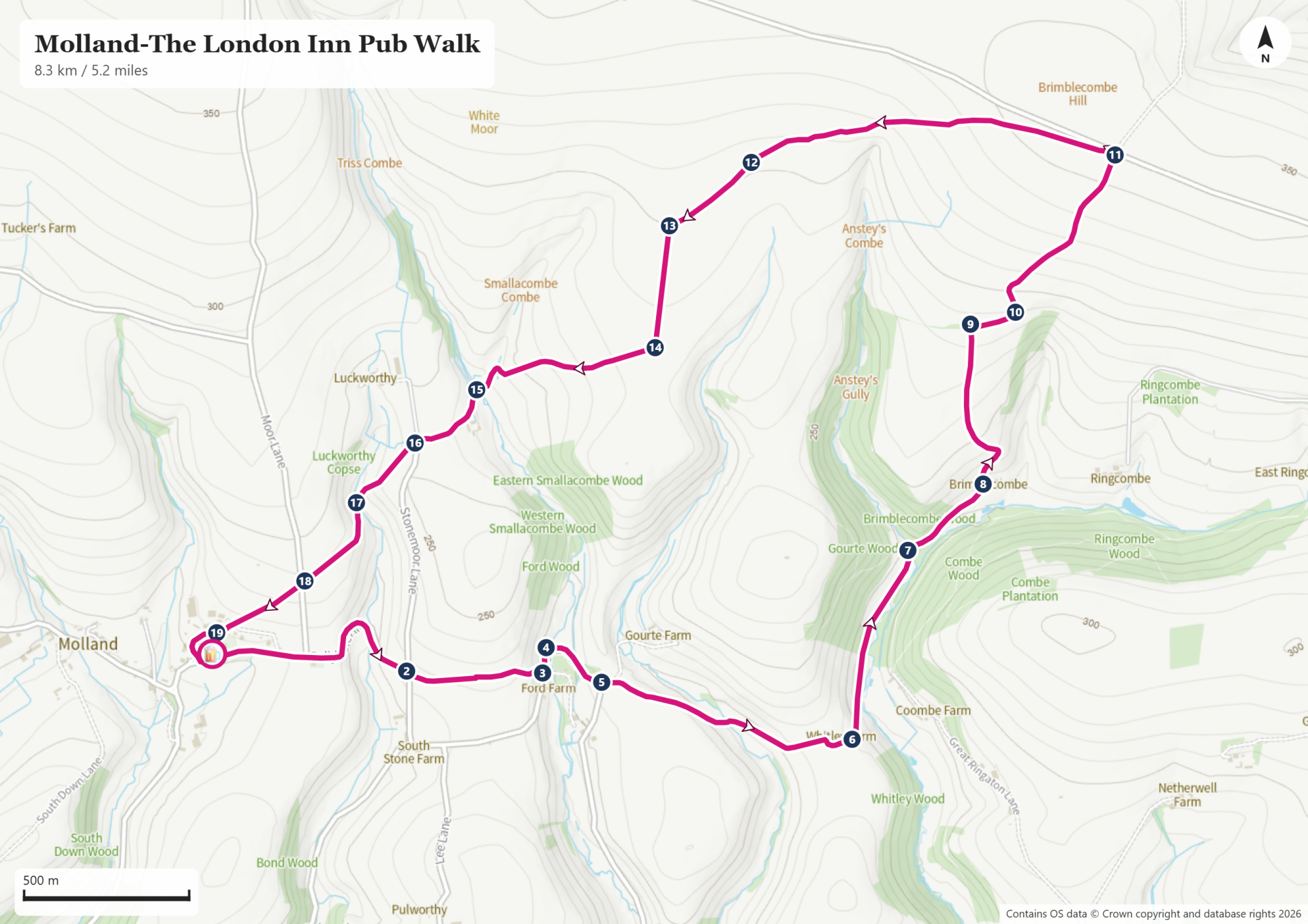
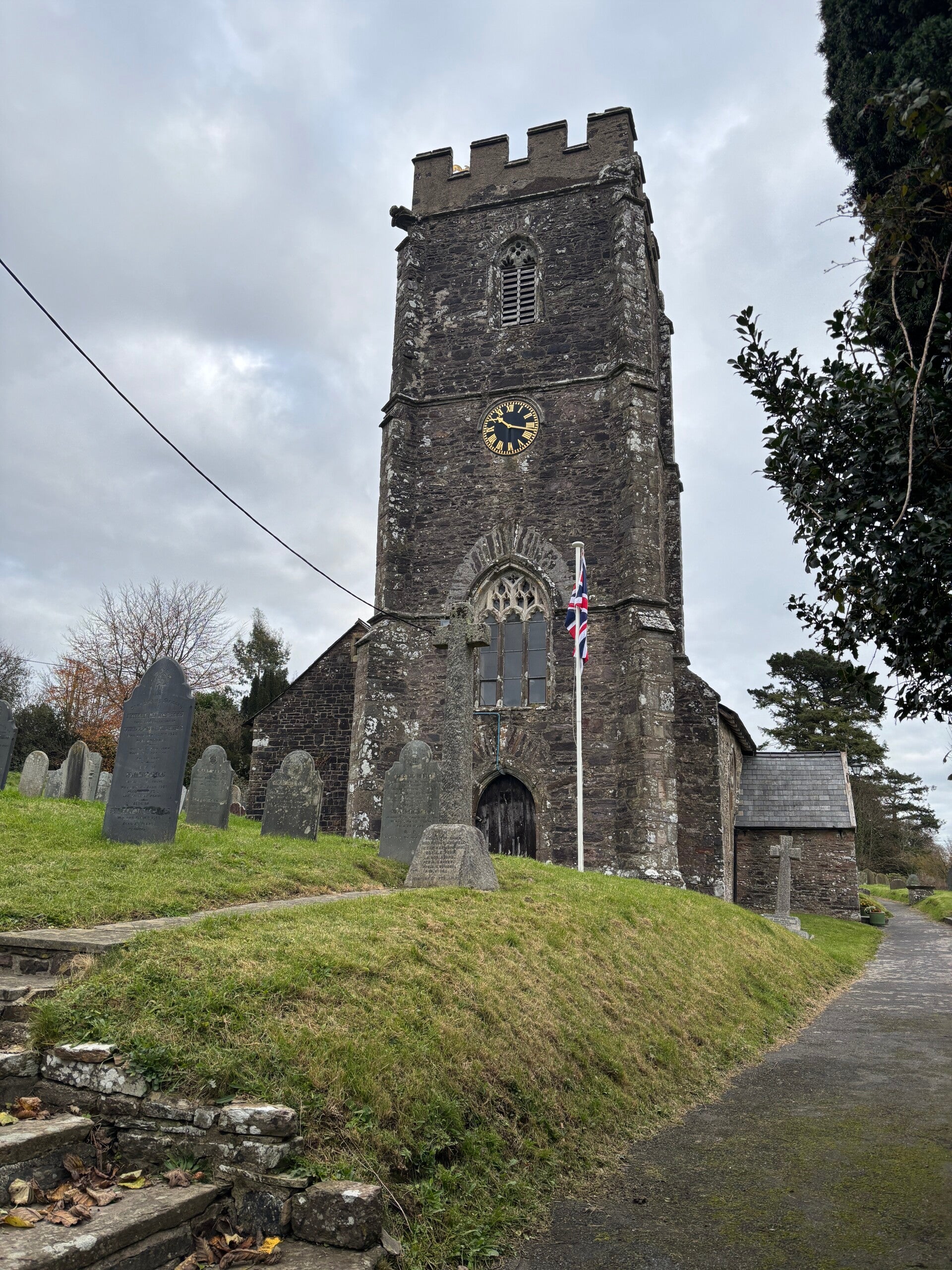
- The London Inn sits next to the Church with a small car park to its right-hand side, but a larger Village Hall car park opposite. The Church of St Mary is a special place and worth taking time to visit – it starts to provide an insight into the history of this remote Devon village. With the church on your left follow the quiet lane as it leaves the village.
- At a junction, continue straight ahead signposted for Stone and Bramley. The lane drops downhill to cross a bridge, then winds back uphill to the Latchgate junction. Go straight ahead here, leaving the lane to join a footpath. (waymark #2) Almost immediately, pass through a gate to the right into a field – horses or sheep here perhaps – and follow the left-hand hedgerow straight ahead, continuing in a straight line through a number of field gates & fields.
- Cross a stile and continue straight ahead. You’ll see a lane at the bottom of a steep slope in front of you. Navigate down to it – there is a route on the OS Map straight ahead (#3) but I cut to the left, working with the slope to drop down to a fence to exit onto a forest track and then 25 metres to the right to join the lane. (#4)
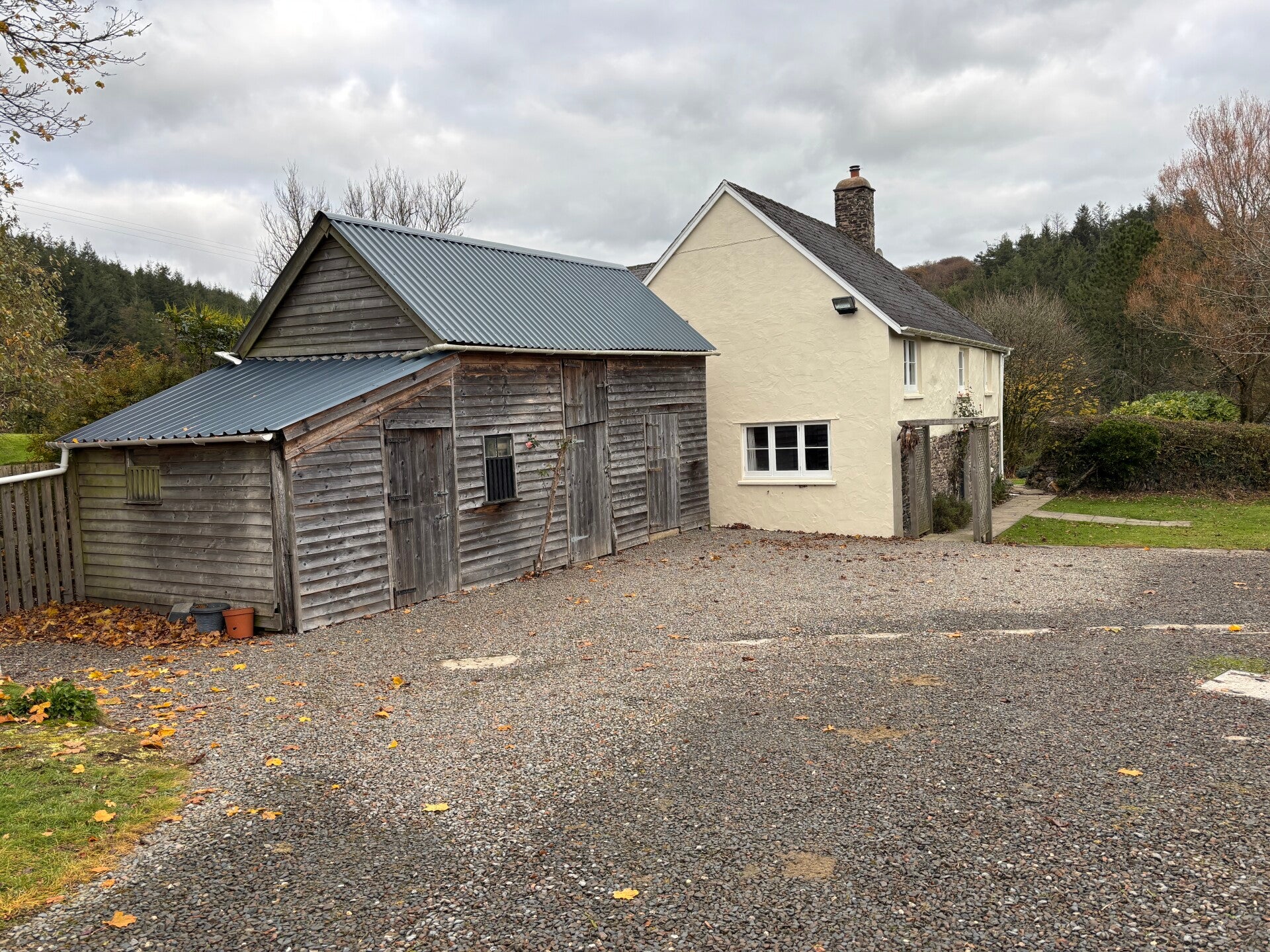
- Once on the lane, bear left to follow it round a bend and up a short, sharp hill to a junction. Follow signs for Whitley Farm, leaving the lane to join a bridleway on a tarmac farm drive through a metal gate straight ahead. There’s an electricity pole by the gate if you’re unsure. (#5) You’ll by now have a sense of Exmoor birdlife, especially the volume of pheasants and partridges in the hedges, fields and in the air. The 6000 acres comprising the Parish of Molland is estate land, having been in the same family for hundreds of years. The Molland Shoot is internationally acclaimed – and you may see or hear the sound of guns on this walk.
- Cross the stream and pass through a wooden gate, continuing on the driveway uphill towards Whitley Farm. At the top of the hill, follow the lane as it bends right through a farm gate to the side of the Farm – the route almost passes the front door, but continue 10 metres to the right of it to a wooden gate beyond. This farm is available as a holiday let on the Best of Exmoor website.
- Pass through the gate and go left on a waymarked bridleway into Brimblecombe. Fine views of the valley from here (#6), and to the left the uphill stretch to the open moor, the highest point on this walk.
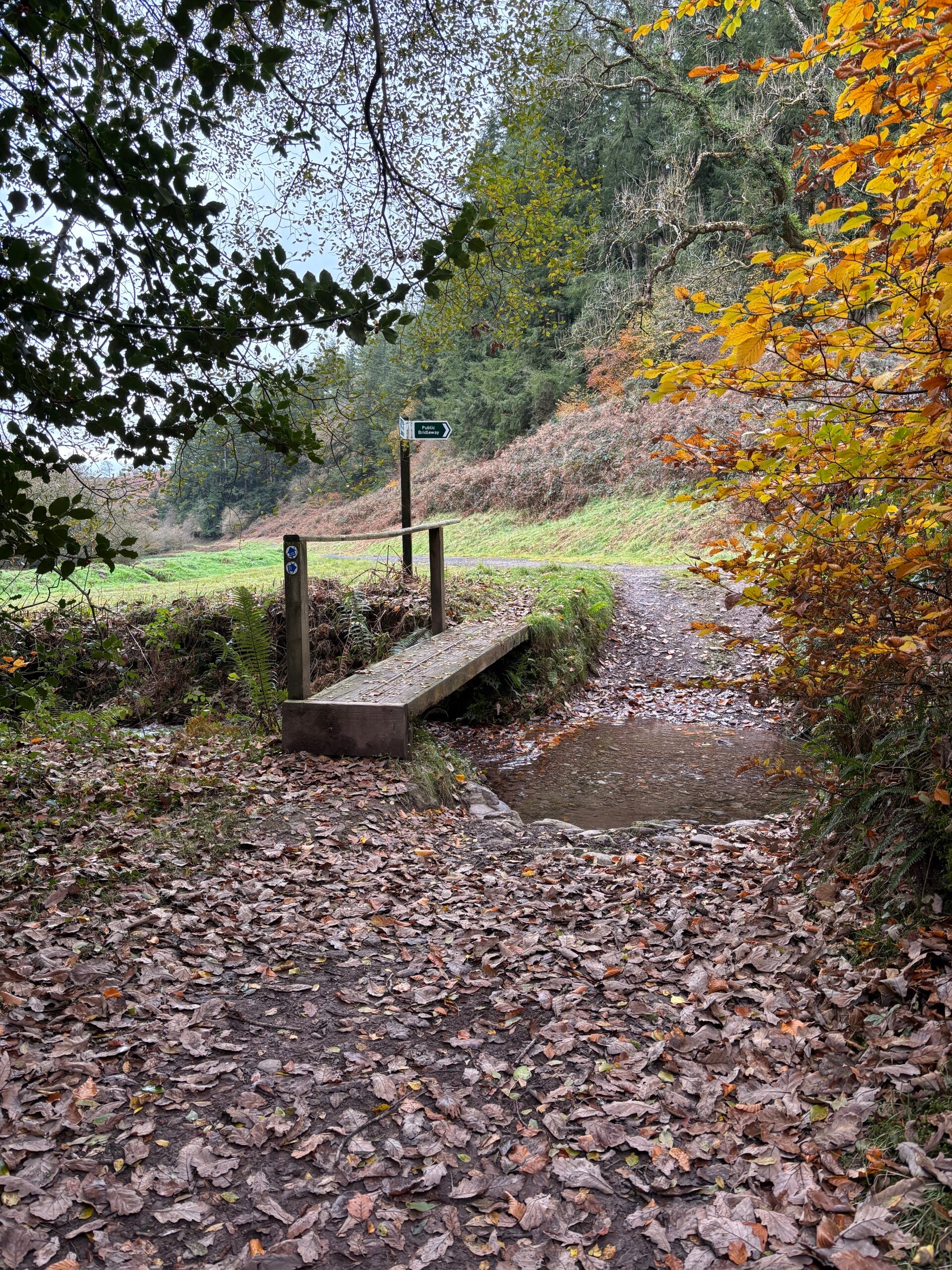
Continue left downhill, soon passing over a footbridge over a stream into woodland – Gourte Wood. (#7) Stay on this route gently uphill to eventually arrive at the old stone barn/farmhouse called Brimblecombe in front of you where the tracks curves to the left. (#8) - Make your way across the farmyard to the obvious exit a short distance ahead, and start the steep uphill climb on the concrete driveway as we continue towards Anstey Gate at the top of Brimblecombe Hill.
At the top of the driveway, pass through a gate. Here, the track opens out, leaving the woodland, to cut between sheep fields as we progress towards the Moor. Continue gently uphill to reach a cattlegrid near a corrugated iron shed and beyond, footpath markers offer route options in all directions! (#9).
The next section leads up to the open Moor, to Anstey Gate above us, but if the weather is bleak and you’re minded to shorten the walk, you can take the signs here for Molland to the left (rejoin the described route at waymark #14). Instead, bear right on the level track signposted for ‘West Anstey 2 ½’ and continue for 100 metres. (#10) - Here take a distinct stone track to your left uphill (cut in two by rainwater run off). It soon curves to the right to cut across the slope and continue to follow it towards the hedge row. It continues uphill to the car park at Anstey Gate, one of the crossing points on this quieter part of Exmoor, often a good spot for sightings of Exmoor Ponies and red deer on Anstey Common and Molland Common. (#11)
- Continue across the left-hand fringe of the car park towards the road, and a few metres before the road, cut left on a grass track leading into the moor. The track immediately forks – take the left-hand option. As you look out over the moor, you’ll see a combe to your left – Anstey Combe – and the moorland starting to descend and arc to the left. That’s the direction to aim for. The paths here can be indistinct – confidence with navigation is important especially in poor visibility – and the routes on the OS Map are not always a 100% match to what’s in front of you on the ground. Notable landmarks are few.
- Pass above Anstey Combe to your left, and a few hundred metres beyond the moorland track opens out to reveal an area of grazing, quite unusual amongst the rough moor that surrounds it. Look ahead for a lone holly tree. If the tree is 12 o’clock, follow a faint track at 10 o’clock making towards what looks like a gorse hedge ahead. (#12)
- Once you’ve reached the gorse hedge, (#13) join a more distinct track in front of it running to the left downhill towards the fringe of the moor – where it meets a beech hedgerow, and a field gate in the hedge should be visible. As you approach the hedge, look for a signpost at corner on the left alongside a distinct track that follows the hedgeline (#14). This is where the shorter alternative route that I suggested from the cattlegrid near Brimblecombe rejoins this route back to Molland.
- Follow the hedgerow to the right – this is more like field walking now rather than moorland. The route starts gently downhill, and then steeply on a rough track towards a stream at the bottom of Smallacombe. (#15)
- Pass through a wooden farm gate and continue straight ahead, up a track. Molland is signposted, 1 mile ahead. Pass the front gate of Smallacombe Farm on your left and join a quiet tarmac road gently uphill.
- At a junction follow the Public Footpath sign straight across, to pass through a metal farm gate into a field. (#16) The route is diagonally left down the field, making towards a small wooden gate you can see at the fringe of a hedge.
- Once at that little wooden gate, identify a gap in the hedge at the bottom of the steep slope below you, roughly in a line with the route you took to reach this point in the field. Make your way down to cross a pair of footbridges over the stream, then some steps beyond up to a track. (#17) Go left on this distinct track, and follow it uphill – the last of the day – as it opens out into a field. Continue diagonally across to a gate in the far corner. (#18)
- The gate leads to a lane just above the village. Cross carefully, following a footpath over the lane up into a field above and onward towards the church. On my visit, the field was newly planted, so I decided to step back to the lane and follow it back to the village to avoid a muddy stomp around the field edge towards the Church.
- Arrive back at The London Inn.
Additional Information
St Mary's Church – Where Molland's Story Begins
Before setting off from Molland, take a little time to visit the Church of St Mary. Its position beside the London Inn makes it an easy stop, but its significance is far greater than its modest village setting might suggest.
Inside, the monuments to the Courtenay family are an immediate reminder of the powerful families who shaped this parish and its estate. Yet the story of Molland began long before the Courtenays arrived. The church itself has medieval origins, and the settlement, its manors and its community reach back further still.
To understand the Molland we see today, it's worth following that story back through the centuries.
1. Before the Throckmortons – A Medieval Inheritance
Molland's history as an organised landholding reaches back beyond the Norman Conquest. By the time William the Conqueror redistributed land following 1066, Molland was already established as a place of importance.
The Domesday survey of 1086 records two separate manors in the area. The larger, Molland Bottreaux, had belonged to Earl Harold – Harold Godwinson, the last Anglo-Saxon king – before passing to the Norman de Beumis family. The other, Molland Champson, was held by Geoffrey de Mowbray, Bishop of Coutances.
It is worth understanding what a manor meant in medieval England. It wasn't simply a village or a grand house, but a unit of landholding and local authority. It could include the lord's own farmland, tenant holdings, woodland, pasture and common land, together with the rights and obligations that governed their use. The two manors at Molland therefore represented distinct estates and systems of landholding, even though they occupied the same wider parish.
The name Molland Bottreaux came from the Botreaux family, who acquired the manor in 1210. Their name has proved remarkably enduring. It survives in local place-names, including Bottreaux Mill, a reminder of the older identity of this part of the parish.
The manor subsequently passed through marriage into the Hungerford family. The Hungerfords were an influential medieval dynasty whose fortunes grew through royal service, political office, military involvement and, particularly, marriage into wealthy landowning families. Sir Thomas Hungerford became the first person reliably recorded as Speaker of the House of Commons in 1377. His son Walter was a soldier and diplomat who fought at Agincourt in 1415, served as Treasurer of England and was created Baron Hungerford in 1426.
It was the marriage of Robert Hungerford, second Baron Hungerford, to Margaret, Lady Botreaux, that brought Molland Bottreaux into the Hungerford family.
A further marriage then brought the Courtenays into the story. Sir Philip Courtenay of Powderham married Elizabeth Hungerford, connecting Molland with one of Devon's most prominent aristocratic families.
2. The Making of the Molland Estate
The Courtenays became closely associated with Molland for nearly three centuries. Sir Philip Courtenay established a new manor house at West Molland in the late fifteenth century. The present house, its fishponds and the surrounding demesne farm are evidence of that period of development. The Courtenay coat of arms above the main entrance remains a visible reminder of the family's presence.
Meanwhile, Molland Champson followed a separate line of ownership. It passed through the Campellis family and subsequently the Culmes before being acquired by John Courtenay in 1700. This brought the two historic manors into common ownership for the first time.
When John Courtenay died without an heir in 1732, his estates passed through his sisters' families. His granddaughter Anna Maria Paston married George Throckmorton in 1748, bringing the Molland inheritance into the Throckmorton family. Their descendants adopted the Courtenay name in recognition of the inheritance, and the estate has remained associated with the Throckmortons ever since.
The family already had deep roots elsewhere in England, particularly at Coughton Court in Warwickshire. Molland became part of a much wider family inheritance, rather than necessarily serving as the family's principal residence.
The significance of this succession is that the modern Molland Estate did not appear fully formed. It developed through centuries of inheritance, marriage, acquisition and adaptation. The landscape and its pattern of farms, fields, woodland and settlements reflect those successive periods of ownership and management.
The estate today covers approximately 6,000 acres, a remarkable area in a parish whose historic acreage was recorded at just over 6,100 acres in nineteenth-century directories. The precise boundaries have changed over time, but the scale of the estate's influence on the parish is clear.
3. An Estate with a Sporting Reputation
One of the most prominent features of modern Molland is its shoot. It has developed a reputation extending well beyond the West Country, attracting sporting visitors from across Britain and overseas.
This is not a recent invention. The shoot's reputation was already well established before the current specialist management arrangements were introduced. Its standing has been built over decades, and maintaining that reputation requires considerable organisation, investment and attention to detail.
The modern operation is part of a wider sporting business, with specialist operators bringing experience in managing shooting days, attracting clients and providing the hospitality expected by an international clientele. The Throckmorton family's association with the land, however, remains central to the identity of the shoot.
The family's own promotional material makes an interesting point about its attitude to the local community. It says that the Throckmortons value and encourage local involvement in shoot management. That is significant because a successful shoot depends on much more than the people who arrive to shoot. Gamekeepers, beaters, pickers-up, loaders, local contractors and neighbouring farms all contribute to the operation.
There is a reputation to protect, and that reputation belongs to the place as much as to the sporting business. The quality of the landscape, the organisation of the day, the people involved and the hospitality all contribute to the experience.
The shoot is also an important part of understanding the estate's wider economy. It attracts visitors and expenditure into a remote rural area, while creating seasonal work and commercial opportunities. Its relationship with the farms and the surrounding community is therefore more involved than might be apparent to a casual observer.
4. How a Working Estate Works
A country estate of this size is not simply a collection of land and buildings. It is an interconnected business, with different activities and interests that need to be managed together.
Agriculture remains fundamental. The estate describes its farms as traditional tenanted holdings, with conservation increasingly integrated into modern farming. This arrangement means that independent farming businesses work on land owned by the estate, rather than the family having to operate every farm directly.
An estate farm letting document from November 2023 provides a particularly revealing insight into how this works. The letting of land at Lee Farms, Bottreaux Mill, expressly reserved sporting rights to the estate, including deer stalking and hunting. The incoming tenant was expected to cooperate with the shoot operators.
More unusually, the estate reserved the right to remove land from, or add land to, the tenancy on three months' notice, where necessary to allow changes to game crops or release pens. This is a clear example of the estate coordinating agricultural and sporting interests through the terms of a farm tenancy.
The same document also shows how environmental schemes can form part of the arrangement. An existing Countryside Stewardship agreement was held in the landlord's name, with the associated annual payment passed to the tenant. The estate also reserved rights relating to potential future conservation, carbon and biodiversity schemes.
It gives us a much clearer picture of what stewardship means in practice. Farming, shooting and conservation are not simply separate activities occupying the same landscape. They can be deliberately coordinated through the estate's management and contractual arrangements.
There are other sources of activity too. Residential properties provide homes and rental income; woodland offers opportunities for forestry and land management; and visitor accommodation provides another way of making use of estate property.
Molland House is an interesting example. This substantial Victorian property was redeveloped to serve two distinct markets: exclusive accommodation for shooting parties during the sporting season, and a private holiday home at other times of the year. The estate has adapted an existing property to provide a wider commercial purpose, rather than relying on one seasonal activity.
The London Inn itself is another part of this picture. The building belongs to the estate, but the pub is operated by an independent tenant. This distinction matters: the estate provides the property, while the tenant takes responsibility for running the business and attracting customers. It is a relationship that allows a community pub to remain part of the village without requiring the estate to operate it directly.
Taken together, these activities demonstrate how the estate's land and buildings can support a range of rural businesses and livelihoods. Not every activity will have the same commercial importance, and the precise financial arrangements are private, but the wider economic picture is much clearer.
5. The Estate and its Village
The relationship between Molland and the estate is unusually close. The church, pub and village hall form a small but important centre for a parish whose farms, cottages and working land extend across a much wider area.
The estate has had a considerable influence on the character of the village, not least through its ownership of property and the pattern of farms and cottages. But it would be wrong to think of the community simply as an extension of the estate. The people who live and work here have their own businesses, families, interests and aspirations.
The village has also changed. Some people have lived here for generations; others have arrived more recently, attracted by the opportunity to make a home in a quieter part of the country.
The pub and village hall provide places for people to meet, while the church has served the parish through centuries of change. These institutions matter because a rural community needs more than attractive buildings and a beautiful landscape. It needs places, services and relationships that help people belong.
The estate's future and the fortunes of the parish are closely connected, but they are not identical. A healthy rural community depends on the people who farm, maintain, manage, trade, volunteer and raise families here, as well as the landowner.
6. St Mary's Church – A Remarkable Survival
Returning to St Mary's, it is easy to see why the church deserves more than a passing visit. It is a remarkable survival of medieval architecture and later Georgian church life, with a collection of historic features that would be noteworthy in a much larger settlement.
The tower, nave and north aisle largely reflect the fifteenth-century church, although parts of the building may be older. The Norman font is a particularly important reminder of the earlier church on this site. The north aisle was remodelled in the sixteenth century, while the interior was substantially refitted in the eighteenth century.
That later work gives the church much of its distinctive character today. Its high-backed box pews, three-decker pulpit and west gallery preserve an atmosphere that has largely disappeared from English parish churches. The pews were individual enclosed spaces, reflecting the way people and families occupied and experienced the church. Some of the larger pews in the chancel have particularly interesting details, including a heraldic shield on one door.
The church also contains a remarkable collection of Courtenay monuments. Several members of the family were commemorated here during the seventeenth and early eighteenth centuries, including John Courtenay and his descendants. Their elaborate memorials reflect the wealth, status and family pride of the people who once held the manor.
Yet the church was never simply a private family mausoleum. It was, and remains, the parish church, serving the wider community. Its history is therefore both a record of the families who held power and a witness to the lives of generations of ordinary people who worshipped, married, baptised their children and said farewell to loved ones here.
It is perhaps the most tangible reminder that Molland's history is not simply the story of an estate. It is the story of a place and the people who have lived within it.
An Inheritance Still Being Created
There is a fragility to rural life that isn't always apparent in the landscape. The fields, farms, cottages and villages can seem enduring, but the businesses and livelihoods that sustain them are exposed to changing costs, market conditions, regulation and public policy. Decisions made many miles away can have very real consequences for people working on the ground.
This isn't an argument against change. Rural life has always evolved, and the Molland Estate itself is evidence of generations of adaptation. But change needs to be informed by an understanding of what already exists, what it takes to sustain it and what might be lost if the connections that hold a community together are weakened.
The Molland we encounter today is the result of centuries of human endeavour, investment, stewardship and adaptation. Its landscape, buildings, farms and community have been shaped by generations of people, each inheriting something from those who came before and, in turn, leaving something for those who follow.
We might take its beauty for granted, but places like this don't simply happen, and they don't sustain themselves. They depend on people who understand the land, care about its future and find ways to make rural life work.
For those who live here, Molland is home. For those who visit, it is a wonderful glimpse of a particular kind of English rural life. For both, it is an inheritance still being created.
More Pubs & Walks To Try